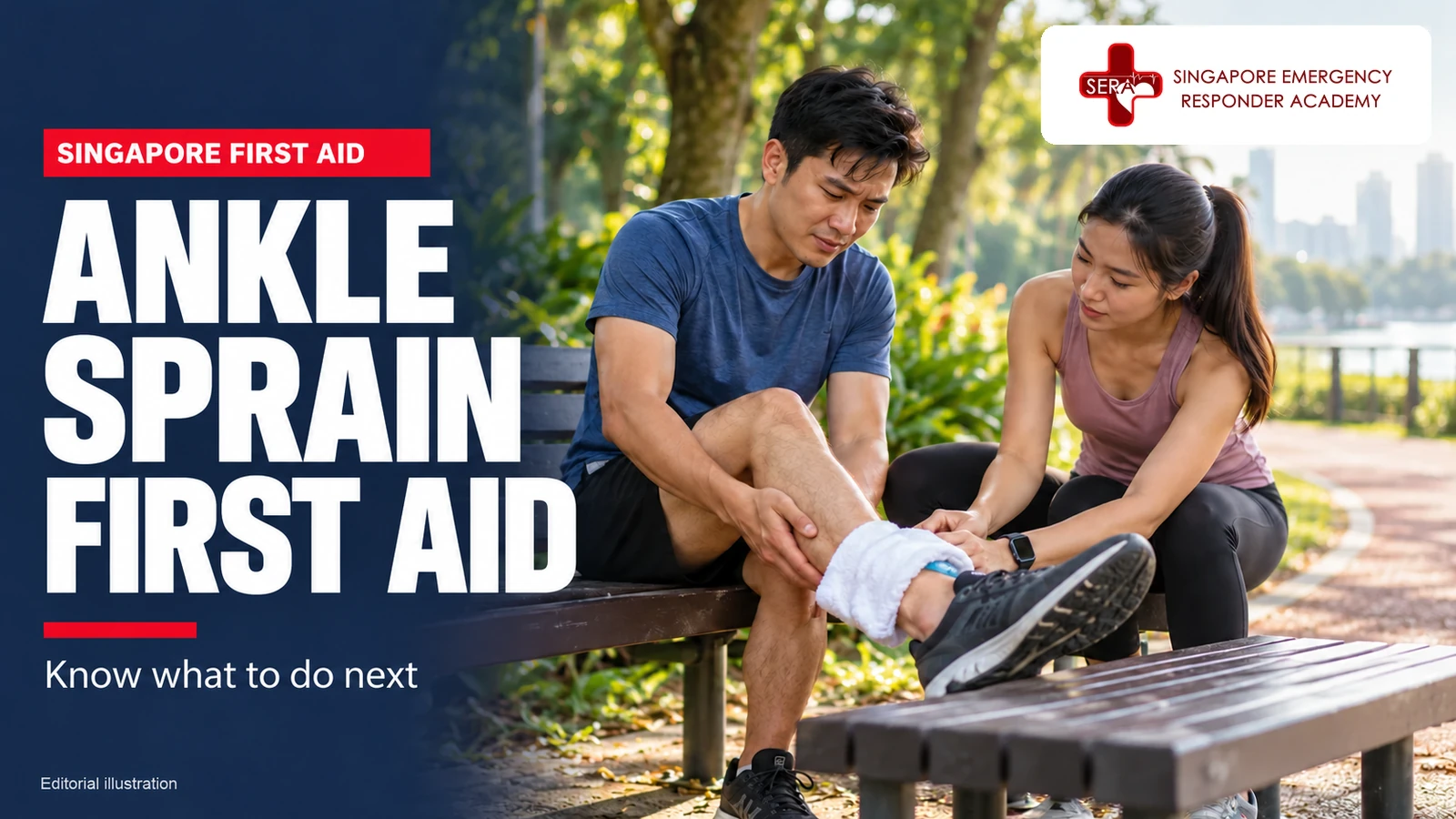
A twisted ankle can interrupt a run, sports session or ordinary walk. Learn the first steps for protecting an injured ankle, using ice and compression safely, recognising signs that need medical assessment, and planning recovery without rushing straight back into activity.
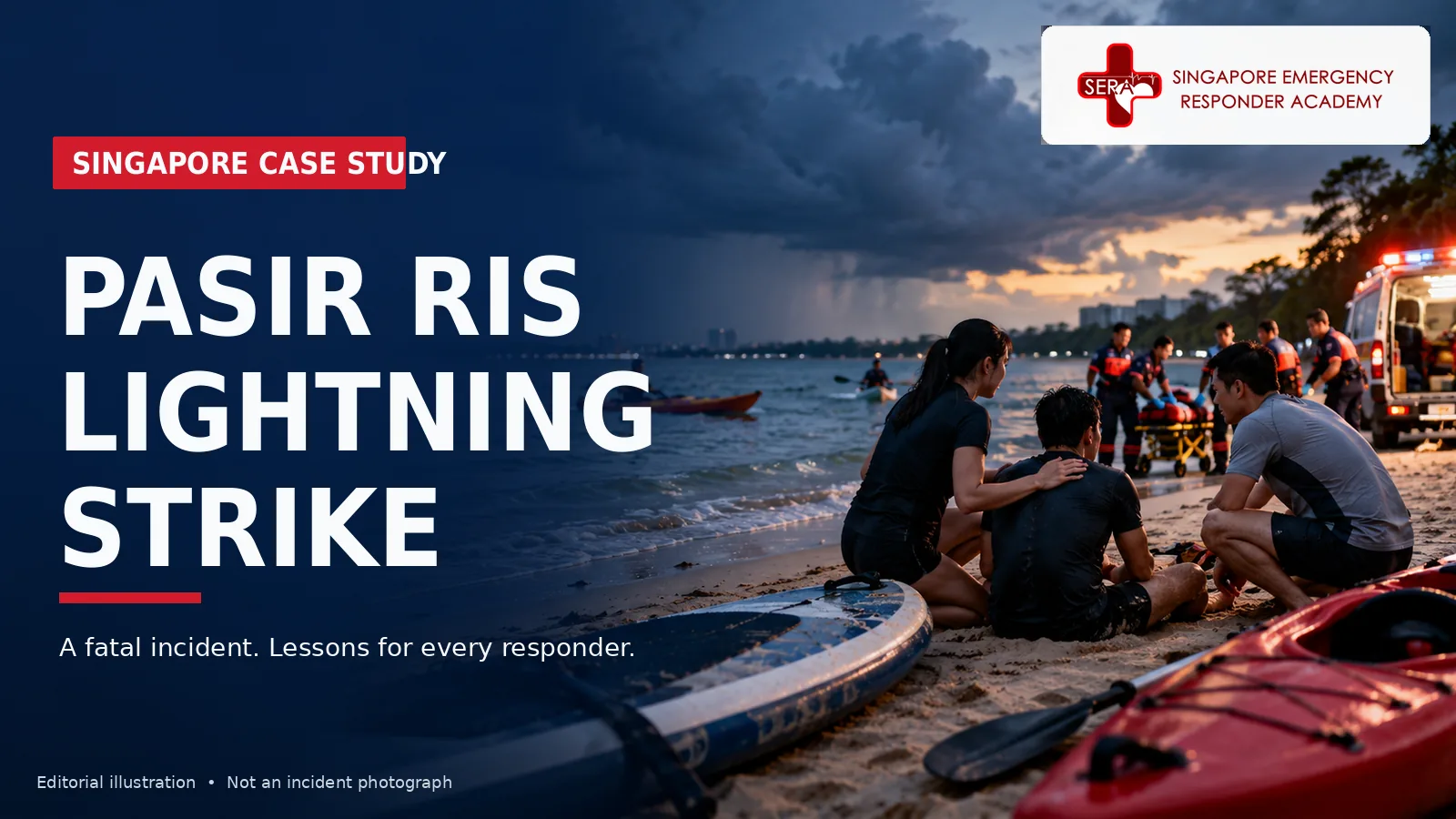
Pasir Ris Lightning Strike: What Singapore’s Fatal Beach Incident Teaches Us About First Aid and Storm Safety
Real-Life Emergency Response | Singapore Case Study
On 5 July 2026, a 24-year-old man was struck by lightning while paddleboarding in the waters off Pasir Ris Beach, Singapore. Bystanders helped bring affected individuals ashore and reportedly performed cardiopulmonary resuscitation (CPR) before emergency responders arrived. The man was conveyed to hospital unconscious and subsequently died.
The key takeaway:
Lightning can strike even when skies appear clear.
The Pasir Ris incident highlights why outdoor
activity organisers must monitor weather conditions,
why rescuers must consider their own safety,
and how early emergency activation and CPR
can support casualties before professional
help arrives.
The incident also demonstrates the importance of distinguishing between preventing an emergency and responding appropriately once one occurs.
1. What Happened at Pasir Ris Beach?
According to CNA’s report of the incident , police were alerted to an emergency near 131 Pasir Ris Road at approximately 4.50pm on 5 July 2026.
A group had been kayaking and stand-up paddleboarding offshore when a lightning strike occurred.
An eyewitness, Muhammad Fairuz, told reporters that he saw an unconscious man on a paddleboard.
Fairuz and another bystander reportedly used kayaks to bring people who remained offshore back to land.
According to witness accounts reported by Mothership , several members of the public then took turns performing CPR on the unconscious man while awaiting SCDF’s arrival.
The reported CPR attempts were based on eyewitness accounts. The publicly available official statements did not specify the resuscitation techniques used or whether an AED was deployed.
7 Hospitalised · 1 Fatality
SCDF conveyed seven individuals to hospital. Five, including the unconscious man, were taken to Sengkang General Hospital. Two children were taken to KK Women’s and Children’s Hospital. The 24-year-old man subsequently died.
The remaining six individuals, aged between 13 and 54, were conscious when conveyed to hospital.
On 7 July, Sengkang General Hospital confirmed that the four patients who arrived conscious had been discharged. The medical outcomes of the two children were not publicly disclosed.
2. Why Did Lightning Strike When the Skies Appeared Clear?
An important detail emerged when Singapore’s Meteorological Service (MSS) subsequently explained the weather conditions.
According to MSS information reported by CNA , the lightning strike originated from a thunderstorm cloud located several kilometres away.
The main thunderstorm was not directly over the beach when the incident occurred.
This is consistent with established meteorological guidance that lightning can travel beyond the main thunderstorm cloud, including into areas where rainfall is not occurring.
Important safety lesson:
Clear skies overhead do not guarantee
that an outdoor location is free
from lightning risk.
The Meteorological Service Singapore
recommends monitoring weather information
and lightning alerts through myENV.
3. Five First Aid and Emergency-Response Lessons
The following recommendations are general safety lessons based on authoritative guidance. They are not additional claims about the actions taken during the incident.
01
Stop Activities When Lightning Threatens
Check weather forecasts and lightning alerts before starting outdoor activities. If thunder is heard or lightning is observed, stop activities and seek appropriate shelter immediately. Do not remain in or near the sea, swimming pools or other exposed water bodies.
02
Prioritise Rescuer Safety
Before approaching a casualty, assess whether the scene remains hazardous. Water, exposed shorelines and open spaces are dangerous during thunderstorms. Do not enter the water or attempt an improvised rescue that could create additional casualties. Call 995 and seek appropriate professional rescue assistance.
03
Recognise Unresponsiveness and Abnormal Breathing
Once the casualty is in a safe location, check responsiveness and normal breathing. If the person is unresponsive and not breathing normally, activate 995 and begin CPR according to your training and the dispatcher’s instructions. Ask another person to retrieve an AED if available.
04
Know That Lightning Victims Are Safe to Touch
A person who has been struck by lightning does not retain an electrical charge. According to the US Centers for Disease Control and Prevention , it is safe to touch a lightning casualty and provide first aid. However, rescuers must first ensure that the surrounding environment is sufficiently safe.
05
Arrange Urgent Medical Assessment
Lightning injuries can affect the heart, nervous system and other organs. Even someone who appears conscious after a lightning strike may require urgent medical evaluation. Follow emergency dispatcher instructions and monitor the casualty until professional help arrives.
4. What Should You Do During a Lightning Emergency?
If someone is struck by lightning:
- Ensure the surrounding area is safe before approaching.
- Call 995 immediately.
- Check responsiveness and normal breathing.
- If unresponsive and not breathing normally, begin CPR and use an AED when available, following its prompts.
- Follow the emergency dispatcher’s instructions until SCDF arrives.
- Ensure other people move to appropriate shelter rather than remaining exposed.
The Meteorological Service Singapore’s lightning safety guidance also advises waiting at least 30 minutes after thunder is last heard before resuming outdoor activities.
5. What Can Outdoor Activity Organisers Learn?
The incident has important implications for sports coaches, instructors, water activity operators and organisations conducting outdoor events.
Emergency preparedness should include weather monitoring, clearly defined stop-activity procedures, access to safe shelter and arrangements for contacting emergency services.
Staff should understand their responsibilities during an emergency and receive suitable first aid training, including CPR and AED skills where appropriate.
A weather alert system is valuable, but it should complement on-site observation and sound safety decisions.
As this incident demonstrates, emergency readiness involves both preventing exposure to foreseeable hazards and knowing how to assist when an accident occurs.
Relevant SERA First Aid Training
CPR + AED
Learn to recognise cardiac arrest, perform adult CPR and use an automated external defibrillator through practical training.
Explore CPR + AED →Standard First Aid
Comprehensive first aid training covering common injuries, medical emergencies and CPR+AED. Suitable for sports coaches and individuals seeking broader first aid certification.
Explore Standard First Aid →Occupational First Aid
Workplace first aid training for appointed first aiders responsible for assisting casualties during emergencies.
Explore Occupational First Aid →Prepare Your Team to Respond When It Matters
The Pasir Ris incident is a reminder that emergencies can develop unexpectedly, even when conditions initially appear safe.
Singapore Emergency Responder Academy provides hands-on first aid and CPR+AED training for individuals, sports coaches, workplaces and organisations.
Request Corporate TrainingFrequently Asked Questions
1. When did the Pasir Ris lightning incident happen?
The incident occurred on 5 July 2026 in the waters off Pasir Ris Beach. Police were alerted at approximately 4.50pm.
2. How many people were taken to hospital?
Seven people were conveyed to hospital. One 24-year-old man subsequently died, while six others were conscious when transported.
3. Did bystanders perform CPR?
Yes, according to eyewitness accounts reported by local media. The official public statements did not specify the precise resuscitation techniques or whether an AED was used.
4. Can lightning strike when it is not raining?
Yes. Lightning can strike several kilometres away from the main thunderstorm cloud. Clear skies overhead do not guarantee safety.
5. Is it safe to touch someone struck by lightning?
Yes. Lightning casualties do not retain an electrical charge. However, assess the surrounding environment before providing assistance to avoid further lightning exposure.
6. How long should I wait before resuming outdoor activities?
Singapore’s Meteorological Service recommends waiting at least 30 minutes after the last thunder is heard.
7. Which SERA course is suitable for outdoor sports coaches?
SERA’s Standard First Aid course is recognised by SportSG and NROC and includes CPR+AED skills. Individuals seeking focused adult resuscitation training can consider CPR+AED.
Official Sources and Further Reading
- CNA — Man Dies Following Lightning Strike Near Pasir Ris Beach, July 2026
- CNA — Meteorological Service Singapore Explains Pasir Ris Lightning Incident, July 2026
- Mothership — Witness Accounts of Pasir Ris Beach Rescue
- The Straits Times — Hospital Updates Following Pasir Ris Lightning Strike, 7 July 2026
- Meteorological Service Singapore — Lightning Safety Guidance
- US CDC — Lightning Safety and First Aid Recommendations
- SCDF — CPR, AED and Community First Responder Guidance
This case study describes a verified incident from 5 July 2026. Witness accounts are identified separately from official statements. General safety recommendations are based on authoritative published guidance and do not replace professional emergency response instructions. The featured image is illustrative and does not depict the actual casualty, bystanders or emergency responders.

Related Posts