Severe bleeding can become life-threatening quickly. Learn how to recognise serious blood loss, control bleeding, identify signs of shock and respond safely while waiting for emergency medical assistance in Singapore.
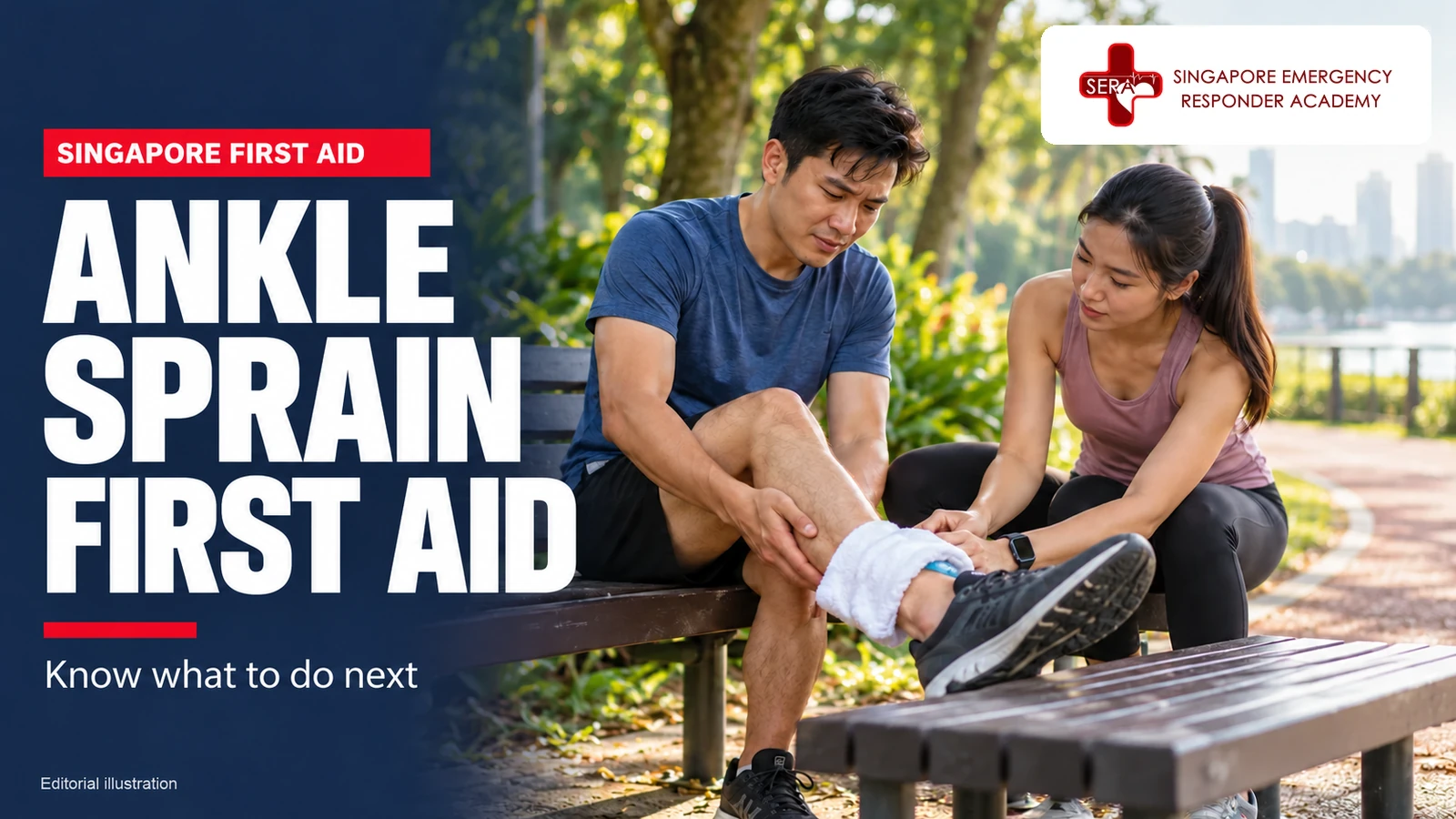
Ankle Sprain First Aid in Singapore: What to Do After a Twist
SERA • Everyday First Aid
Ankle Sprain First Aid in Singapore: What to Do After a Twist
An awkward landing, uneven pavement or quick change of direction can leave someone with a painful ankle. Ankle sprain first aid in Singapore begins with stopping activity, protecting the joint and recognising when the injury needs medical assessment.
1. Stop and protect the injured ankle
End the activity immediately. Help the person sit somewhere safe and avoid making them walk repeatedly to “test” the injury. Ask how the ankle twisted, where it hurts and whether they can put weight on it.
A sprain involves stretched or torn ligaments, which connect bones around a joint. SingHealth notes that a severe ankle sprain may occur alongside a fracture. First aid cannot establish the diagnosis, so avoid promising that swelling is harmless or that the person can finish the match.
2. Use a cold pack with a protective layer
For a suspected minor sprain, place an ice pack wrapped in a towel against the injured area for about 15–20 minutes. Never apply ice directly to the skin. HealthHub recommends cold compresses for bruises and sprains during the first 48–72 hours.
Check the skin and the person’s comfort during application. Do not leave a cold pack in place indefinitely or fall asleep with it attached. A simple timer helps a companion remember when to remove it while organising the next steps.
3. Apply gentle compression and support elevation
An elastic bandage can provide gentle support and help manage swelling. It should feel supportive without causing increasing pain, numbness or tingling. Loosen or remove it if these symptoms develop; do not tighten it further in an attempt to force swelling down.
When comfortable and practical, support the leg on pillows so the ankle is raised above heart level. Avoid forcing a painful joint into position. Rest, ice, compression and elevation are commonly described as RICE; adding protection gives the familiar PRICE approach.
4. Choose medical care based on the symptoms
A GP or polyclinic can assess a minor sprain. Seek prompt medical advice if pain or swelling is severe, the person cannot bear weight or move the joint, or symptoms are not improving after three days of home care.
A visibly crooked ankle, suspected fracture or dislocation, or signs of nerve injury such as numbness or weakness require emergency department assessment. A cold or unusually coloured foot is also concerning and needs urgent attention. Do not try to straighten an obviously deformed ankle.
When arranging care, explain the mechanism and whether symptoms are worsening. “Twisted on landing and could not walk afterwards” gives the clinician useful information. Do not delay assessment simply because an elastic bandage makes the injury look supported.
5. Plan recovery beyond the first cold pack
First aid manages the immediate situation; recovery may need a separate plan. Changi General Hospital’s guidance explains that rehabilitation can address strength, balance and joint function, helping reduce future sprains.
Follow the treating clinician’s advice about movement, support and return to exercise. Avoid using a fixed number of days as permission to restart sport. The demands of a desk job, warehouse shift and badminton game differ, so explain normal activities during the consultation.
For coaches and supervisors, prepare a practical response before an injury: identify a safe resting area, keep supplies accessible and agree how someone will accompany an injured participant. Record what happened and the care provided so the handover is clear.
Choose SERA training for your role
Standard First Aid
Explore adult first aid training for coaches, fitness instructors and people seeking broader practical skills.
View Standard First AidOccupational First Aid
Build workplace response skills through a syllabus including fractures and soft tissue injuries.
View Occupational First AidChild First Aid
Explore first aid training designed for people caring for children and infants.
View Child First AidTurn first aid knowledge into practice
Practise responding calmly and recognising your limits. Review SERA’s course information and choose training that matches the people you support.
Explore SERA trainingFrequently asked questions
Should I walk off a twisted ankle?
Stop the activity and protect the ankle. Do not force walking through pain or repeatedly test the joint.
Can I place ice directly on the ankle?
No. Wrap the cold pack in a towel to protect the skin and limit each application.
How tight should the bandage be?
It should provide gentle support without numbness, tingling or increased pain. Loosen or remove it if these occur.
Does being able to walk rule out a fracture?
No. Walking ability alone cannot establish the diagnosis. Seek assessment when symptoms or the injury mechanism cause concern.
When should I get a persistent sprain checked?
Seek medical advice if symptoms have not improved after three days of home care, or sooner if they worsen.
When can I return to sport?
Follow an individual recovery plan. Rehabilitation may include movement, strengthening and balance work before a gradual return.

Related Posts