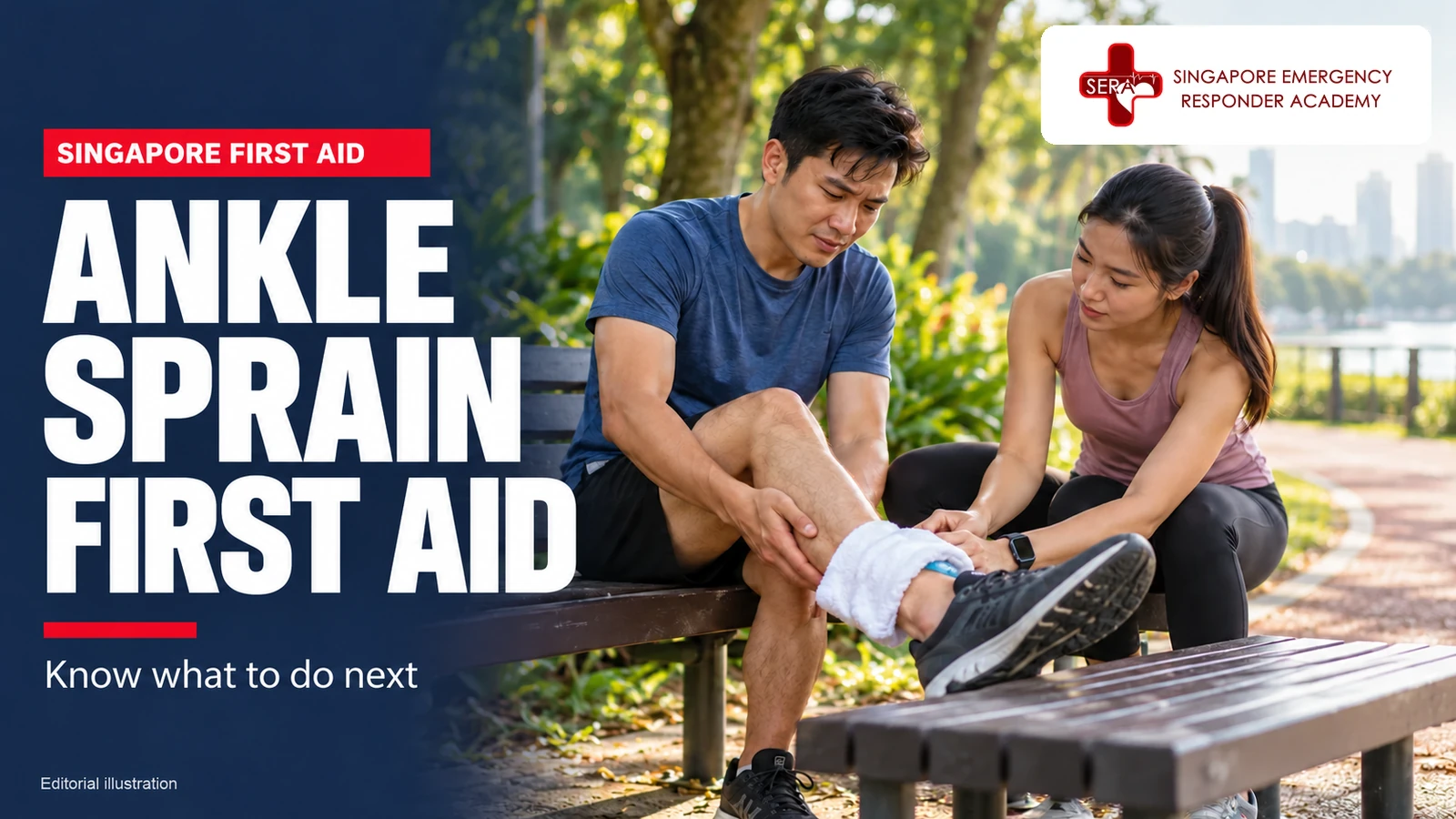
A twisted ankle can interrupt a run, sports session or ordinary walk. Learn the first steps for protecting an injured ankle, using ice and compression safely, recognising signs that need medical assessment, and planning recovery without rushing straight back into activity.
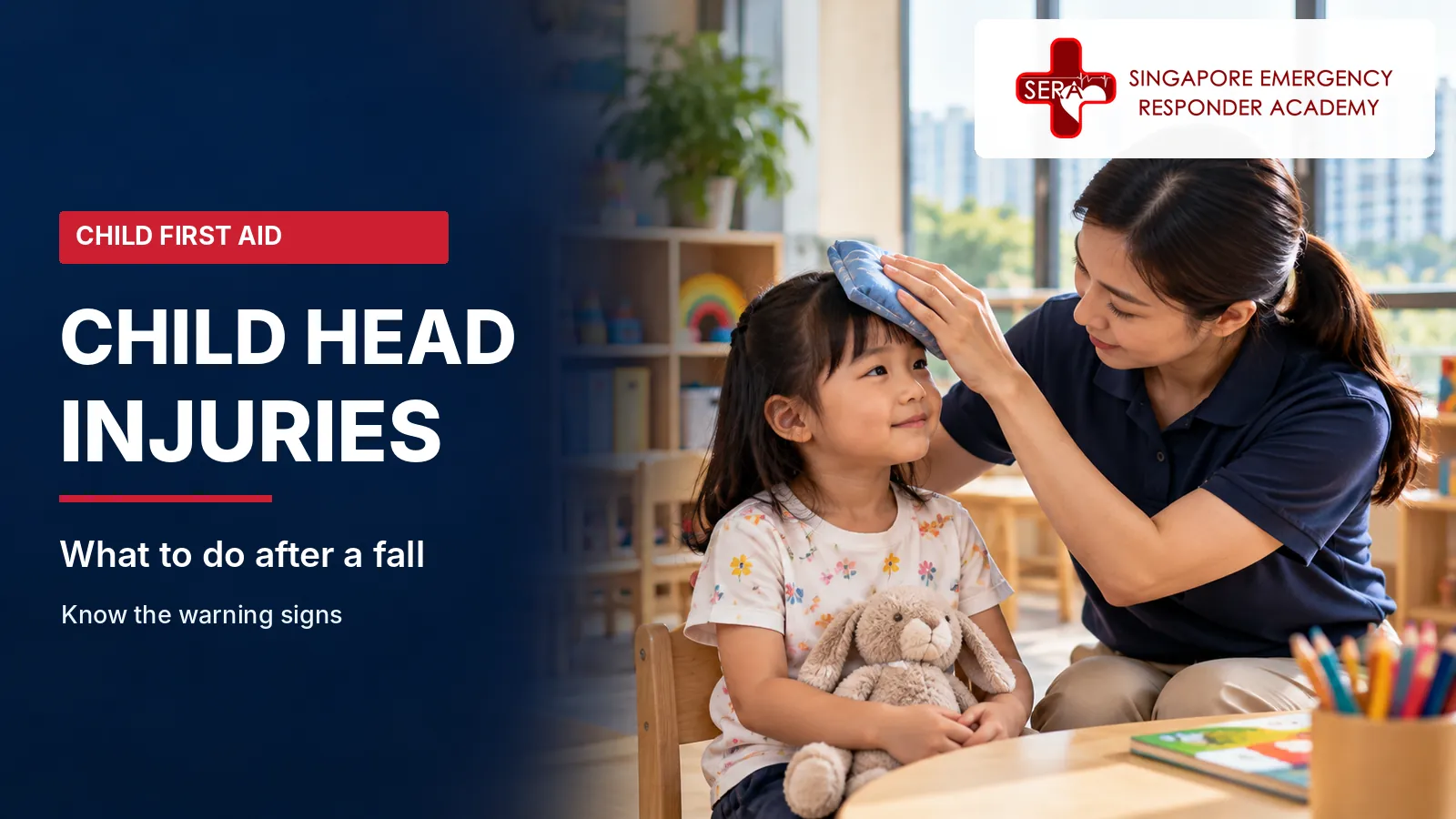
Child Head Injury First Aid in Singapore: What to Do After a Fall
Child First Aid | Singapore Parents & Caregivers
If your child falls and hits their head, stay calm, assess their condition and look for warning signs of serious injury. For a minor bump without concerning symptoms, a cold compress, rest and careful observation may be sufficient. However, certain symptoms require immediate medical attention, even if your child initially appears well.
Quick answer:
After a child hits their head, check
their responsiveness, breathing and
behaviour.
Apply a cold compress for a minor bump
if the child is otherwise well.
Seek emergency medical assessment for
loss of consciousness, repeated vomiting,
seizures, confusion, unusual drowsiness
or difficulty walking.
Head injuries are among the common injuries seen in children. According to KK Women’s and Children’s Hospital (KKH) , falls account for a substantial proportion of childhood injuries, particularly among younger children.
1. What Happens When a Child Hits Their Head?
A head injury can range from a minor scalp bruise to a more serious injury affecting the skull or brain.
A visible bump does not necessarily mean that the underlying injury is serious. However, the absence of a large bump does not rule out concussion or other internal injuries.
Concussion is a type of brain injury that may occur after a sudden impact or jolt to the head. Importantly, a child does not need to lose consciousness to have a concussion.
Parents and caregivers should therefore consider how the injury occurred, the child’s symptoms and whether their behaviour has changed.
2. What First Aid Should You Give After a Fall?
For a child who is awake and responsive, the following steps provide a practical starting point.
01
Check the Child’s Condition
Approach calmly and check whether the child responds normally. Look for breathing difficulties, unusual behaviour, bleeding or signs of significant injury. If the child is unconscious or has abnormal breathing, call 995 and follow the emergency dispatcher’s instructions.
02
Avoid Unnecessary Movement
If the fall was significant or a neck or spinal injury is suspected, avoid moving the child unnecessarily. Do not force the child to sit, stand or walk. Seek emergency assistance and follow the dispatcher’s guidance.
03
Apply a Cold Compress for Minor Bumps
If the child is alert and otherwise well, gently apply a cold compress or wrapped ice pack to the affected area. Do not place ice directly against the skin. Comfort the child and allow them to rest.
04
Observe for Changes
Monitor the child for headache, vomiting, dizziness, unusual sleepiness or behavioural changes. Symptoms may not appear immediately. Follow appropriate medical advice and seek reassessment if the child’s condition changes.
Monitor for 72 Hours
Singapore’s HealthHub recommends watching children closely for unusual symptoms or behaviour during the first 72 hours following a minor head injury.
3. When Should You Bring Your Child to Hospital?
According to HealthHub’s guidance on childhood head injuries and KKH’s head injury advice , certain symptoms may indicate a potentially serious injury.
Seek immediate emergency medical
assessment if your child:
- Becomes unconscious or unresponsive.
- Experiences seizures or abnormal movements.
- Has persistent or repeated vomiting.
- Develops a severe or worsening headache.
- Becomes confused, unusually drowsy or difficult to wake.
- Has difficulty walking or maintaining balance.
- Experiences blurred or double vision.
- Has blood or clear fluid coming from the ears or nose.
For life-threatening emergencies, including unconsciousness, seizures or breathing difficulties, call 995 immediately.
An infant under six months who falls from a height exceeding 90cm also requires emergency assessment, according to HealthHub.
4. Can a Child Sleep After Hitting Their Head?
A common concern is whether a child should be kept awake after a head injury.
Sleep itself is not necessarily dangerous following a minor head bump. However, unusual drowsiness, difficulty waking or changes in responsiveness are warning signs.
A responsible adult should continue monitoring the child and follow medical advice about observation during sleep.
KKH also advises against giving medication that causes drowsiness unless instructed by a doctor.
Remember:
A child appearing normal immediately
after a fall does not guarantee
that symptoms will not develop later.
Continue appropriate observation
and seek medical advice whenever
you are concerned.
5. What Should Preschools and Childcare Centres Do?
Falls can occur during playground activities, classroom transitions or ordinary play.
Childcare staff should have clear procedures for assessing injuries, contacting parents and escalating medical concerns.
Practical preparations include:
- Maintaining accessible first aid supplies.
- Knowing who the trained first aiders are.
- Recording the circumstances and time of an injury.
- Informing parents promptly.
- Monitoring children for changes in behaviour.
- Knowing when to activate emergency services.
Staff should never assume that a child is uninjured simply because they stop crying or resume playing.
6. How Can Parents Prevent Childhood Head Injuries?
Not every fall can be prevented, but practical safeguards can reduce the risk.
HealthHub and KKH recommend close supervision, appropriate safety barriers and helmets for activities such as cycling and skating.
For younger children, avoid leaving infants unattended on elevated surfaces. Ensure playground equipment is age-appropriate and supervise children during active play.
Relevant SERA First Aid Training
Child First Aid
SRFAC-accredited and ECDA-recognised training for individuals working with infants and children. Covers essential child first aid and emergency response competencies.
Explore Child First Aid →First Aid Essentials: Babies and Children
A practical four-hour awareness workshop for parents, grandparents and caregivers. Develop confidence in responding to common childhood emergencies.
Explore Workshop →School First Aid Talks
Customisable first aid awareness sessions for schools and organisations seeking practical emergency preparedness education.
Explore First Aid Talks →Be Prepared for Childhood Emergencies
From falls and head injuries to choking and medical emergencies, knowing how to respond can make a meaningful difference.
Singapore Emergency Responder Academy provides practical first aid training for parents, caregivers, preschool staff and organisations.
Request First Aid TrainingFrequently Asked Questions
1. What should I do immediately if my child hits their head?
Check their responsiveness, breathing and behaviour. For minor bumps without concerning symptoms, comfort the child, apply a cold compress and continue observation.
2. When should I bring my child to hospital after a fall?
Seek emergency medical assessment for loss of consciousness, repeated vomiting, seizures, confusion, unusual drowsiness, difficulty walking or other concerning symptoms.
3. How long should I monitor my child after a head injury?
HealthHub recommends watching for unusual symptoms or behaviour during the first 72 hours. Follow medical advice if your child has already been assessed.
4. Can my child sleep after hitting their head?
Sleep may be appropriate after a minor injury. However, unusual drowsiness or difficulty waking requires urgent medical assessment.
5. Can a child have a concussion without losing consciousness?
Yes. Concussion can occur without loss of consciousness. Symptoms may include headache, dizziness, confusion, nausea, balance difficulties or changes in behaviour.
6. Should I apply ice to a bump on my child’s head?
A cold compress or wrapped ice pack may help with minor swelling. Avoid placing ice directly against the skin.
7. Which SERA course is suitable for preschool teachers?
SERA’s SRFAC-accredited Child First Aid course is recognised by ECDA and is suitable for individuals requiring structured infant and child first aid competencies.
Official Sources and Further Reading
- HealthHub — Head Injuries in Children: First Aid and Warning Signs
- KK Women’s and Children’s Hospital — Head Injury (Child)
- KK Women’s and Children’s Hospital — Concussion
- HealthHub — Should I Take My Child to the Emergency Room?
- SCDF — Emergency Medical Services and When to Call 995
- SERA — Child First Aid Course
This article provides general first aid information based on published Singapore healthcare guidance. It does not replace medical assessment or professional advice. Parents and caregivers should seek medical attention whenever a child develops concerning symptoms following a head injury.

Related Posts