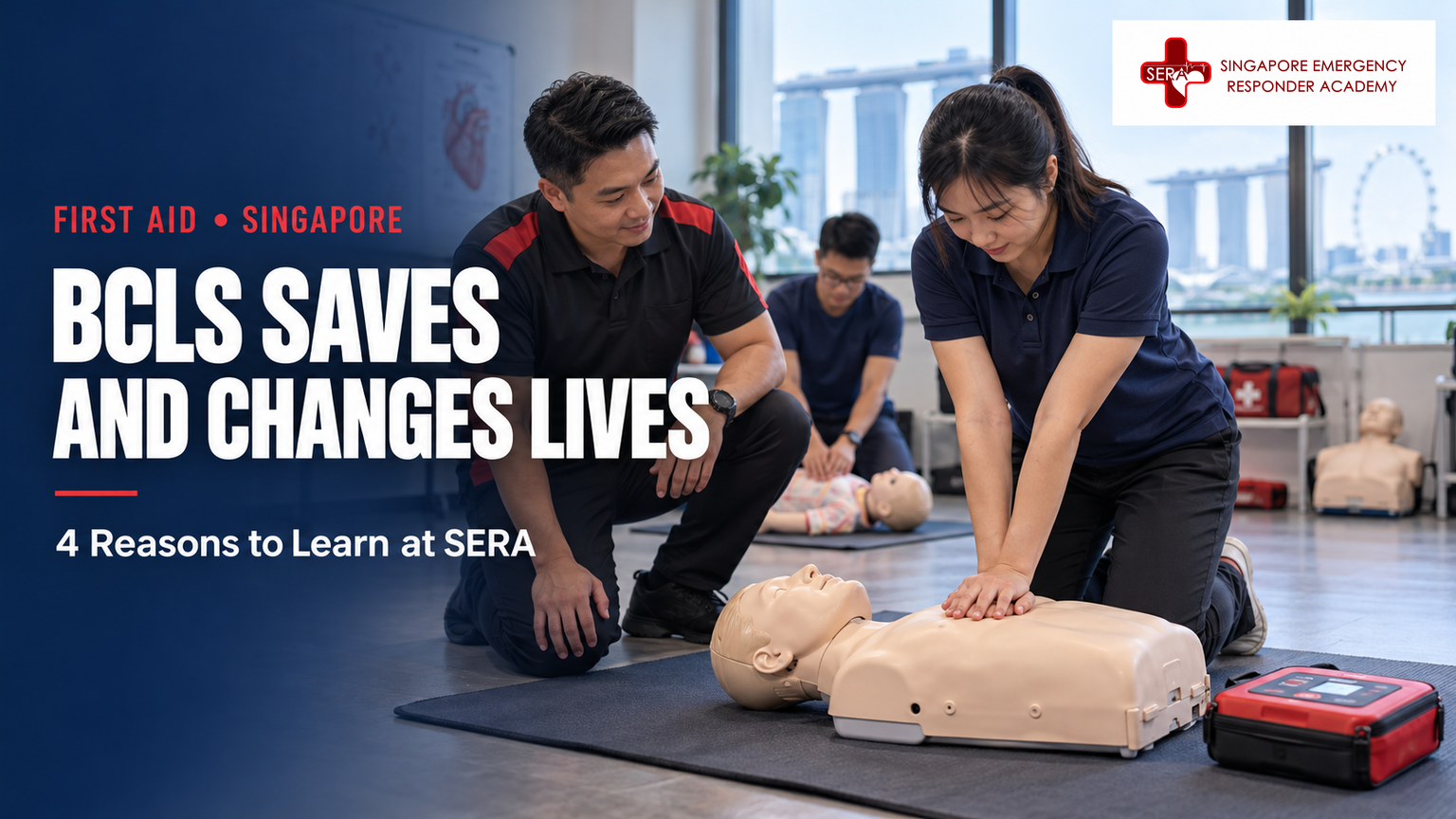
When someone suffers a cardiac arrest, every minute matters. Learn why immediate bystander CPR and AED use are critical, what to do if someone suddenly collapses, and how CPR training can help save lives in Singapore.

Severe Bleeding First Aid: What to Do Before an Ambulance Arrives in Singapore
FIRST AID ESSENTIALS · SEVERE BLEEDING · SINGAPORE
What should you do if someone is bleeding heavily? Whether it happens after a workplace accident, serious fall, road incident or injury involving machinery or broken glass, severe bleeding requires prompt action.
Significant blood loss can become a medical emergency. While professional medical assistance is essential, the people already at the scene may be in the best position to take immediate action while waiting for an ambulance.
The priority is straightforward: make the scene safe, call for emergency assistance when required, and control serious external bleeding using appropriate first aid techniques.
How Do You Know If Bleeding Is Serious?
Not every cut or wound is a medical emergency. Minor bleeding may stop with basic wound care and direct pressure.
Severe or uncontrolled bleeding, however, requires urgent attention.
Warning Signs of Serious Bleeding
- Blood is flowing continuously or rapidly from a wound.
- Bleeding does not stop despite firm, sustained pressure.
- The wound is large or deep.
- Blood rapidly soaks through dressings.
- The injury involves a partial or complete amputation.
- The casualty becomes pale, weak, dizzy, confused or increasingly drowsy.
Significant blood loss can lead to shock, where the body’s tissues and vital organs are no longer receiving adequate blood circulation.
When serious bleeding occurs, the priority is not to make a perfect diagnosis. It is to recognise the emergency, get help and control the bleeding.
Check That the Scene Is Safe
First aid begins with the safety of the responder, casualty and people nearby.
Before approaching an injured person, quickly identify hazards that could create additional casualties.
Depending on the environment, these may include:
- Moving vehicles
- Operating machinery
- Broken glass or sharp objects
- Electrical hazards
- Chemicals
- Fire or smoke
If available, use appropriate personal protective equipment such as disposable gloves when there is a risk of contact with blood or other body fluids.
A responder who becomes injured cannot effectively assist the casualty.
Call 995 for Life-Threatening Bleeding
If the bleeding is severe or the casualty appears seriously injured, activate emergency medical assistance promptly.
The Singapore Civil Defence Force (SCDF) operates the 995 Emergency Medical Services line for medical emergencies.
SCDF identifies excessive bleeding among the examples of emergencies requiring an Emergency Medical Service response.
Source: Singapore Civil Defence Force — Emergency Medical Services .
During a serious emergency:
If other people are present, delegate clearly. Ask one person to call 995 while another retrieves the first aid kit or other required equipment. This allows first aid to begin without unnecessary delay.
Apply Firm Direct Pressure to Serious External Bleeding
For significant external bleeding, controlling blood loss becomes an immediate priority.
Using appropriate first aid materials, apply firm, sustained direct pressure to the wound as taught during accredited first aid training.
Avoid repeatedly removing the dressing simply to check whether the bleeding has stopped, as disturbing the wound can interfere with clot formation.
If blood penetrates the dressing, continue managing the wound according to the first aid techniques in which you have been trained.
This is also why workplaces should ensure first aid kits are adequately stocked, clearly identified and readily accessible when an emergency occurs.
Watch for Signs of Shock
A casualty may initially appear alert after an injury and subsequently deteriorate as blood loss continues.
Possible warning signs of shock include:
- Pale, cool or clammy skin
- Weakness or dizziness
- Rapid breathing
- Increasing anxiety or restlessness
- Confusion
- Drowsiness or reduced responsiveness
Continue monitoring the casualty while waiting for professional medical assistance.
Important:
Do not give food or drink to a seriously injured or poorly responsive casualty. Continue monitoring their responsiveness and breathing until professional help arrives.
Know When a Bleeding Injury Needs Special Care
What if an object is embedded in the wound?
An embedded object creates a different first aid situation. Do not casually pull out an object that has penetrated deeply into the body, as removing it may worsen bleeding or cause further tissue damage.
Obtain emergency medical assistance and manage the injury according to the techniques taught during accredited first aid training.
What about amputation or crush injuries?
Serious injuries involving amputation, crushing forces or major trauma require urgent professional medical attention.
The casualty may also have injuries that are not immediately visible, so continued monitoring is essential.
Can Someone Be Bleeding Internally Without an Obvious Wound?
Yes. Not all dangerous bleeding is visible.
Significant trauma can result in internal bleeding even when there is little or no obvious external blood loss.
Warning signs following significant trauma may include:
- Increasing abdominal pain or swelling
- Dizziness or faintness
- Pale or clammy skin
- Unexplained weakness
- Confusion
- Reduced responsiveness
A casualty involved in significant trauma may therefore require urgent medical assessment even when there appears to be surprisingly little visible bleeding.
Why First Aid Preparedness Matters in Singapore
Professional emergency responders play an essential role, but medical emergencies occur long before an ambulance reaches the casualty.
257,158
Emergency Medical Services calls attended by SCDF in 2025
That is an average of approximately 705 EMS calls every day, according to SCDF’s 2025 Emergency Medical Services, Fire and Enforcement Statistics.
Source: SCDF — Emergency Medical Services, Fire and Enforcement Statistics 2025 .
For serious bleeding, the people already at the scene may therefore have an important role during the period before professional responders arrive.
What Should Singapore Workplaces Have in Place?
Bleeding emergencies can happen in offices, warehouses, workshops, kitchens, construction sites, schools, sports facilities and many other environments.
Workplace First Aid Readiness Checklist
- Accessible and regularly checked first aid kits
- An appropriate number of trained first aiders
- Clear procedures for activating emergency medical assistance
- Emergency contact and site-access arrangements
- First aid provisions suited to the workplace’s actual hazards
- Employees who know where emergency equipment is located
- Regular refresher training and emergency exercises where appropriate
Higher-risk workplaces should ensure their first aid arrangements reflect the injuries that could realistically occur during their operations rather than relying solely on a generic emergency plan.
Why Hands-On First Aid Training Matters
Reading about bleeding control can help someone understand the basic principles, but it cannot fully replicate practical training.
During hands-on first aid training, participants learn how to assess a casualty, use first aid equipment, manage wounds and bleeding, recognise deterioration and determine when an incident requires escalation.
Just as importantly, practical exercises allow participants to perform these actions in sequence rather than trying to remember isolated instructions during a real emergency.
Choose the Right SERA First Aid Course
The appropriate first aid programme depends on your role and the environment in which you may be expected to respond.
Standard First Aid
Develop practical skills for casualty assessment, injuries and common medical emergencies.
Occupational First Aid
For appointed workplace first aiders managing occupational injuries and medical emergencies.
BCLS + AED
Develop practical CPR, choking management and AED skills for life-threatening emergencies.
Build the Skills Before You Need Them
When someone is seriously bleeding, there may be little time to search online for instructions or decide who should take charge.
Training helps responders recognise the emergency, follow a structured casualty assessment and take appropriate action while professional medical assistance is on the way.
Emergency preparedness starts before the emergency happens.
Explore SERA’s First Aid Training Courses →Frequently Asked Questions About Severe Bleeding First Aid
What should I do first if someone is bleeding heavily?
First ensure that the scene is safe. For life-threatening or uncontrolled bleeding, obtain emergency medical assistance and apply firm, sustained direct pressure to the wound using appropriate first aid materials and techniques.
When should I call 995 for bleeding?
Call 995 when bleeding is severe or uncontrolled, when the casualty has sustained significant trauma, or when their condition appears life-threatening. SCDF lists excessive bleeding among the medical emergencies requiring emergency ambulance assistance.
Should I remove a dressing to check whether bleeding has stopped?
Avoid repeatedly removing a dressing simply to inspect the wound, as this can interfere with clot formation. Continue controlling the bleeding according to the first aid techniques in which you have been trained.
Should I remove an object embedded in a wound?
Do not casually remove a deeply embedded object. Removing it may worsen bleeding or cause additional injury. Seek emergency medical assistance and manage the casualty according to appropriate first aid procedures.
What are the signs of shock after severe bleeding?
Possible signs include pale or clammy skin, weakness, dizziness, rapid breathing, restlessness, confusion, drowsiness and reduced responsiveness. A casualty who is deteriorating after significant blood loss requires urgent medical attention.
Which SERA course teaches first aid for bleeding and injuries?
SERA’s Standard First Aid course covers practical first aid skills for casualties and injuries. Appointed workplace first aiders can consider Occupational First Aid.

Related Posts