Singapore's Haze Subsidy Scheme begins on 12 October 2026 as worsening air quality raises health concerns. Find out which Singaporeans qualify for subsidised treatment, how much patients pay, which conditions are covered, and when to visit a participating GP clinic, polyclinic or emergency department.

Marina One Gym Collapse: CPR, AED and Teamwork Lessons
Singapore case study • CPR and AED • Gym readiness
The Marina One gym collapse shows why recognising cardiac arrest, sharing responsibilities and getting an AED to the casualty belong in every fitness facility’s emergency plan.
The immediate response: If an adult collapses, check that it is safe to approach. If they are unresponsive and not breathing normally, call 995, start CPR and get an AED. Follow the dispatcher’s instructions and the device’s prompts.
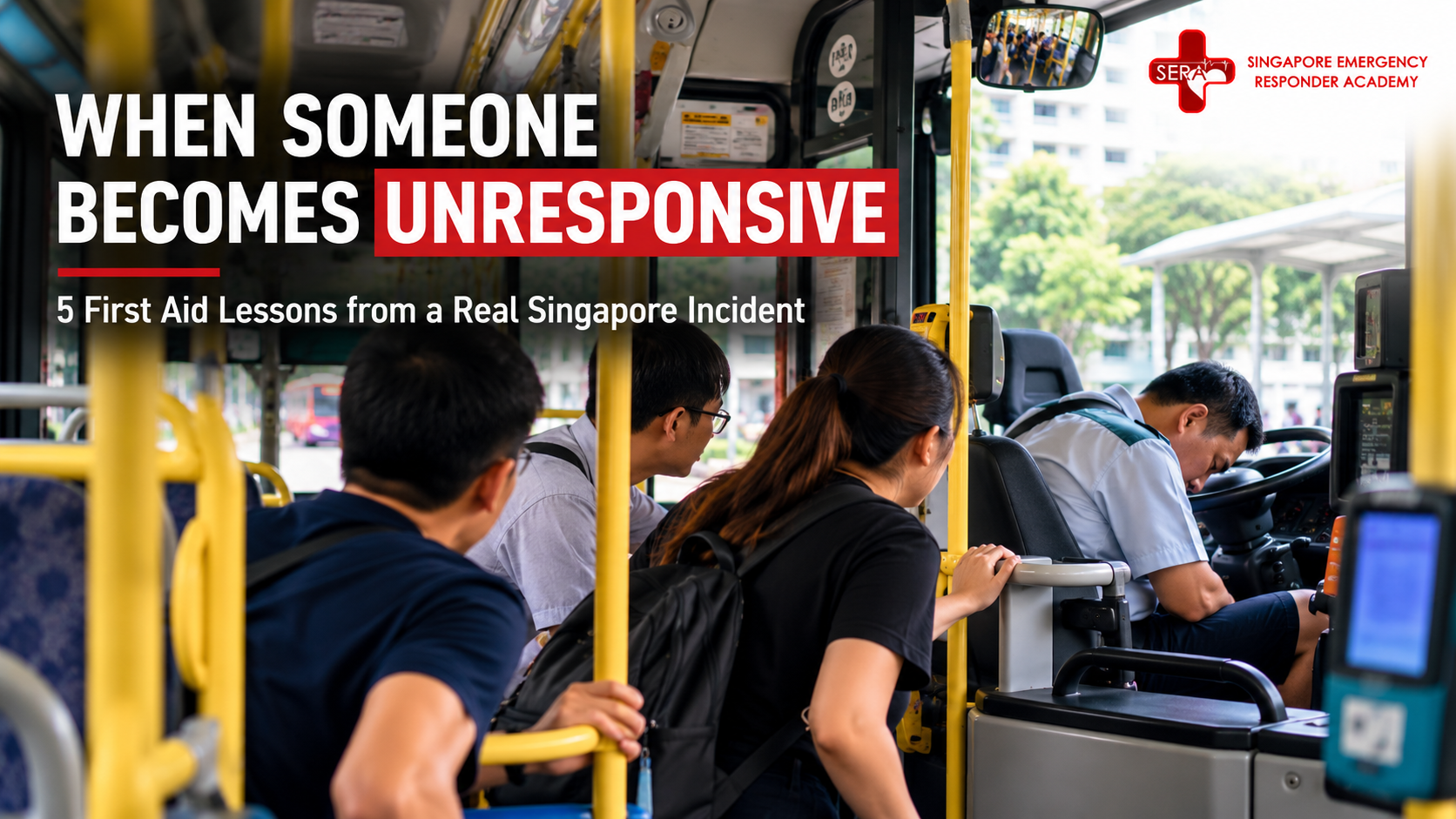
This article separates the reported incident from general first aid lessons. The featured image is illustrative; it does not depict the actual casualty or responders.
What happened at Marina One?
On 14 May 2026, at around 8pm, a man collapsed at Virgin Active’s Marina One gym. In its 26 May report based on an interview with the responding doctor, Mediacorp’s 8world described how Khoo Teck Puat Hospital doctor Tan Tuan Hao began CPR and requested an AED.
An NS medic subsequently took over compressions while Dr Tan prepared the device. The report states that an AED shock was delivered and the man regained consciousness. SCDF confirmed receiving a call from 7 Straits View at about 8.25pm and conveying one person to Singapore General Hospital.
Verified fact: CPR and AED use were reported
NHG Health’s 23 May summary also records Dr Tan’s assessment, CPR and AED use, and restoration of the man’s heartbeat before the ambulance arrived.
The doctor told 8world that the man was stable and still receiving hospital treatment at the time of reporting. These accounts do not establish his eventual discharge, neurological recovery, underlying diagnosis or the precise collapse-to-shock interval. Regaining consciousness is encouraging, but it does not remove the need for emergency care.
Five practical lessons for a gym emergency
The following recommendations draw on Singapore guidance. They should not be read as additional actions confirmed in this incident.
-
Recognise abnormal breathing promptly
Do not assume an unresponsive person is simply exhausted after exercise. Check responsiveness and normal breathing promptly; gasping is not normal breathing. Lay rescuers should not delay CPR while searching for a pulse. The 2026 Singapore BCLS and AED guidelines distinguish lay recognition from healthcare providers’ pulse assessment.
-
Assign clear jobs
Point to specific people: one calls 995, another retrieves the AED, and another meets the ambulance crew. Give the caller the building name, street address, floor and access route. SCDF’s 2026 Emergency Handbook advises calling 995 and appointing someone to retrieve an AED; its operations specialists can provide telephone CPR instructions.
-
Share compressions while protecting quality
Adult compressions should target the lower half of the breastbone, at 100–120 per minute and 4–6cm deep, with full chest recoil. Keep interruptions brief. When another capable rescuer is available, coordinate a changeover as fatigue develops. The reported handover to the medic illustrates why a response should not depend on one person’s stamina.
-
Let the AED guide the next action
Turn it on, expose and dry the chest, and apply pads as illustrated. Keep everyone clear during analysis and shock delivery. Resume CPR when prompted. A “no shock advised” message does not, by itself, mean recovery. These principles are set out in SRFAC’s publicly linked CPR and AED protocol; follow current training and dispatcher instructions.
-
Continue care through the handover
If the casualty wakes or resumes normal breathing, stop compressions and monitor closely. Leave the AED attached and switched on until the emergency team directs otherwise. Tell paramedics what you observed and what was done. Keep access clear, protect privacy and avoid giving food or drink.
A readiness checklist for fitness facilities
- Keep the AED visible, accessible and maintained according to its manufacturer’s instructions.
- Ensure staff know its location and can retrieve it during every operating shift.
- Practise calling 995, guiding responders through building access and sharing roles.
- Use short scenario drills to rehearse a collapse during a busy class.
These are preparedness recommendations, not findings about this gym’s compliance. SCDF’s myResponder app can also help users locate nearby AEDs.
Build the skills before an emergency
For background, read SERA’s Out of Hospital Cardiac Arrest explainer. This case adds a specific lesson: a coordinated team can support CPR and AED preparation together.
CPR + AED
Practise adult hands-only CPR and AED use for everyday emergencies.
Standard First Aid
Build broader first aid skills, including CPR and AED use, relevant to sports coaches and fitness instructors.
BCLS + AED
Develop basic cardiac life support skills, including ventilation and airway-obstruction response.
Prepare your team to respond
Hands-on practice helps people recognise an emergency, act confidently and work together when someone collapses.
Explore CPR + AED trainingFrequently asked questions
When did the Marina One gym collapse happen?
It occurred on 14 May 2026 at around 8pm. SCDF reported receiving the emergency call at about 8.25pm.
Was an AED shock confirmed?
Yes. 8world’s interview-based report states that a shock was delivered. NHG Health separately confirms CPR and AED use.
Should a bystander check for a pulse?
Lay rescuers should focus on responsiveness and normal breathing, call 995 and follow instructions. Pulse checks are part of healthcare-provider assessment.
Can I help without mouth-to-mouth breathing?
Yes. Hands-only CPR is an option for an adult cardiac arrest. Follow the 995 dispatcher’s instructions and use an AED when available.
Does waking up mean the casualty is safe?
No. Continue monitoring, leave the AED attached and await emergency care. Cardiac arrest requires hospital assessment even after apparent recovery.
Was the man’s full recovery confirmed?
The cited reports describe regained consciousness and ongoing hospital treatment. They do not establish his long-term outcome.
Sources checked on 11 October 2026. Case facts reflect the dated reports linked above; response lessons reference Singapore guidance available at review.

Related Posts