Four recommended heat-stress measures become mandatory for outdoor work from 1 December 2026. Understand what MOM’s announcement means, which safeguards already apply and how to prepare training, water supplies, cooling equipment and a practical emergency response before the changes take effect.
Seizure First Aid in Singapore: What to Do and When to Call 995
First aid essentials · Seizure response · Singapore
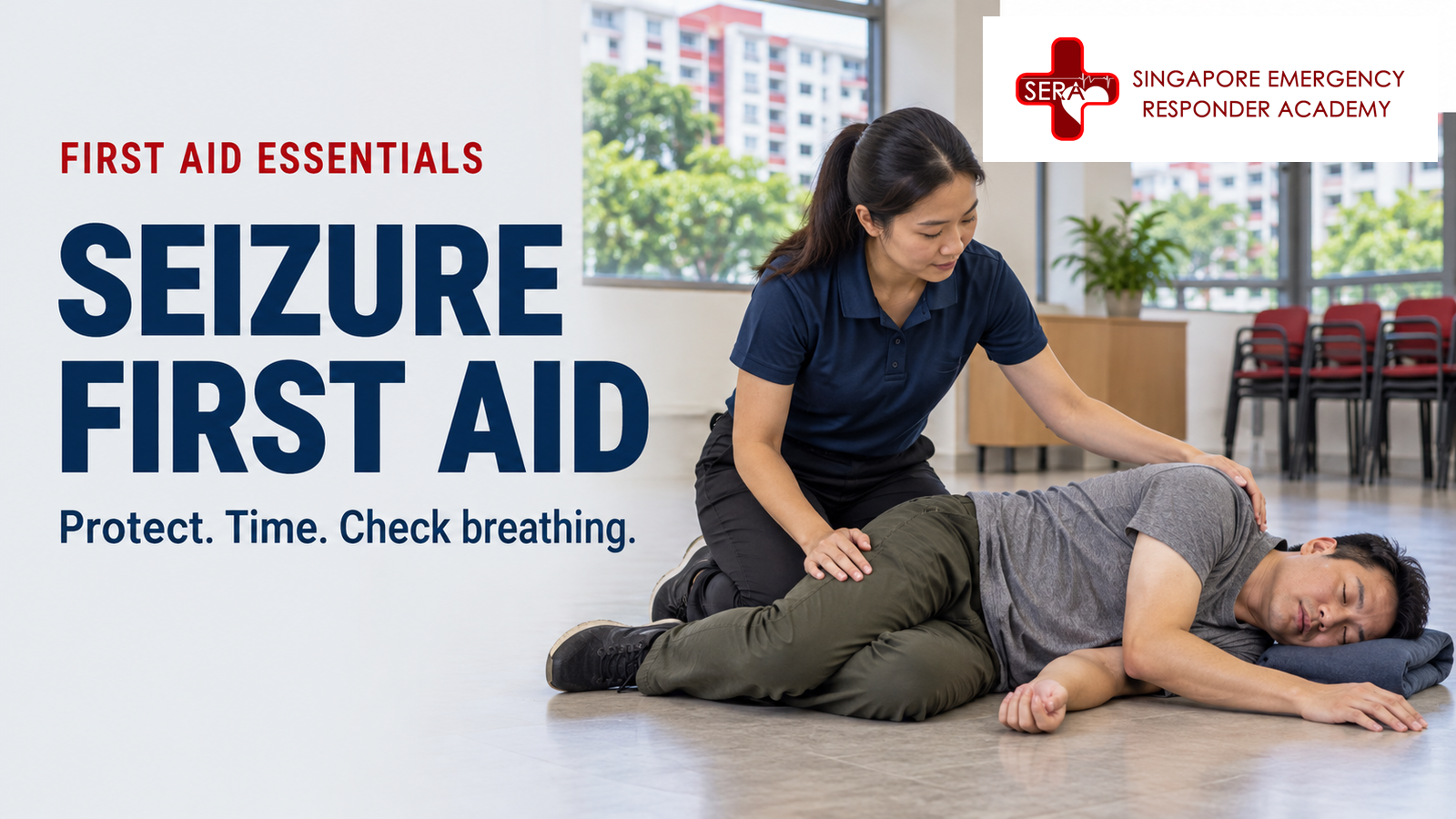
If someone has a seizure, protect them from injury, note the time and check their breathing. Do not hold them down or put anything in their mouth. Call 995 when emergency help is needed.
A seizure can happen at home, in an office or during a community activity. Bystanders do not need to diagnose its cause. Their immediate job is to make the surroundings safer, observe what happens and recognise deterioration.
The key takeaway: helping calmly includes knowing what to avoid and what to do after the movements stop.
What does a seizure look like?
Some seizures involve collapse, stiffening and rhythmic jerking. Others may appear as staring, unusual behaviour or reduced awareness. A seizure does not automatically mean that someone has epilepsy.
The National Neuroscience Institute’s HealthHub guide explains different seizure presentations. For a bystander, describing the event clearly is more useful than trying to name the seizure type.
Make the area safe and give the person space
Look for nearby hazards before approaching. Move chairs, sharp objects and other obstacles away. Ask people to step back, and protect the person’s privacy instead of allowing a crowd to gather.
If they are falling, help them towards the ground when you can do so safely. Avoid dragging them unnecessarily. Delegate simple tasks: one person can watch the time while another makes an emergency call.
In a workplace, somebody should also arrange access for responders. Knowing the building entrance, floor and unit can prevent confusion when help arrives.
Protect them without restraining their movements
The Singapore First Aid Guidelines 2026 identify airway protection and injury prevention as priorities. They recommend clearing the surroundings, helping the casualty to the ground and positioning them on their left side.
Help with positioning gently when safely possible; do not wrestle with forceful movements. For children, HealthHub’s parent guidance advises turning them onto their side once movements stop.
Keep the mouth clear. Do not insert fingers, a spoon or any other object. Do not force drinks, food or tablets into the mouth during a seizure or while the person cannot swallow safely.
Time the seizure and recognise when to call 995
Use a phone or watch to record when the movements begin and end. If you arrived partway through, say that the starting time is unknown.
More than 5 minutes
SRFAC’s 2026 guidelines identify a seizure lasting longer than five minutes as a medical emergency requiring urgent treatment. Source: Singapore First Aid Guidelines 2026.
Do not wait for a time threshold if there are other serious concerns. Call 995 for difficulty breathing, repeated seizures without recovery, significant injury or a first known seizure. The CDC’s seizure first aid guidance also identifies seizures in water, pregnancy and diabetes as reasons to seek emergency assistance.
Give the dispatcher your location, the person’s condition and the seizure duration. Follow instructions and keep the phone available.
Check responsiveness and normal breathing
When the movements stop, immediately check whether the person responds and breathes normally. Brief seizure-like movements can occur at the start of cardiac arrest.
According to the Singapore BCLS and AED Guidelines 2026, an unresponsive person who is not breathing normally needs immediate resuscitation. Call 995, begin CPR and get an AED, following your training and dispatcher instructions. Gasping is not normal breathing.
If they remain unresponsive but breathe normally, maintain a safe side position and keep monitoring. Do not assume that stillness means the emergency is over.
How should you help during recovery?
Stay nearby, speak calmly and explain what happened. The person may be confused or tired. Avoid rushing them to stand or answering questions on their behalf when they can speak for themselves.
Prepare a factual handover: observed movements, duration, breathing changes, injuries and whether they regained awareness between episodes. Share any known care plan with responders. Do not improvise medication treatment.
A simple preparedness checklist
- Know the address and access route for your home or workplace.
- Identify colleagues who have current first aid training.
- Discuss an agreed emergency plan with a family member who has epilepsy.
- Practise allocating tasks without crowding the casualty.
Practise the decisions before an emergency
Reading a guide helps with recognition; hands-on practice helps with positioning, breathing checks and teamwork. SERA’s Saving a Life with CPR and AED Skills article offers a related perspective on preparing to respond.
Standard First AidExplore practical first aid training for everyday emergencies.
Child First AidBuild emergency-response skills relevant to children and caregivers.
BCLS + AEDPractise resuscitation, AED use and casualty assessment.
Be ready to protect, observe and respond
Build confidence in the practical skills that support a calm first aid response.
View course dates and registration →Frequently asked questions
Should I hold someone down during a seizure?
No. Clear nearby hazards and protect them without restraining their movements.
Should I put a spoon in their mouth?
No. Objects in the mouth can cause injury and obstruct the airway.
When is seizure duration an emergency concern?
A seizure lasting longer than five minutes requires urgent medical treatment. Call 995 earlier if other serious concerns are present.
Should I start CPR after every seizure?
No. Start CPR when the person is unresponsive and not breathing normally, following dispatcher instructions.
Can I give water immediately afterwards?
Wait until the person is fully alert and can swallow safely. Never force them to drink.
Guidance checked on 10 October 2026. Educational content supports, and does not replace, practical first aid training.

Related Posts