Four recommended heat-stress measures become mandatory for outdoor work from 1 December 2026. Understand what MOM’s announcement means, which safeguards already apply and how to prepare training, water supplies, cooling equipment and a practical emergency response before the changes take effect.
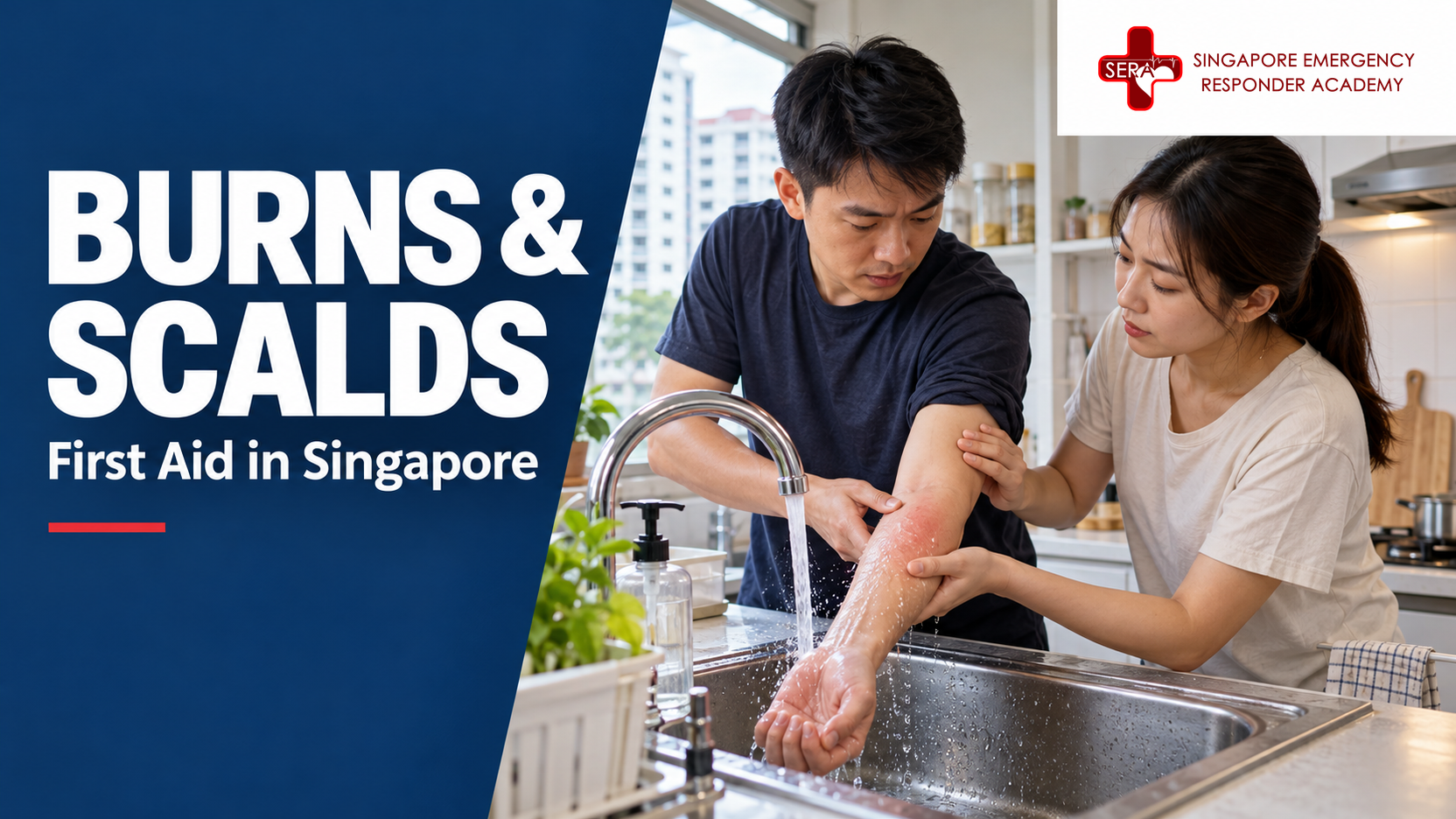
Burn and Scald First Aid in Singapore: What to Do Immediately
SERA First Aid Essentials · Singapore
For a heat burn or scald, make the scene safe, start cooling with running water, remove loose items before swelling develops, and cover the injury. Serious burns need urgent medical help.
A kettle, soup bowl or hot pan can turn an ordinary kitchen moment into an emergency. At work, steam and heated equipment create similar risks. Burn first aid in Singapore starts with a calm sequence: stop the exposure, cool, protect and assess.
This guide focuses on immediate assistance before medical assessment. Chemical and electrical injuries require additional precautions.
Is it a burn or a scald?
A scald comes from wet heat, including hot liquids or steam. Burns can result from dry heat, electricity or chemicals. The name matters less than the cause, location and extent of the injury when deciding what help is needed. See HealthHub’s burns and scalds guidance.
Four steps for immediate burn first aid
- Stop the exposure safely. Move away from the hot liquid or surface. Do not enter a hazardous area to help. Ask someone to clear the route to a tap and keep other people away from the spill.
- Cool promptly. Use cool running water. SRFAC’s published first aid syllabus recommends cooling thermal burns as soon as possible for at least 10 minutes. Start immediately rather than searching for a product.
- Remove constricting items. Gently remove rings, watches and loose clothing near the injury before swelling develops. Leave anything stuck to the skin in place.
- Cover and seek advice. After cooling, loosely protect the injury with a sterile dressing. Avoid cotton wool. Consult a doctor for less serious injuries; call 995 for severe burns, following SCDF’s emergency handbook.
Verified fact: cooling guidance differs
SCDF and SRFAC specify at least 10 minutes. HealthHub’s child-focused guidance specifies 20 minutes. For a child’s heat burn, follow that 20-minute guidance while arranging appropriate care. Cooling must not delay an emergency call.
When should you call 995?
Call 995 for a severe burn or breathing difficulty. SCDF identifies burns involving more than 5% of the body surface, or affecting the mouth, throat, eyes, ears or genitals, as severe. Do not wait to calculate a percentage if the person appears seriously unwell.
Children need particular caution. HealthHub advises emergency assessment for electrical or chemical burns, white or charred skin, suspected smoke inhalation, and burns larger than the affected child’s hand. A person who initially looks well after smoke exposure may still need urgent assessment.
Pain does not measure severity
A deep burn may cause surprisingly little pain. Do not judge the injury only by whether the person can tolerate it, or reassure them solely because the skin injury looks small.
Avoid remedies that complicate treatment
Do not apply toothpaste, grease, lotions or ointments during immediate first aid, and do not burst blisters or peel away stuck material. These precautions are set out in SCDF’s handbook. HealthHub also advises against ice and sticky or fluffy dressings.
Prepare your home and workplace
Walk through a simple practice scenario: someone spills hot tea, one helper guides them to water, another clears the hazard, and a third makes the emergency call if needed. Agree who will meet the ambulance and give the address.
For families, HealthHub recommends keeping a first aid kit and sharing safety actions with caregivers. Make sure everyone knows where supplies are stored; preparation should include grandparents and domestic helpers.
At workplaces using toxic or corrosive chemicals, MOM requires nearby eyewash or water facilities for quick flushing. Know the emergency plan and relevant safety data sheet before an incident occurs.
After assessment, follow the clinician’s dressing instructions. Seek further care for spreading redness, worsening pain, pus or fever, as explained in HealthHub’s wound care guidance.
Build practical first aid confidence
Choose training that fits your responsibilities. Practising with an instructor helps turn a remembered sequence into an organised response.
Standard First AidExplore broader first aid training, including burn injuries.
Occupational First AidDevelop skills for appointed workplace first aiders.
First Aid Essentials: Babies and ChildrenExplore practical learning for parents and caregivers.
Continue learning with SERA’s choking signs guide and introduction to out-of-hospital cardiac arrest.
Be ready when everyday accidents happen
Bring your household or team’s questions to practical first aid training. Learn how to assess a situation, organise help and respond with confidence.
Explore SERA First Aid TrainingFrequently asked questions
What should I do first?
Make the scene safe and stop contact with the heat source.
How long should I cool a burn?
SRFAC says at least 10 minutes; HealthHub specifies 20 minutes for children.
Should I use ice?
No. Use cool running water.
Can I remove stuck clothing?
No. Leave material attached to the skin in place.
When should I call 995?
For severe burns or breathing difficulty.
Can a painless burn be serious?
Yes. Little pain does not rule out a deep injury.
Sources: SRFAC, SCDF, HealthHub and MOM, linked beside the relevant guidance. Educational information; medical assessment determines treatment.

Related Posts