
Choking can become life-threatening when the airway is completely blocked. Learn how to recognise complete airway obstruction and what to do if an adult, child or infant is unable to speak, breathe or cough effectively.
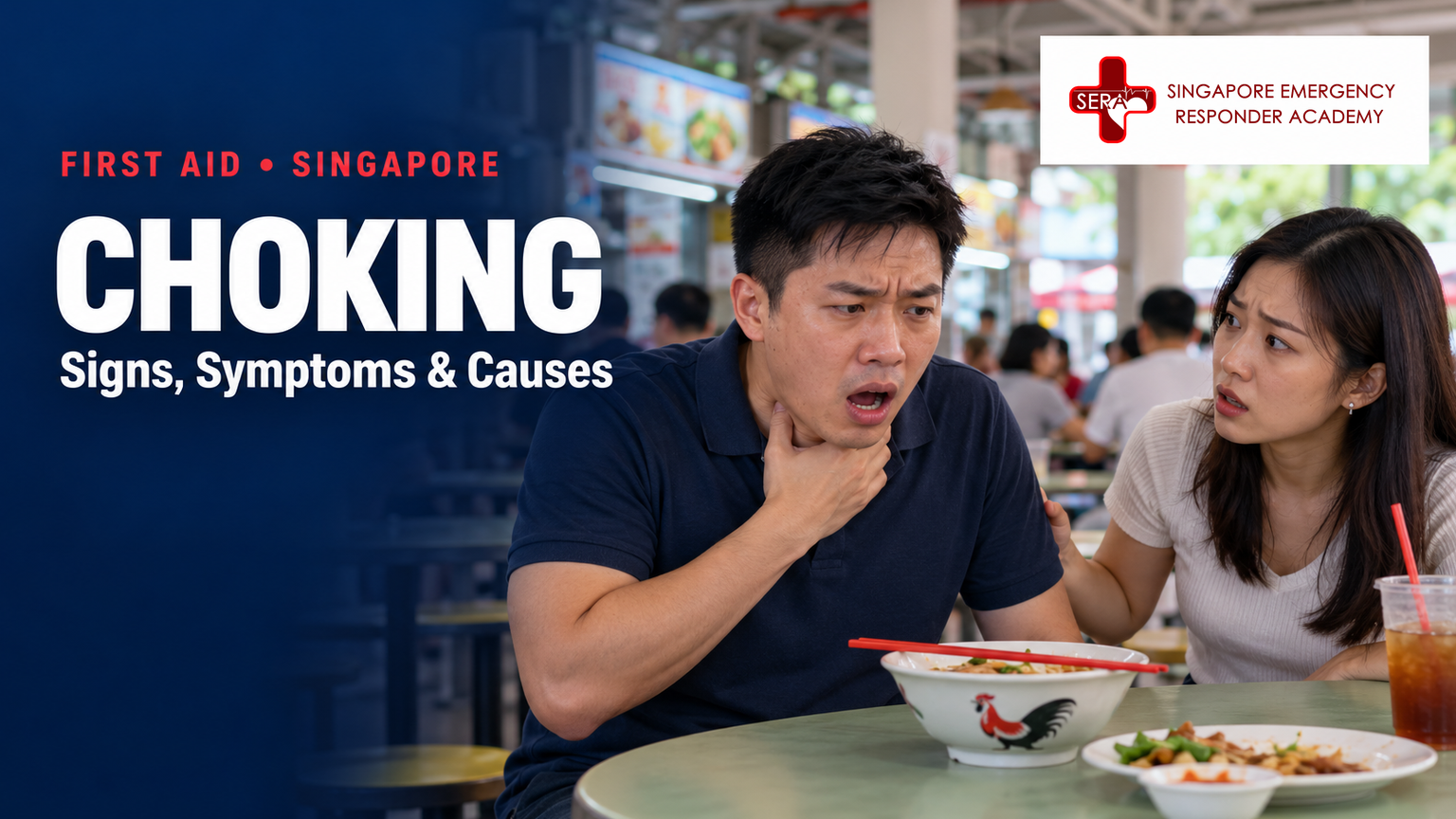
Choking Signs, Symptoms and Causes: What to Look For in Singapore
Choking awareness · First aid · Singapore
Originally published · Guidance reviewed
Someone suddenly stops talking during a meal and reaches for their throat. Could they be choking? Recognising choking signs and symptoms helps you decide when to encourage coughing and when urgent help is needed.
Choking happens when food or another object obstructs the airway. This is called foreign body airway obstruction, or FBAO. A partial blockage allows some airflow; a complete blockage prevents airflow.
The immediate question: can the person speak, breathe and cough effectively? An ineffective cough or difficulty breathing can signal severe obstruction, even if the airway is not completely blocked.
What are the signs and symptoms of choking?
Choking often begins abruptly while eating or putting an object in the mouth. The person may look frightened, clutch their neck or struggle to get your attention. Assess their breathing and cough rather than relying on one gesture.
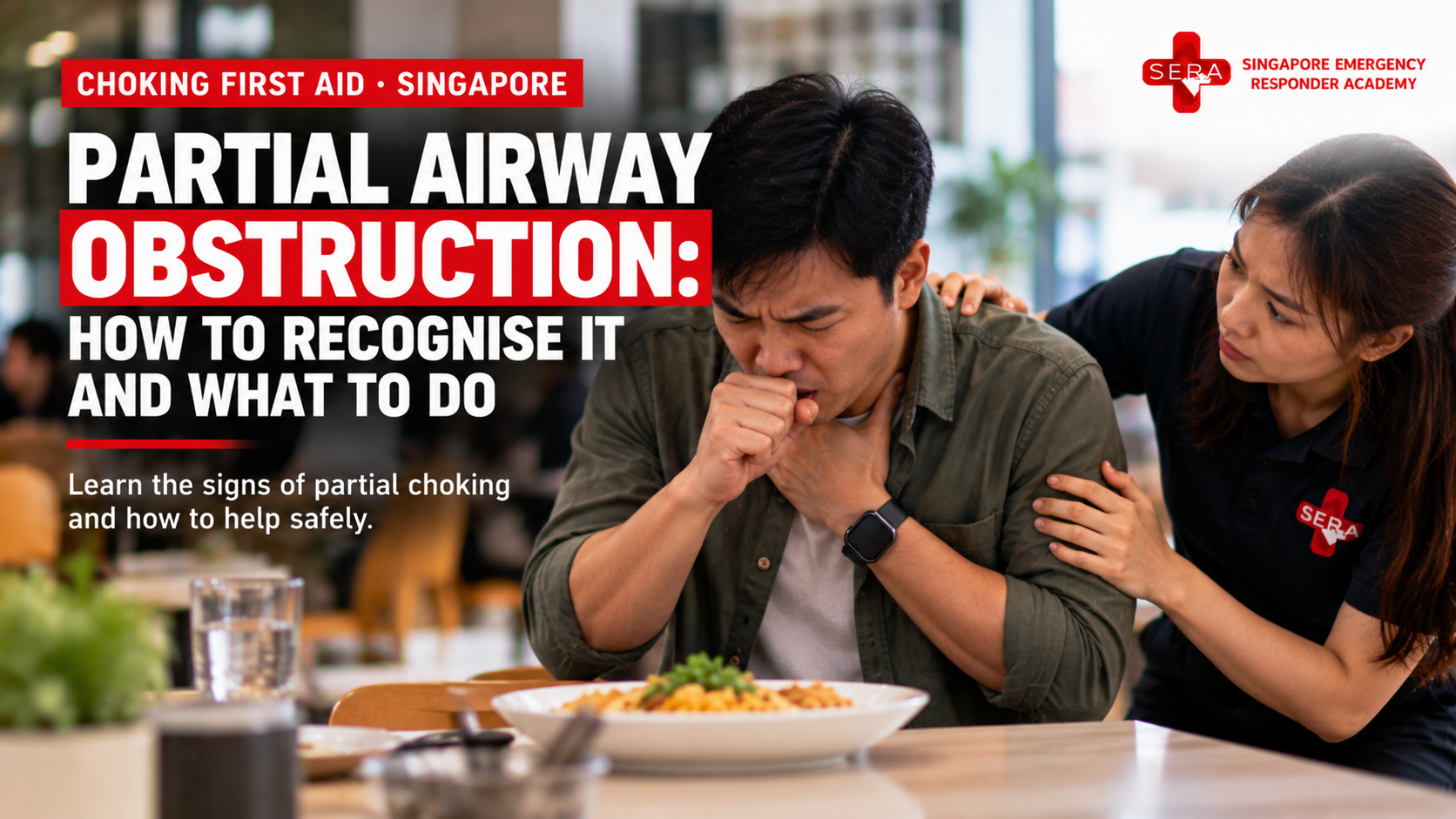
Partial obstruction with an effective cough
The person can cough forcefully and may still speak and breathe. Encourage coughing and stay beside them. Watch for deterioration.
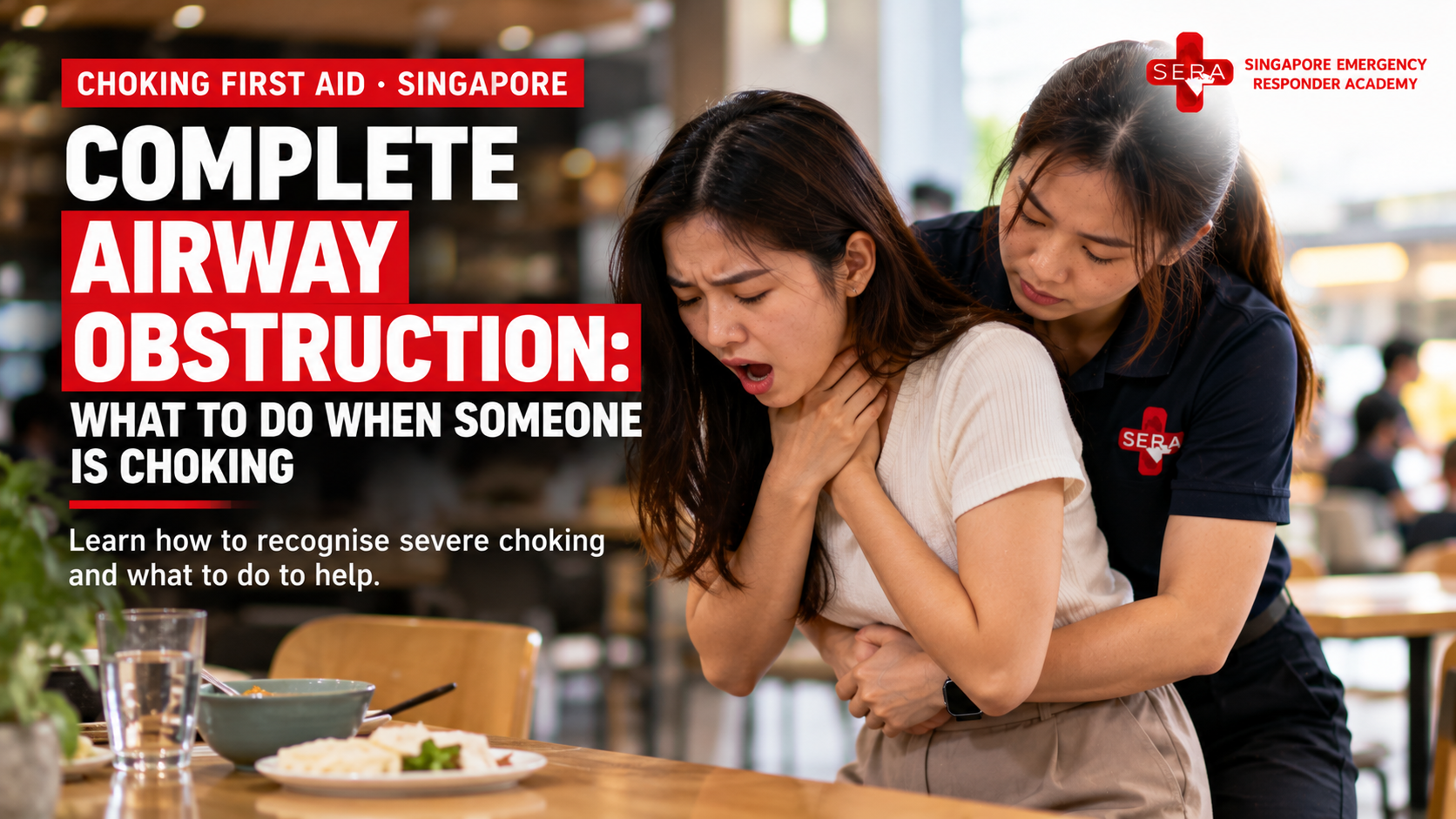
Severe or complete obstruction
The person cannot speak or breathe adequately, or their cough becomes weak, silent or ineffective. They may eventually collapse. Immediate action is needed.
995
Singapore’s emergency ambulance number
Call immediately for severe choking or collapse. Put the phone on speaker and follow the dispatcher’s instructions while help is coming.
Read our focused guides to partial airway obstruction: recognition and help and complete airway obstruction: ways to help.
What causes choking?
Food can enter the airway instead of passing safely towards the stomach. Large pieces and foods that are hard, round or difficult to chew can pose hazards. Babies and young children also explore objects with their mouths.
- Food hazards: whole grapes, whole nuts, hard raw vegetables and chunks of meat can be unsuitable for babies.
- Small objects: loose toy parts and other accessible objects can enter a child’s mouth.
- Swallowing difficulties: problems moving food or liquid safely can increase risk during meals.
Why do children and older adults need extra attention?
Babies are learning to manage new textures. Choose developmentally appropriate food, seat them upright and supervise eating. HealthHub’s feeding guidance identifies common choking hazards.
Older adults may have dysphagia, a swallowing disorder associated with conditions such as stroke, Parkinson’s disease or dementia. Repeated coughing during meals, a wet voice or difficulty swallowing warrants assessment. HealthHub recommends consulting a doctor, who may refer the person to a speech therapist.
Age alone does not explain every episode. Food texture, chewing ability, medical conditions and the eating environment all matter.
What should you do when someone is choking?
Encourage an effective cough
If coughing remains forceful, encourage it and monitor closely. Do not give back blows or thrusts while the person is coughing effectively.
Act on severe choking
Get someone to call 995. For a conscious adult or child, the 2026 Singapore BCLS+AED guidelines recommend five back blows, then five abdominal thrusts if needed. Repeat until the object clears or the person becomes unconscious. Use chest thrusts instead when pregnancy or body size prevents encircling the abdomen.
Use the infant-specific response
For a conscious choking infant, alternate five back blows with five chest thrusts, supporting the head and keeping it lower than the chest. Never use abdominal thrusts. The 2026 paediatric guidelines specify the heel of one palm for infant chest thrusts.
Respond to collapse
If unresponsive and not breathing normally, lower the person onto a firm surface and begin CPR, starting with compressions. Have someone bring an AED. Give breaths if trained and able; otherwise continue compressions and follow 995 instructions. Remove only a clearly visible object when opening the airway.
Do not offer food or water, shake the person or perform blind finger sweeps. These actions can worsen the situation. Hands-on training helps you practise the correct technique safely.
How can you reduce choking risk?
Eat seated upright, slow down and chew thoroughly. Keep small objects away from children and supervise meals. For swallowing disorders, follow the clinician’s recommended food textures and fluid consistency. Do not guess which dietary changes are suitable.
Practise with SERA
Standard First Aid
Build practical skills for everyday emergencies, including choking response.
Child First Aid
Learn responses for emergencies involving children and infants.
BCLS+AED
Practise airway obstruction relief, CPR and AED use.
Build confidence before an emergency
Turn choking awareness into practical skills with guided training at SERA.
Explore first aid trainingFrequently asked questions
Can someone choke without making noise?
Yes. Severe choking can be silent because insufficient air moves through the airway.
Does coughing mean the person is safe?
No. Assess whether the cough is effective and keep watching for deterioration.
Should I give water to someone who is choking?
No. Do not offer food or water while an airway obstruction is suspected.
Can I use abdominal thrusts on a baby?
No. Infant choking requires back blows and chest thrusts.
When should I call 995?
Call immediately for severe choking, breathing difficulty or collapse.
What if someone repeatedly coughs during meals?
Arrange medical assessment for possible swallowing difficulties. Seek emergency help for acute breathing problems.
Sources

Related Posts
Comments (1)
Comments are closed.


[…] learning with SERA’s choking signs guide and introduction to out-of-hospital cardiac […]