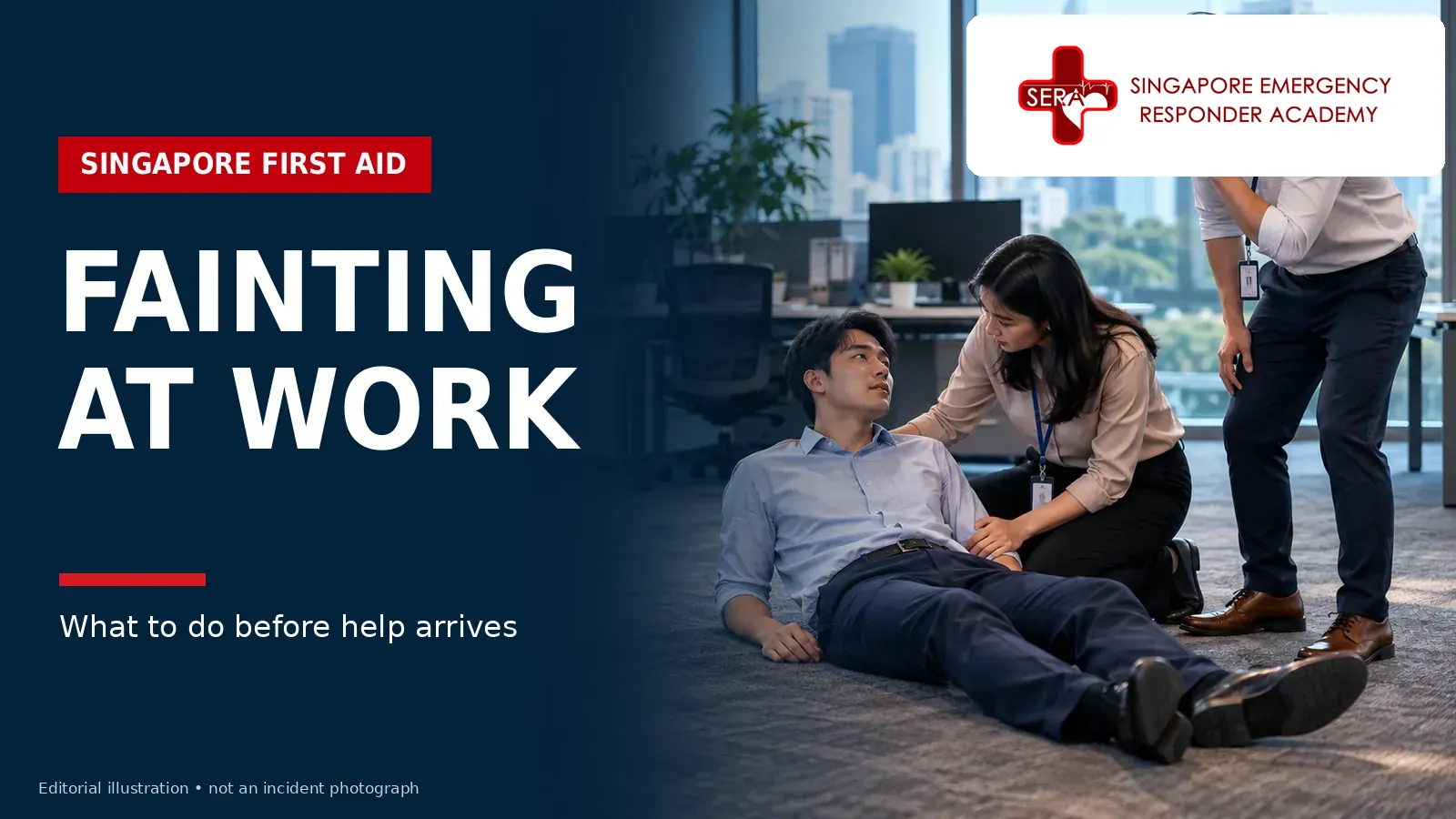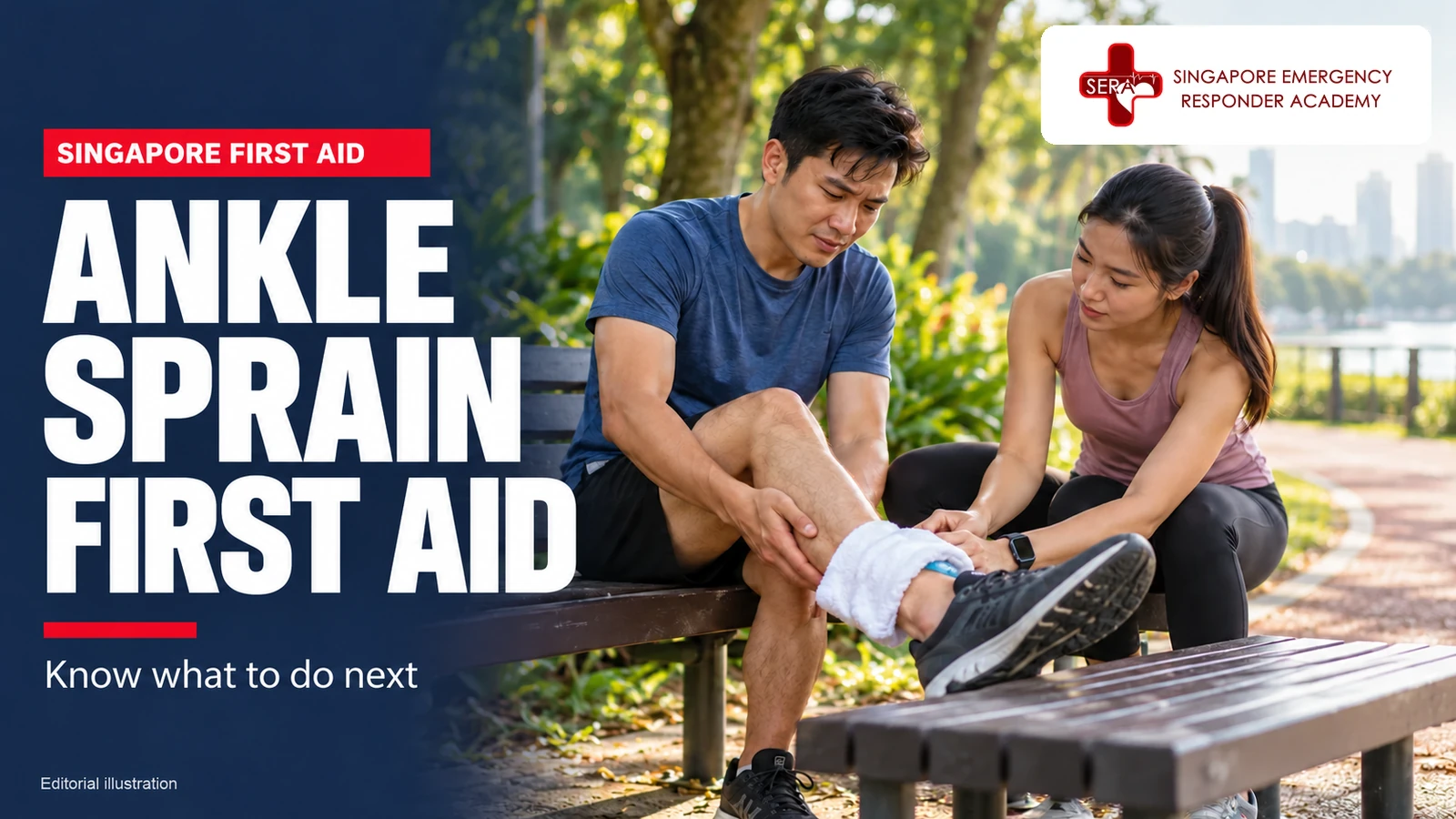
A colleague suddenly collapses during a meeting. Should you help them lie down, call an ambulance or begin CPR? Learn how to respond to fainting at work, identify dangerous warning signs and provide appropriate first aid using guidance from Singapore's healthcare authorities.
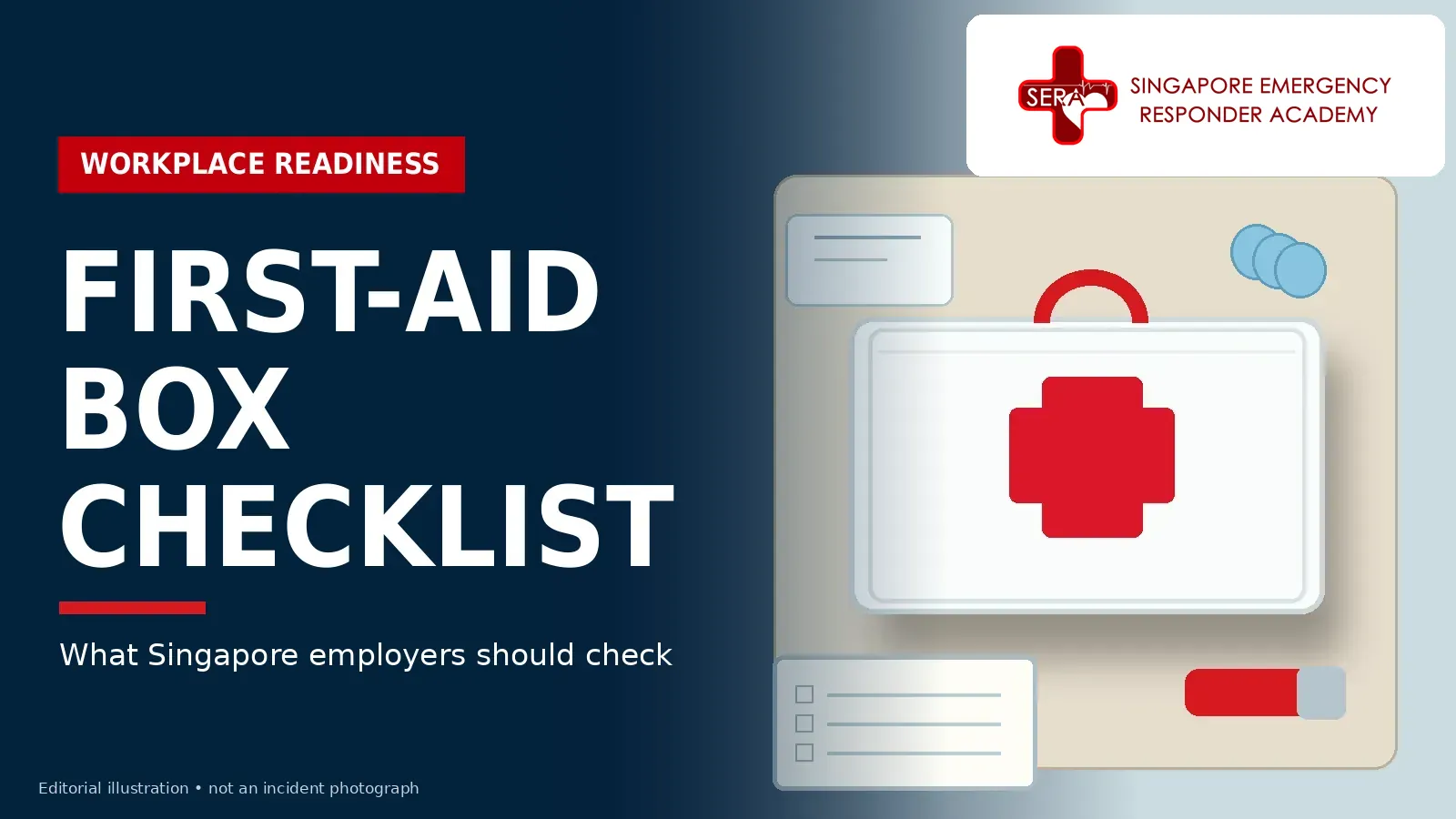
Workplace First-Aid Box Requirements in Singapore: What Employers Must Check
Workplace First Aid | Singapore WSH Compliance
Your workplace may have a first-aid box hanging on the wall. But when was it last inspected? Are the dressings still usable? Can employees access it quickly? Does every occupied floor have sufficient supplies? Under Singapore’s Workplace Safety and Health (First-Aid) Regulations, providing a box is only part of the employer’s responsibility.
Quick answer:
Singapore workplaces must provide
sufficient first-aid boxes.
Boxes must be adequately equipped,
properly maintained, checked frequently,
clearly identified and placed
in accessible, well-lit locations.
Each floor of a workplace
located within a building
must have sufficient first-aid boxes.
1. Are First-Aid Boxes Mandatory in Singapore?
Yes. Regulation 4 of the Workplace Safety and Health (First-Aid) Regulations requires workplaces to provide sufficient first-aid boxes.
The regulations also establish requirements relating to equipment, maintenance, accessibility and responsibility for the boxes.
These requirements apply separately from obligations to appoint trained workplace first aiders.
The regulations exclude hospitals and medical clinics, which operate under other healthcare arrangements.
2. What Must Employers Check?
A practical inspection should consider more than the number of boxes purchased.
01
Provide Sufficient Boxes
Review the number of workers, workplace layout and nature of the activities performed. Boxes should be available where employees can realistically access them during an emergency.
02
Cover Each Occupied Floor
Where a workplace is located within a building, each floor must have sufficient first-aid boxes. A box kept at the main reception may not adequately serve employees working on another floor.
03
Check the Contents
Ensure supplies are appropriate for the workplace’s risks. Common first-aid materials include sterile dressings, gauze, bandages, disposable gloves and suitable wound-care supplies. Consider additional provisions where particular hazards exist.
04
Inspect and Replace Supplies
Check whether packaging remains intact, items are usable and quantities are sufficient. Remove damaged or expired materials and replenish supplies after use. Record inspection findings and assign responsibility for corrective actions.
05
Keep Boxes Visible and Accessible
First-aid boxes must be clearly identified and placed in accessible, well-lit locations. Avoid storing them behind locked doors or unrelated equipment that could delay retrieval.
One Important Requirement
Every first-aid box must be under the charge of a person appointed by the workplace occupier. Assigning ownership helps ensure that inspections and replenishment are actually carried out.
3. What Should a Workplace First-Aid Box Contain?
The current regulations require first-aid boxes to be adequately equipped. They should contain only first-aid appliances or requisites.
Unlike older published versions of the legislation, the current regulation does not prescribe a universal Box A, B or C stocking schedule.
Employers should therefore evaluate their workplace’s actual risks rather than relying solely on an outdated supplier checklist.
A typical office may require materials for minor cuts, abrasions and other common injuries.
Workplaces involving machinery, hot surfaces or hazardous substances may require additional arrangements.
Important distinction:
A first-aid box is not a substitute
for specialised emergency equipment.
For example, workplaces with possible
exposure to toxic or corrosive substances
may have additional requirements
for emergency flushing facilities
under Regulation 7.
These must be considered separately.
4. How Often Must First-Aid Boxes Be Checked?
The regulations require boxes to be checked frequently. They do not prescribe one universal inspection interval for every workplace.
Employers should determine an appropriate inspection frequency based on workplace conditions, how often supplies are used and the potential consequences of missing equipment.
A monthly documented check may be a useful internal starting point for a low-risk office, but should not be represented as a statutory monthly requirement.
Higher-risk or heavily used locations may need more frequent inspections.
5. What Should an Inspection Record Include?
A simple record makes it easier to identify recurring problems and demonstrate that maintenance is being managed.
Consider recording:
- Date of inspection
- Box location
- Name of the person checking
- Missing or damaged items
- Expired or unusable supplies
- Replenishment actions
- Date the issues were resolved
Make sure employees know where the boxes are located and whom to contact when supplies need replacing.
6. Is Having a First-Aid Box Enough?
No. Equipment is useful only when employees know how to access and use it appropriately.
Under the same regulations, workplaces employing more than 25 people must appoint sufficient trained first aiders.
Employers should therefore review first-aid coverage, training validity and emergency communication arrangements alongside their equipment inspections.
Common workplace oversights:
- Missing or expired dressings
- Boxes kept in inaccessible rooms
- Insufficient coverage across floors
- No person responsible for maintenance
- Supplies not replaced after use
- Employees unaware of kit locations
Relevant SERA First Aid Training
Occupational First Aid
Training for appointed workplace first aiders recognised under Singapore’s MOM requirements.
Explore OFA →CERT First Aid
Basic first aid and CPR+AED training for appointed Company Emergency Response Team first aiders.
Explore CERT First Aid →Basic First Aid
Practical introductory first aid training for individuals seeking foundational first aid skills.
Explore Basic First Aid →Keep Your Workplace Emergency-Ready
Maintained first-aid equipment, trained personnel and clear emergency procedures work together to support safer workplaces.
SERA provides practical first aid and emergency-response training for Singapore organisations.
Request Corporate TrainingFrequently Asked Questions
1. Does every Singapore workplace need a first-aid box?
The WSH (First-Aid) Regulations require workplaces to provide sufficient first-aid boxes, subject to the regulations’ exclusions.
2. Does every office floor need a first-aid box?
Where a workplace is in a building, each floor must have sufficient first-aid boxes.
3. Must employers use Box A, B or C?
The current regulations require adequately equipped boxes rather than the older fixed Box A/B/C schedule.
4. Is monthly first-aid box inspection mandatory?
The regulations require frequent checks but do not prescribe a universal monthly interval.
5. Who should maintain the first-aid box?
Each box must be under the charge of a person appointed by the workplace occupier.
6. Does owning a first-aid box replace the need for trained first aiders?
No. First-aid equipment and trained first-aider requirements are separate obligations.
Official Sources and Further Reading
- Singapore Statutes Online — WSH (First-Aid) Regulations
- MOM — Workplace Safety and Health
- MOM — Workplace First Aid
- SCDF — Responders Plus Programme
This article provides general information about workplace first-aid preparedness. Employers should refer to the current legislation and relevant regulatory guidance for their specific workplace requirements.

Related Posts