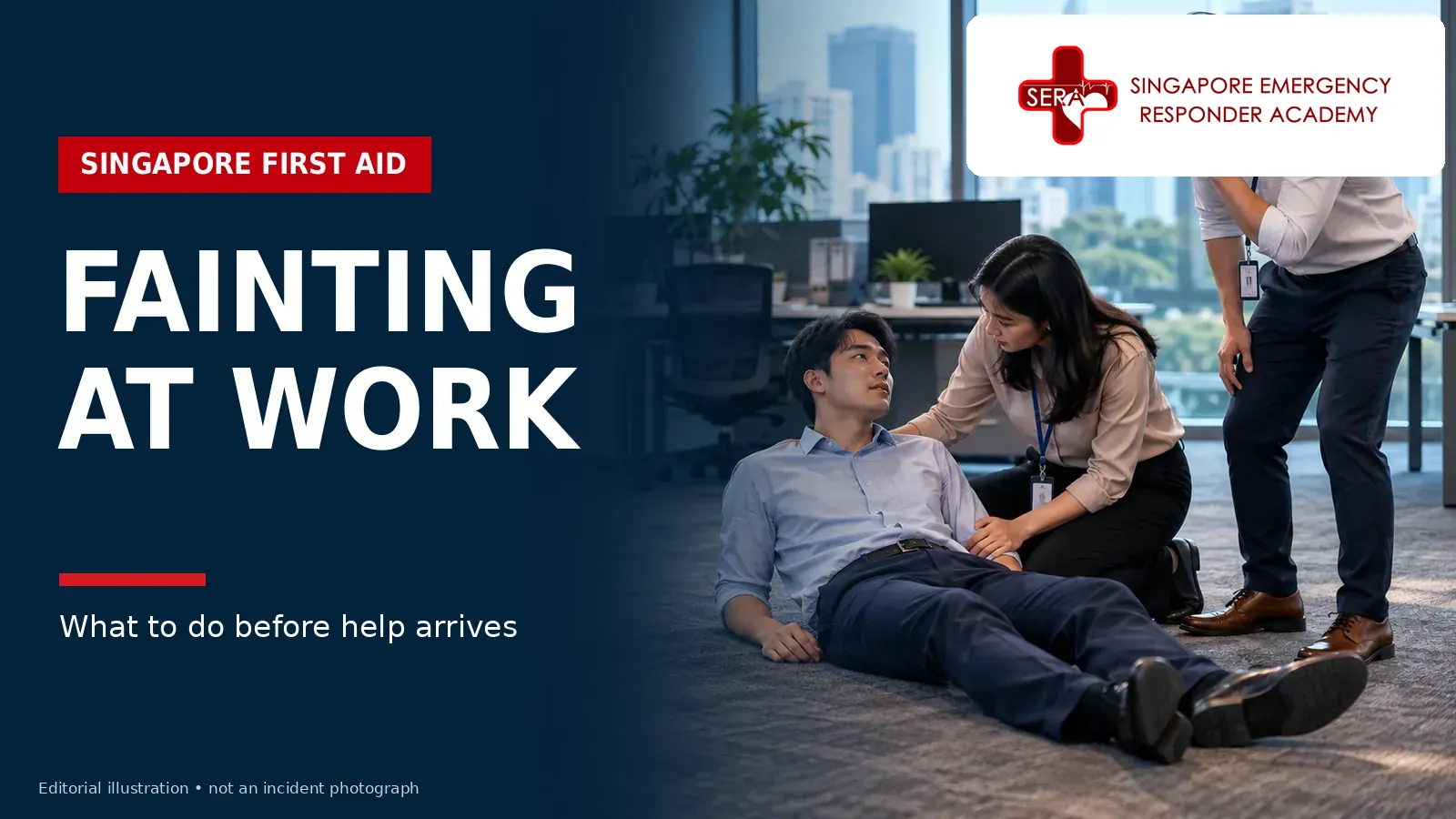
A colleague suddenly collapses during a meeting. Should you help them lie down, call an ambulance or begin CPR? Learn how to respond to fainting at work, identify dangerous warning signs and provide appropriate first aid using guidance from Singapore's healthcare authorities.
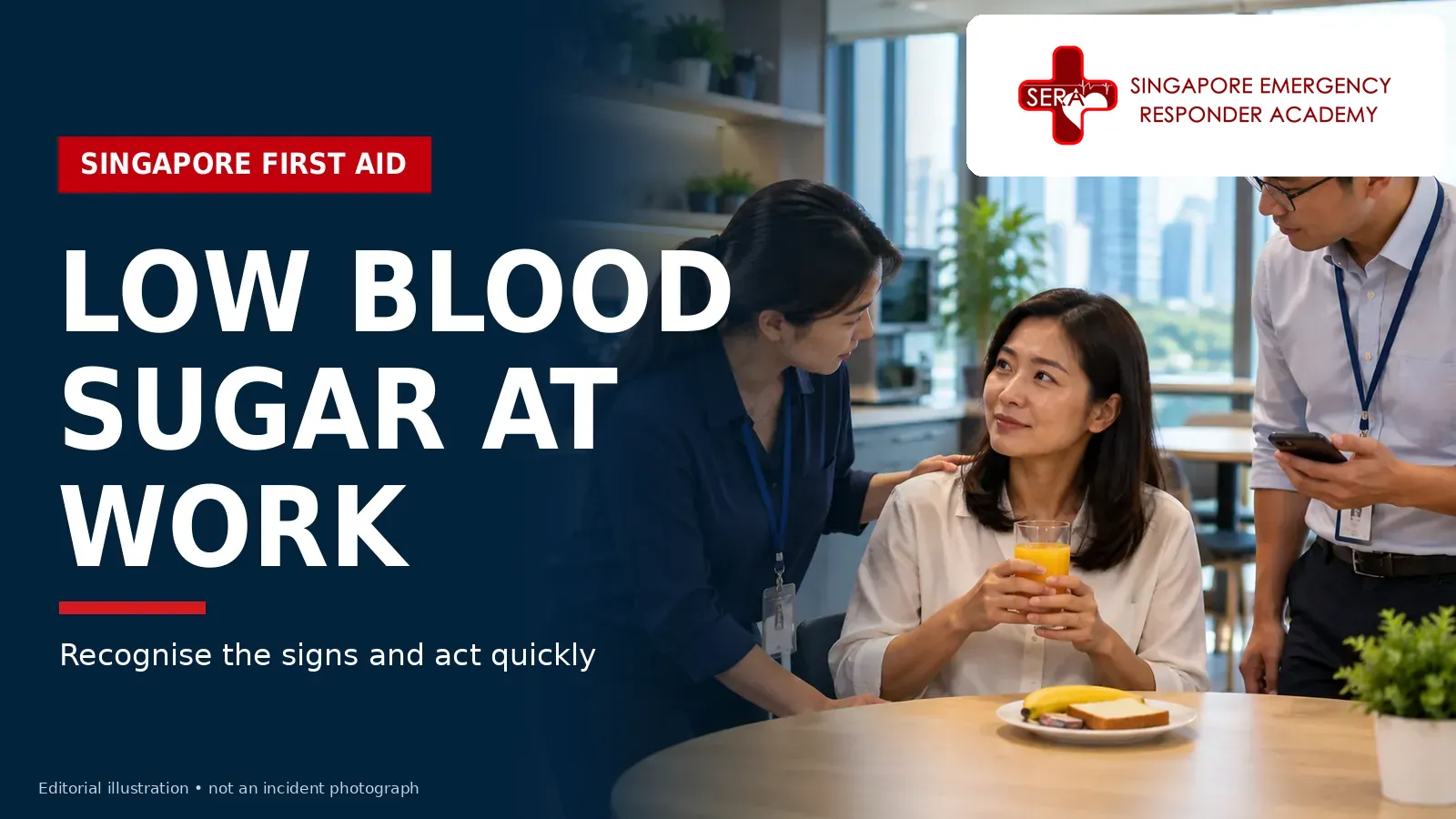
Low Blood Sugar at Work: First Aid for Diabetic Emergencies in Singapore
Diabetic Emergencies | Workplace First Aid
A colleague suddenly becomes sweaty, shaky and confused during a meeting. They mention having diabetes and missing their usual lunch. Could their blood sugar be too low? Recognising the warning signs and knowing when to provide appropriate assistance can help prevent a diabetic emergency from becoming more serious.
Quick answer:
For a conscious person with suspected
low blood sugar who can swallow safely,
Singapore’s HealthHub recommends
15g of fast-acting sugar.
Recheck after 15 minutes.
If the person becomes unconscious
or cannot swallow safely,
do not give anything by mouth.
Call 995 immediately.
1. What Is Hypoglycaemia?
Hypoglycaemia refers to blood sugar falling below the normal range. For people with diabetes, a blood glucose reading below 4 mmol/L is generally considered low.
According to HealthHub’s Diabetes Hub , hypoglycaemia may develop when someone taking certain diabetes medications misses a meal, has an unusually active day or takes more medication than required.
It is particularly relevant to people using insulin or certain medications that increase insulin release.
Not every person with diabetes will experience hypoglycaemia, but recognising the symptoms is an important first aid skill.
2. What Are the Warning Signs?
Low blood sugar may initially cause relatively mild symptoms. However, symptoms can progress as blood glucose falls.
- Sweating and trembling
- Sudden hunger
- Dizziness or headache
- Fast heartbeat
- Weakness or fatigue
- Blurred vision
- Irritability or behavioural changes
- Confusion or slurred speech
Severe hypoglycaemia may cause seizures or unconsciousness.
These symptoms are not exclusive to low blood sugar. A person experiencing sudden confusion, weakness or slurred speech may also be having a stroke or another medical emergency.
3. How to Respond to Mild Hypoglycaemia
The following approach applies only when the person is awake, cooperative and able to swallow safely.
01
Stop Activity and Assess
Help the person sit somewhere safe and stop potentially hazardous work. Check their symptoms and ask whether they have a known diabetes management plan.
02
Check Blood Sugar if Possible
If the person has a glucose meter and knows how to use it, they can check their reading. A reading below 4 mmol/L indicates low blood sugar.
03
Take 15g of Fast-Acting Sugar
If the person is conscious and swallowing normally, HealthHub recommends 15g of fast-acting carbohydrate. Examples include glucose tablets or an appropriate measured quantity of regular sweetened drink.
04
Recheck After 15 Minutes
Recheck blood sugar if possible. If symptoms persist or the reading remains below 4 mmol/L, repeat the treatment once. Seek medical advice if symptoms do not resolve after the second attempt.
05
Follow Up with Food and Medical Advice
Once the person has recovered and blood sugar is at least 4 mmol/L, they should follow their diabetes care plan. HealthHub recommends a snack or an earlier meal to help prevent blood sugar from falling again.
The 15–15 Rule
15g of fast-acting sugar. Wait 15 minutes. Recheck blood sugar. Repeat once if the reading remains low or symptoms persist. This applies only to a conscious person who can swallow safely.
4. When Is Low Blood Sugar an Emergency?
Severe hypoglycaemia can rapidly affect a person’s ability to protect their airway or respond appropriately.
Call 995 if the person:
- Becomes unconscious or unresponsive.
- Has a seizure.
- Cannot swallow safely.
- Experiences severe confusion or deterioration.
- Has abnormal breathing.
Do not force sweets, drinks or food into an unconscious person’s mouth.
Do not administer insulin as a treatment for suspected low blood sugar.
If the casualty is unresponsive and not breathing normally, begin CPR and use an AED when available, following the emergency dispatcher’s instructions.
5. How Can Workplaces Prepare?
Employees with diabetes may work across many industries, including offices, retail, logistics and physically demanding environments.
An effective workplace response does not require colleagues to know someone’s private medical history.
Instead, employees should understand how to recognise an emergency, contact trained first aiders and call 995 when necessary.
Where an employee voluntarily shares an individual emergency plan, organisations can discuss appropriate support arrangements while respecting confidentiality.
Workers taking glucose-lowering medications should follow their healthcare team’s advice on medication, meals and activity.
Important:
A workplace first aider does not
diagnose diabetes or adjust medication.
Their role is to recognise
potential danger, provide appropriate
first aid within their competence
and obtain professional assistance.
Relevant SERA First Aid Training
Occupational First Aid
Structured workplace first aid training covering medical emergencies and CPR+AED skills.
Explore Course →Standard First Aid
First aid, CPR and AED competencies suitable for sports coaches and individuals.
Explore Course →Corporate First Aid Talks
Awareness sessions covering medical emergencies, including diabetic emergencies.
Explore Talks →Equip Your Workplace with First Aid Skills
Recognising low blood sugar is one part of a broader workplace emergency-response capability. SERA provides practical training to help employees identify medical emergencies and respond safely.
Request Corporate TrainingFrequently Asked Questions
1. What blood sugar level is considered low?
For people with diabetes, a reading below 4 mmol/L is generally considered hypoglycaemia.
2. What is the 15–15 rule?
Take 15g of fast-acting sugar, wait 15 minutes and recheck. Repeat once if blood sugar remains low or symptoms persist.
3. Can I give juice to an unconscious person?
No. Never give food or drinks to someone who is unconscious or cannot swallow safely. Call 995.
4. Can low blood sugar cause confusion?
Yes. Severe hypoglycaemia can cause confusion, slurred speech and behavioural changes.
5. Should I give insulin during hypoglycaemia?
No. Insulin lowers blood sugar and must not be used to treat suspected hypoglycaemia.
6. Can workplaces arrange diabetic emergency awareness training?
SERA offers corporate first aid awareness talks covering common medical emergencies, including diabetic emergencies.
Official Sources
- HealthHub — Hypoglycaemia
- HealthHub — Monitoring Blood Sugar During Exercise
- MOH — Getting Medical Help
- MOM — Workplace First Aid
This article provides general first aid education and does not replace individual diabetes management plans or medical advice.

Related Posts