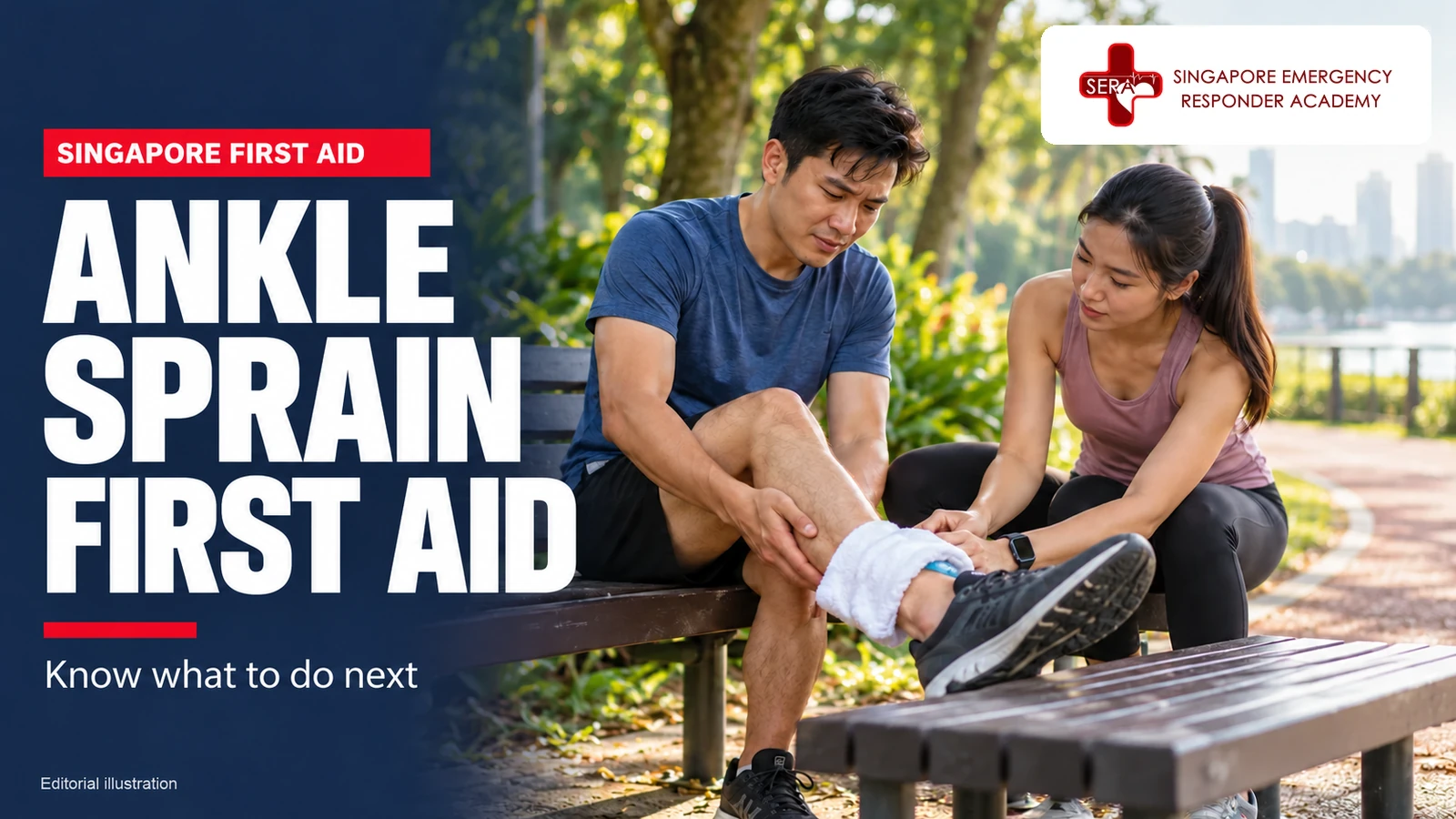
A twisted ankle can interrupt a run, sports session or ordinary walk. Learn the first steps for protecting an injured ankle, using ice and compression safely, recognising signs that need medical assessment, and planning recovery without rushing straight back into activity.
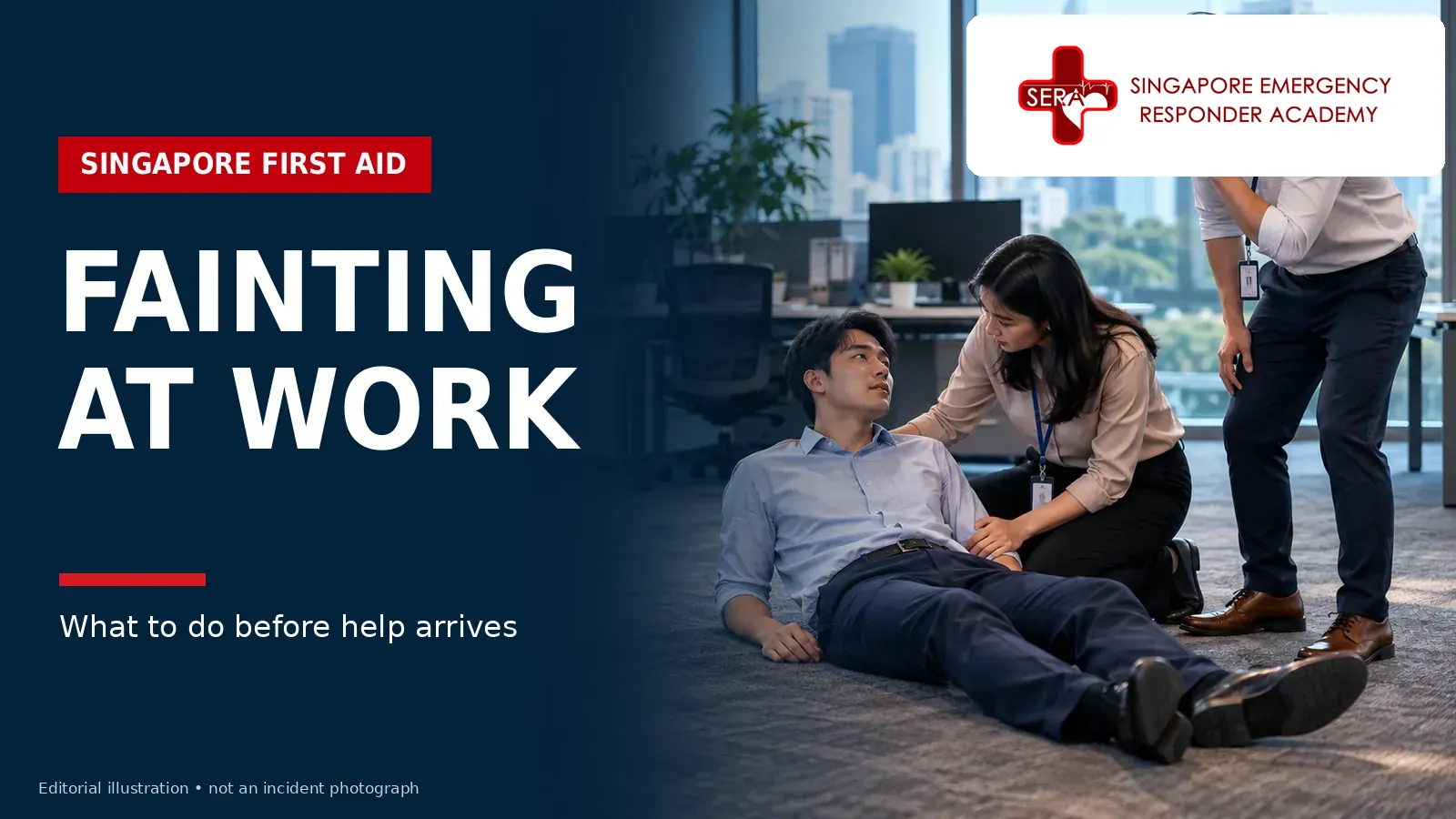
Fainting at Work in Singapore: What to Do and When to Call 995
Workplace First Aid | Singapore
A colleague suddenly becomes dizzy, falls to the ground and stops responding. Would you recognise whether they have simply fainted or are experiencing a potentially life-threatening emergency? Knowing what to do during the first few moments can help prevent further injury and ensure appropriate assistance reaches the casualty quickly.
Quick answer:
Check that the surroundings are safe
and assess the person’s responsiveness
and breathing.
If they are unresponsive, call 995.
If they are not breathing normally,
begin CPR and use an AED when available.
Even if they regain consciousness,
a medical assessment is recommended
to determine why they fainted.
1. What Causes Someone to Faint?
Fainting, medically known as syncope, is a temporary loss of consciousness usually caused by reduced blood flow to the brain.
According to SingHealth’s guidance on fainting , common triggers include emotional distress, pain, prolonged standing and sudden changes in blood pressure.
However, fainting can also indicate more serious conditions, including abnormal heart rhythms, severe hypoglycaemia or sudden blood loss.
A first aider should not assume that every collapse is harmless.
2. What Should You Do When a Colleague Faints?
01
Check for Danger
Ensure the surrounding area is safe. Move nearby hazards away and prevent other people from crowding around the casualty. Do not move the person unnecessarily if there may be an injury.
02
Check Responsiveness and Breathing
Speak clearly to the casualty and gently check whether they respond. If unresponsive, call 995 immediately. Check for normal breathing for no more than 10 seconds. Gasping is not normal breathing. Follow the emergency dispatcher’s instructions.
03
Provide Appropriate First Aid
If the person is awake, help them lie down comfortably and rest. If unconscious but breathing normally, maintain an open airway and use the recovery position when appropriate, provided there is no suspected spinal injury. If they are not breathing normally, begin CPR and arrange for an AED.
04
Monitor Their Condition
Watch for changes in breathing, responsiveness and behaviour. Do not give food or drinks to someone who is unconscious, drowsy or unable to swallow safely. Stay with the casualty until appropriate help arrives.
995 — Emergency Ambulance
In Singapore, call 995 for an unresponsive casualty, abnormal breathing or other signs of a serious medical emergency. Follow the SCDF dispatcher’s instructions while waiting for help.
3. When Is Fainting a Medical Emergency?
Some people recover consciousness quickly after fainting. However, the cause may still require medical investigation.
Call 995 immediately if the person:
- Remains unresponsive.
- Is not breathing normally.
- Experiences chest pain or breathlessness.
- Shows sudden confusion or stroke-like symptoms.
- Has sustained a serious injury during the fall.
- Has repeated episodes without recovering.
The Ministry of Health identifies chest pain, breathing difficulties and sudden neurological symptoms as reasons for emergency assessment.
4. What Should You Avoid?
A common mistake is trying to wake someone by shaking them, slapping their face or splashing water onto them.
These actions are unnecessary and may cause further injury.
Do not force someone to stand immediately after recovering.
Allow them to rest and arrange medical assessment, even if they report feeling better.
Important distinction:
Fainting is not the same as cardiac arrest.
A person who has fainted may continue
breathing normally, whereas cardiac arrest
requires immediate CPR and AED use.
Always assess the casualty rather
than assuming the cause of collapse.
5. How Should Singapore Workplaces Prepare?
Workplace emergencies can occur during meetings, training sessions, physical activity or ordinary work.
Employers should ensure staff know who their appointed first aiders are, where the AED is located and how to activate emergency assistance.
The Ministry of Manpower’s first aid guidance recommends establishing an emergency action plan that includes recognising emergencies and responding appropriately.
Organisations can also conduct short awareness sessions so employees understand the difference between fainting, cardiac arrest and other serious medical emergencies.
Relevant SERA First Aid Training
Occupational First Aid
Training for appointed workplace first aiders covering medical emergencies, injuries and CPR+AED.
Explore Course →CERT First Aid
Basic first aid and CPR+AED skills for appointed Company Emergency Response Team first aiders.
Explore Course →Corporate First Aid Talks
Practical awareness sessions covering emergencies such as fainting, stroke and cardiac arrest.
Explore Talks →Prepare Your Team for Medical Emergencies
Recognising a medical emergency and responding appropriately can make an important difference. SERA provides practical first aid and emergency-response training for Singapore organisations.
Request Corporate TrainingFrequently Asked Questions
1. Should I call 995 if someone faints?
Call immediately if the person remains unresponsive, has abnormal breathing or shows other emergency warning signs.
2. Should I give water to someone who fainted?
Not while they are unconscious, drowsy or unable to swallow safely.
3. Should I perform CPR on someone who fainted?
Perform CPR if the person is unresponsive and not breathing normally.
4. Can fainting indicate a heart problem?
Yes. Some episodes are associated with abnormal heart rhythms or other underlying conditions.
5. Should someone return to work after fainting?
They should receive appropriate medical assessment before resuming activities, particularly safety-critical work.
6. Which first aid course covers fainting?
SERA’s Occupational First Aid course covers workplace medical emergencies. Corporate awareness talks are also available.
Official Sources
- SingHealth — Fainting: What to Do
- MOM — Workplace First Aid
- MOH — Getting Medical Help
- SCDF — Responders Plus Programme
This article is intended for general first aid education and does not replace medical advice or professional emergency instructions.

Related Posts