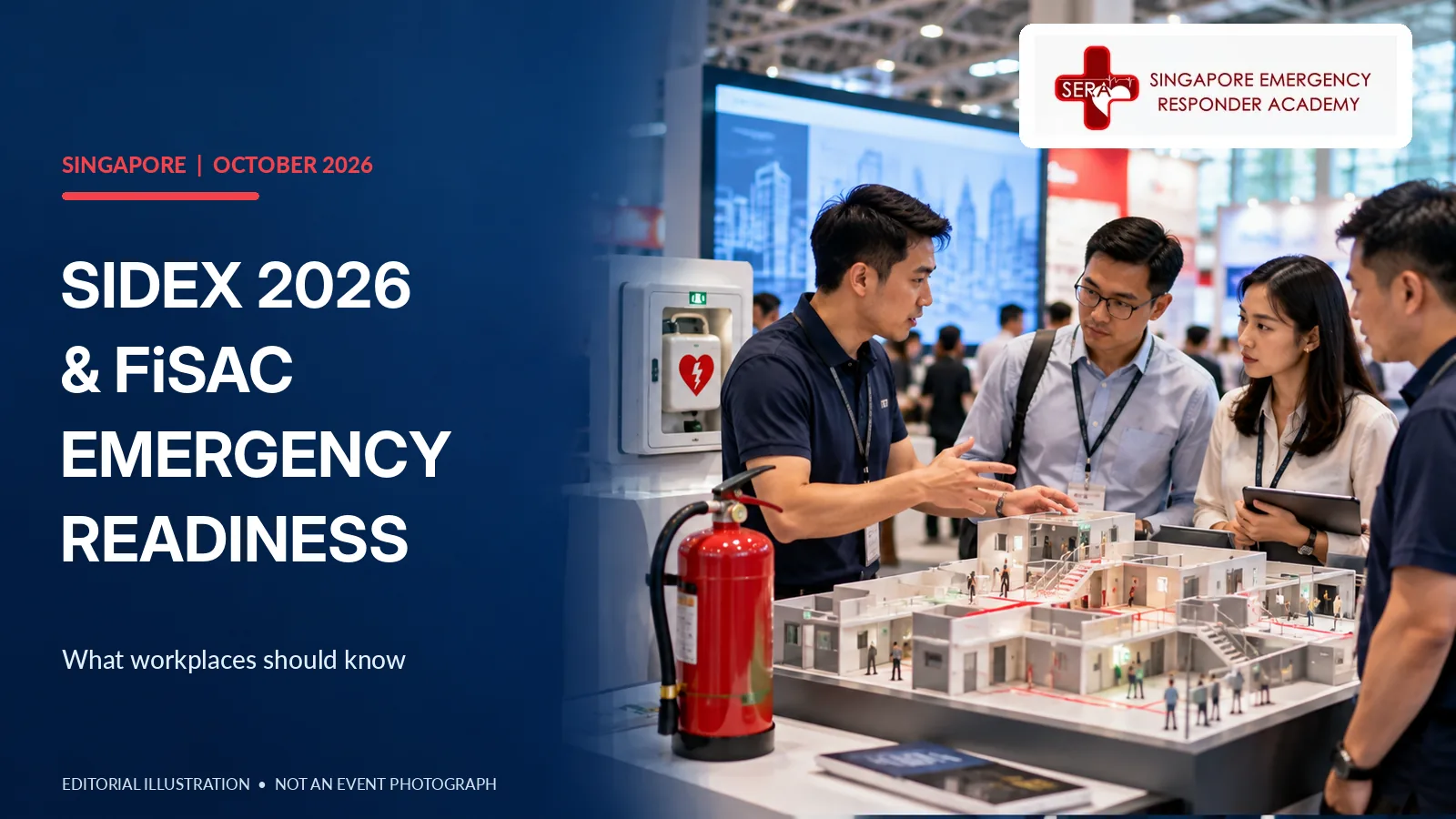
From 28 to 30 October 2026, SIDEX–ACDR and FiSAC will bring fire safety and emergency-response professionals together at Singapore EXPO. Ahead of the event, explore the announced programme and practical steps employers can take to review evacuation, first aid and crisis planning. FIRE Council
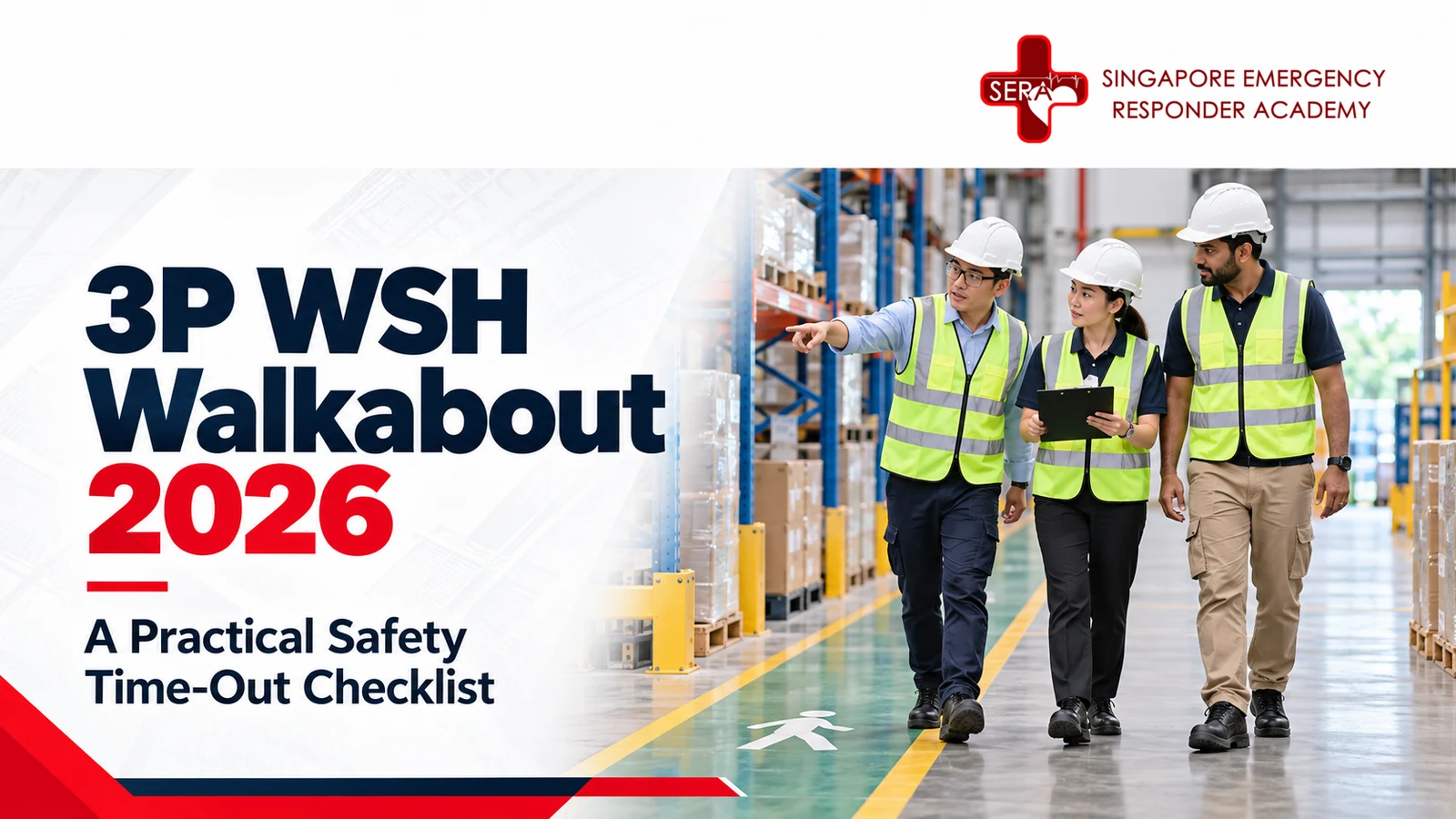
Singapore’s 3P WSH Walkabout 2026: A Practical Safety Time-Out Checklist for Employers
Workplace Safety | Singapore | October 2026
Singapore’s Workplace Safety and Health Council (WSHC) announced its 3P WSH Walkabout 2026 initiative on 6 October 2026, encouraging construction industry leaders to identify hazards, engage workers and strengthen workplace safety.
What employers should know:
The initiative complements the Ministry of Manpower’s
(MOM) voluntary Safety Time-Out from
5 to 18 October 2026 for the construction
and transportation and storage industries.
For construction companies, this is an opportunity
to review worksite risks, verify safety measures
and strengthen emergency preparedness before
an incident occurs.
The initiative follows workplace fatalities reported in September 2026. Rather than treating safety as a documentation exercise, WSHC is encouraging project leaders to examine actual working conditions and speak directly with the people exposed to hazards.
1. What Is the 3P WSH Walkabout 2026?
The 3P WSH Walkabout is a workplace safety initiative that encourages construction project leaders, supervisors and other stakeholders to conduct meaningful inspections and conversations at worksites.
According to the WSH Council’s 6 October announcement, the initiative emphasises three principles:
- Proactive: Anticipate and address workplace hazards before incidents occur.
- Prevention: Integrate safety considerations into project planning and execution.
- Partnerships: Strengthen cooperation among developers, consultants, contractors, subcontractors and workers.
5–18 October 2026
Period of MOM’s voluntary Safety Time-Out and WSHC’s associated 3P WSH Walkabout campaign. The initiative focuses on reviewing risks and strengthening safety practices.
The Safety Time-Out is voluntary. It should not be confused with a mandatory closure of every construction site or a new first aid certification requirement.
2. Why Are Project Managers Being Asked to Take a More Active Role?
The 2026 Walkabout places particular emphasis on project managers because their decisions influence work sequencing, manpower allocation, contractor coordination and operational risks.
A safety officer may identify a hazard, but management involvement is often necessary to provide resources, adjust schedules or resolve conflicting work activities.
WSHC encourages project managers to lead safety conversations, listen to workers and address unsafe conditions before work proceeds.
Practical takeaway:
A useful safety walkabout should produce
specific findings, assigned responsibilities
and follow-up actions — not merely photographs
or completed attendance records.
3. Five Areas to Review During Your Workplace Safety Time-Out
The following checklist translates WSHC’s recommendations into practical areas for employers and supervisors to examine.
01
Inspect High-Risk Work Activities
Review active work involving machinery, lifting operations, concrete pumps and moving vehicles. Check whether the appropriate risk controls, equipment inspections and safe work procedures are implemented and followed.
02
Check Vehicle and Pedestrian Safety
Examine traffic routes, reversing areas, vehicle parking arrangements and pedestrian segregation. Confirm that workers understand site traffic rules and that precautions against unintended vehicle movement are effective.
03
Speak Directly With Workers
Ask workers about near misses, difficult tasks, damaged equipment and situations where they feel pressured to take shortcuts. Encourage reporting without blame and ensure supervisors respond to concerns constructively.
04
Review Emergency Response Arrangements
Confirm who the appointed first aiders are, where first aid equipment is located and how emergency services will access the site. Review communication procedures, emergency contact details and arrangements for guiding responders to an injured worker.
05
Document and Close Safety Gaps
Record significant findings, assign corrective actions and establish reasonable completion deadlines. Verify that controls are effective before affected activities continue. Escalate serious unresolved risks promptly.
4. How Does First Aid Fit Into the Safety Time-Out?
Workplace accident prevention remains the priority. However, organisations must also prepare for situations where preventive measures fail.
During a Safety Time-Out, employers can review whether appointed first aiders are available, appropriately trained and familiar with their workplace emergency procedures.
First aid arrangements should reflect the workplace’s hazards, workforce and applicable legal requirements.
For example, a construction site may need to consider serious falls, traumatic injuries, major bleeding and sudden medical emergencies.
5. What Should Workers Do When a Serious Accident Occurs?
The Singapore Civil Defence Force (SCDF) identifies major trauma, excessive bleeding, loss of consciousness and other life-threatening conditions as emergencies requiring urgent help.
If a serious workplace accident occurs:
- Make sure the scene is safe before approaching. Avoid exposing additional workers to machinery, electricity, traffic or unstable structures.
- Activate the workplace emergency response procedure and alert designated first aiders.
- Call 995 for life-threatening injuries or medical emergencies.
- Provide clear information about the location, nature of the emergency and casualty’s condition.
- Provide appropriate first aid within your training and follow SCDF dispatcher instructions.
- Arrange for someone to direct emergency responders to the casualty.
Follow SCDF’s Emergency Medical Services guidance when deciding how to activate emergency assistance.
6. Does First Aid Training Replace Workplace Safety Controls?
No. First aid training supports emergency readiness but does not replace risk assessments, safe work procedures, equipment maintenance, supervision or regulatory compliance.
Both preventive and emergency arrangements are important. Employers should also ensure that training reflects the responsibilities of appointed personnel.
For a complementary discussion of incident prevention and emergency preparedness, read SERA’s article on vehicular incidents and workplace emergency readiness in Singapore.
Relevant SERA Workplace First Aid Training
Occupational First Aid
A practical course for appointed workplace first aiders, covering common injuries, medical emergencies, CPR and AED use.
Explore OFA →Occupational First Aid Refresher
Refresh essential first aid competencies and maintain readiness for workplace emergencies.
Explore refresher →CERT First Aid
Practical first aid, CPR and AED training for appointed Company Emergency Response Team first aiders.
Explore CERT training →Strengthen Your Workplace Emergency Readiness
Use your workplace safety review to identify training gaps and ensure the right employees have the practical skills to respond when an emergency occurs.
SERA provides workplace first aid training for individuals and corporate groups, including onsite arrangements.
Request Corporate TrainingFrequently Asked Questions
1. What is the 3P WSH Walkabout 2026?
It is a WSH Council initiative encouraging construction industry leaders to inspect worksites, engage workers and strengthen hazard prevention through proactive action and collaboration.
2. When is Singapore’s October Safety Time-Out?
MOM called for a voluntary Safety Time-Out from 5 to 18 October 2026 for construction and transportation and storage companies.
3. Is the Safety Time-Out mandatory?
The October 2026 initiative is voluntary. However, employers must continue complying with applicable workplace safety and health laws and requirements.
4. Who should participate in the Walkabout?
WSHC encourages project directors, project managers, engineers, supervisors and other project stakeholders to participate alongside workplace safety personnel.
5. Does the Walkabout introduce new first aid rules?
No new first aid certification requirement was announced as part of the Walkabout. Employers should continue meeting existing applicable workplace first aid obligations.
6. Why review emergency procedures during a Safety Time-Out?
An emergency review helps identify gaps in first aider availability, equipment accessibility, communication and arrangements for obtaining professional medical assistance.
7. Where can employers find official Safety Time-Out resources?
The WSH Council provides sample checklists covering workplace traffic management, vehicles, lifting operations, housekeeping and other workplace hazards on its 3P WSH Walkabout announcement page.

Related Posts