Singapore Health Advisory | Updated 11 October 2026
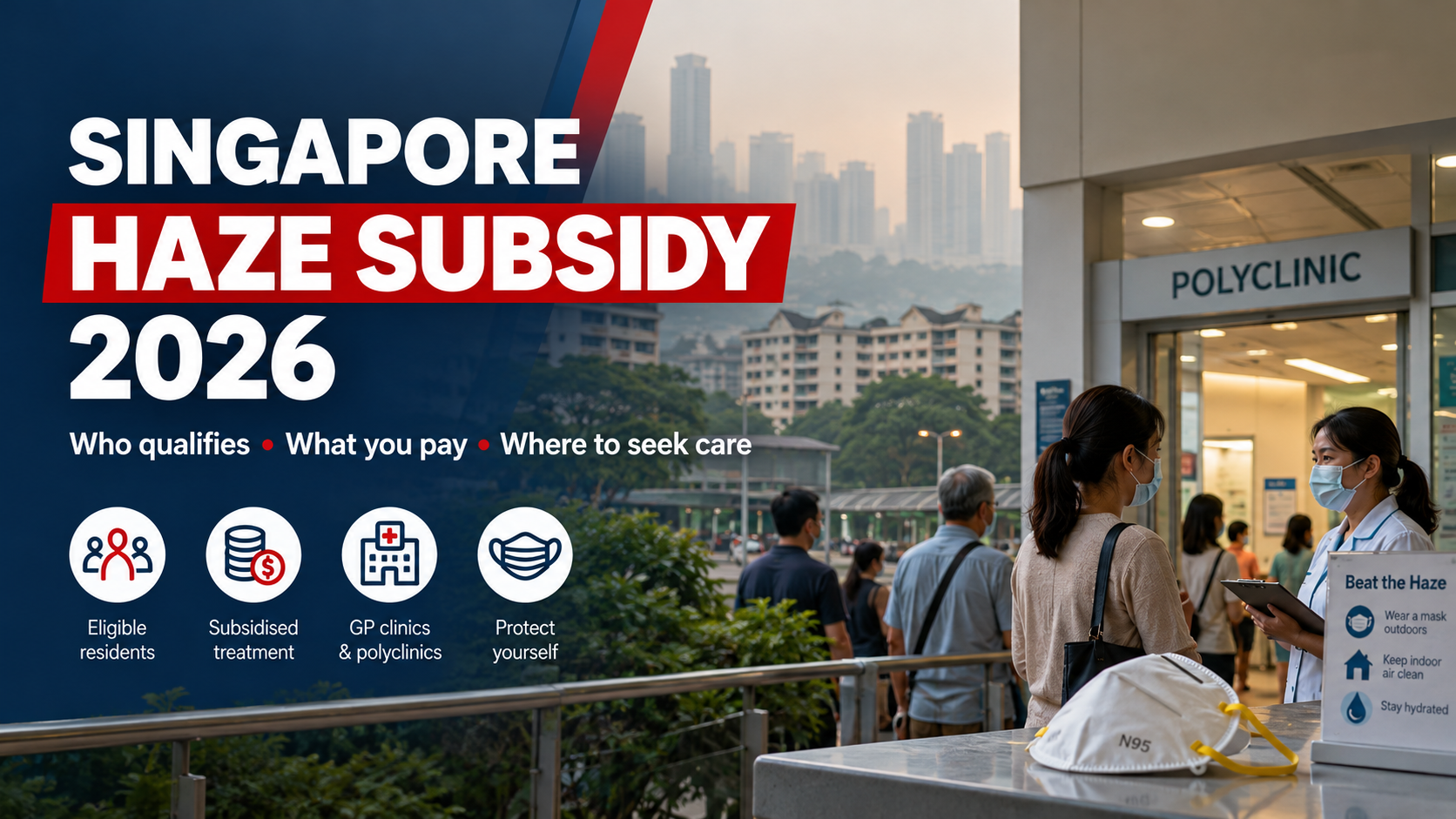
Singapore’s Haze Subsidy Scheme (HSS) will be activated from 12 October 2026, allowing eligible Singaporeans to receive subsidised treatment for haze-related medical conditions at participating GP clinics and all polyclinics.
At a glance: Public Assistance cardholders receive fully subsidised treatment, Pioneer and Merdeka Generation seniors pay no more than $5, and other eligible Singapore Citizens pay no more than $10. Eligibility differs between participating GP clinics and polyclinics.
The Ministry of Health (MOH) announced the activation on 11 October 2026 following deteriorating air quality caused by transboundary haze. The Public Health Preparedness Clinic (PHPC) Scheme is also being activated to support Singapore’s primary healthcare response.
Here’s what you need to know about eligibility, treatment costs, covered illnesses and protecting yourself during the haze.
1. What Is Singapore’s Haze Subsidy Scheme?
The Haze Subsidy Scheme is a government initiative that helps eligible Singaporeans obtain affordable outpatient medical treatment for specified haze-related conditions.
It operates through participating Public Health Preparedness Clinics and all polyclinics. Instead of paying the usual unsubsidised consultation and treatment charges, eligible patients pay a capped amount for covered treatment under the scheme.
12 October 2026
Official activation date of the Haze Subsidy Scheme, announced by MOH on 11 October 2026. MOH stated that the previous activation was in 2015.
The scheme responds to increasing healthcare needs as haze affects respiratory health, particularly among vulnerable groups.
2. Who Qualifies for the Haze Subsidy Scheme?
Eligibility depends on whether you visit a participating PHPC GP clinic or a polyclinic.
At participating PHPC GP clinics
Singapore Citizens qualify if they belong to at least one of the following groups:
- Children aged 18 and below
- Seniors aged 65 and above
- Public Assistance (PA) recipients
- Pioneer Generation (PG) members
- Merdeka Generation (MG) members
- CHAS Blue or Orange cardholders
- Medical Fee Exemption Card (MFEC) holders
At polyclinics
All Singapore Citizens are eligible for the Haze Subsidy Scheme when seeking treatment for covered haze-related conditions at polyclinics.
Important: A Singapore Citizen who does not meet the PHPC eligibility criteria may still qualify for the subsidy at a polyclinic. Check your eligibility and the clinic’s participation before attending.
3. How Much Will Patients Pay?
MOH has announced three subsidised payment categories for covered haze-related treatment.
| Eligible patient group |
Patient payment |
| Public Assistance cardholders |
Fully subsidised ($0) |
| Pioneer Generation and Merdeka Generation seniors |
Not more than $5 |
| Other eligible Singapore Citizens |
Not more than $10 |
These caps apply to treatment covered under the Haze Subsidy Scheme. They should not be interpreted as a blanket cap on every medical service or unrelated condition.
For example, an eligible adult visiting a polyclinic for a covered haze-related respiratory condition would pay no more than $10 under the scheme.
4. Which Medical Conditions Are Covered?
MOH has identified six categories of conditions, including their complications, for subsidised treatment:
- Allergic rhinitis: nasal irritation, sneezing, runny nose or congestion associated with allergies.
- Asthma: symptoms such as wheezing, coughing and breathlessness.
- Bronchitis: inflammation of the bronchial airways, often associated with coughing.
- Conjunctivitis: inflammation of the eye’s conjunctiva, potentially causing redness and irritation.
- Chronic obstructive pulmonary disease (COPD): a chronic lung condition that may worsen during poor air quality.
- Upper respiratory tract infection: infections affecting areas such as the nose and throat.
Not every cough, sore throat or breathing complaint is necessarily caused by haze. A healthcare professional will assess your symptoms and determine the appropriate diagnosis and treatment.
5. How to Find a Participating Clinic
If you need treatment, follow these steps to identify a suitable healthcare provider.
1
Check whether you qualify
Review the eligibility criteria for PHPC clinics or visit a polyclinic if you are a Singapore Citizen seeking treatment for a covered condition.
2
Find a participating PHPC
Use the clinic directory linked from MOH’s official haze information page. Participating clinics may also display a PHPC decal or Haze Subsidy Scheme poster.
3
Bring your identification and relevant cards
Bring your NRIC or other applicable identification and any relevant assistance or generation card. Contact the clinic beforehand if you are uncertain about documentation or eligibility.
4
Explain your symptoms clearly
Tell the doctor when your symptoms began, whether they have worsened, and whether you have existing conditions such as asthma or COPD.
6. How Dangerous Is the Current Haze?
On 9 October 2026, the National Environment Agency (NEA) reported 24-hour Pollutant Standards Index (PSI) readings between 136 and 192, within the Unhealthy range.
NEA also warned that conditions could deteriorate into the Very Unhealthy range, depending on regional fires and prevailing winds. These figures describe the situation on 9 October and are not live readings.
Haze may irritate the eyes, nose and throat. Individuals with chronic heart or lung conditions may be more vulnerable to adverse effects, particularly during prolonged outdoor exposure.
Check the latest air-quality readings and official activity advisories before planning outdoor exercise, training or events.
7. How to Protect Yourself During Hazy Conditions
Medical subsidies help reduce treatment costs, but reducing unnecessary exposure remains an important preventive measure.
1
Adjust outdoor activity
Follow NEA and MOH advisories according to the prevailing PSI, your health status and the intensity and duration of your activity. Consider moving strenuous exercise indoors when air quality deteriorates.
2
Reduce indoor particle exposure
Keep windows closed when outdoor air quality is poor and use appropriate air filtration where available.
3
Manage existing medical conditions
People with asthma, COPD or heart disease should keep prescribed medication accessible and follow their clinician’s management plan. Seek medical review if symptoms worsen.
4
Understand when masks are useful
MOH advises that N95 masks are generally unnecessary for short activities such as commuting or for normal indoor environments. If prolonged outdoor exposure cannot be avoided during significant haze, follow official mask advisories and ensure any respirator fits correctly.
8. When Should You Seek Emergency Medical Help?
Most mild haze-related symptoms can be assessed by a GP or polyclinic. However, serious breathing or cardiovascular symptoms require urgent attention.
Call 995 immediately for potentially life-threatening symptoms, including:
- Severe difficulty breathing or inability to speak normally because of breathlessness
- Chest pain or pressure suggesting a possible heart emergency
- Collapse, unresponsiveness or abnormal breathing
- Severe breathing distress or rapidly deteriorating consciousness
Do not delay emergency treatment to obtain a haze subsidy.
For non-emergency respiratory symptoms, MOH encourages residents to seek appropriate primary care rather than unnecessarily attending emergency departments.
9. Why First Aid and Emergency Preparedness Still Matter
Haze highlights the importance of recognising respiratory distress and knowing when an ordinary medical complaint has become an emergency.
First aid training cannot replace medical treatment for asthma, bronchitis or other respiratory conditions. However, it can help individuals recognise warning signs, activate emergency services promptly and provide appropriate assistance while awaiting professional care.
For organisations conducting outdoor training, schools, sports programmes or workplace activities, emergency preparedness should include a plan for deteriorating air quality and participants with existing medical conditions.
Explore Relevant SERA Training Courses
Standard First Aid
Build foundational skills for recognising and responding to common medical emergencies.
Explore course →
Basic First Aid + CPR & AED
Develop practical emergency response awareness and essential lifesaving skills.
Explore course →
BCLS + AED
Learn structured basic life support and automated external defibrillator skills.
Explore course →
Prepare Your Team for Medical Emergencies
Whether you manage an office, school, sports programme or community organisation, SERA provides practical first aid and emergency response training to strengthen preparedness.
Explore SERA Training
Frequently Asked Questions
1. When does the Haze Subsidy Scheme start?
The scheme starts on 12 October 2026 at participating Public Health Preparedness Clinics and all polyclinics, following MOH’s announcement on 11 October.
2. Can all Singaporeans claim the haze subsidy?
All Singapore Citizens are eligible at polyclinics for covered haze-related conditions. At participating PHPC GP clinics, eligibility is limited to specified age groups and assistance or generation schemes.
3. Is treatment completely free?
Public Assistance cardholders receive fully subsidised treatment under the scheme. Pioneer and Merdeka Generation seniors pay no more than $5, while other eligible Singapore Citizens pay no more than $10.
4. Can I visit any private GP clinic?
No. The subsidy is available at participating PHPC clinics. Check MOH’s clinic directory or look for the PHPC decal or HSS poster.
5. Does the scheme cover asthma and respiratory infections?
Yes. Covered conditions include asthma, bronchitis, COPD, upper respiratory tract infection, allergic rhinitis, conjunctivitis and their complications.
6. Should I wear an N95 mask whenever there is haze?
Not necessarily. MOH advises that N95 masks are generally not required for brief exposure, such as commuting. Follow official health advisories based on air quality, exposure duration and individual risk.
7. Should I go to the emergency department for haze-related coughing?
Mild or non-emergency symptoms can usually be assessed at a GP clinic or polyclinic. Seek emergency help for severe breathing difficulties, chest pain, collapse or other potentially life-threatening symptoms.
Official Sources and Further Reading