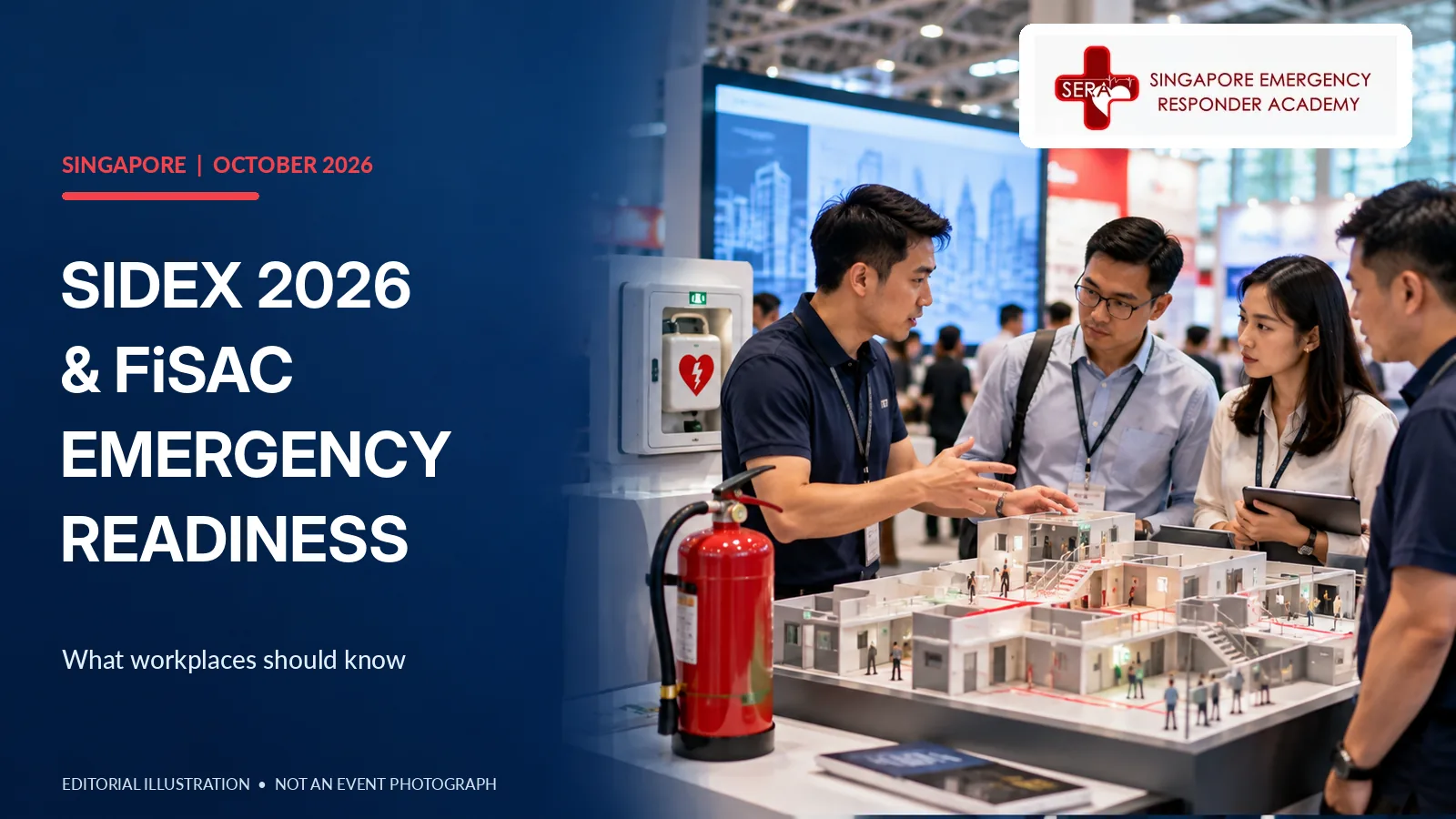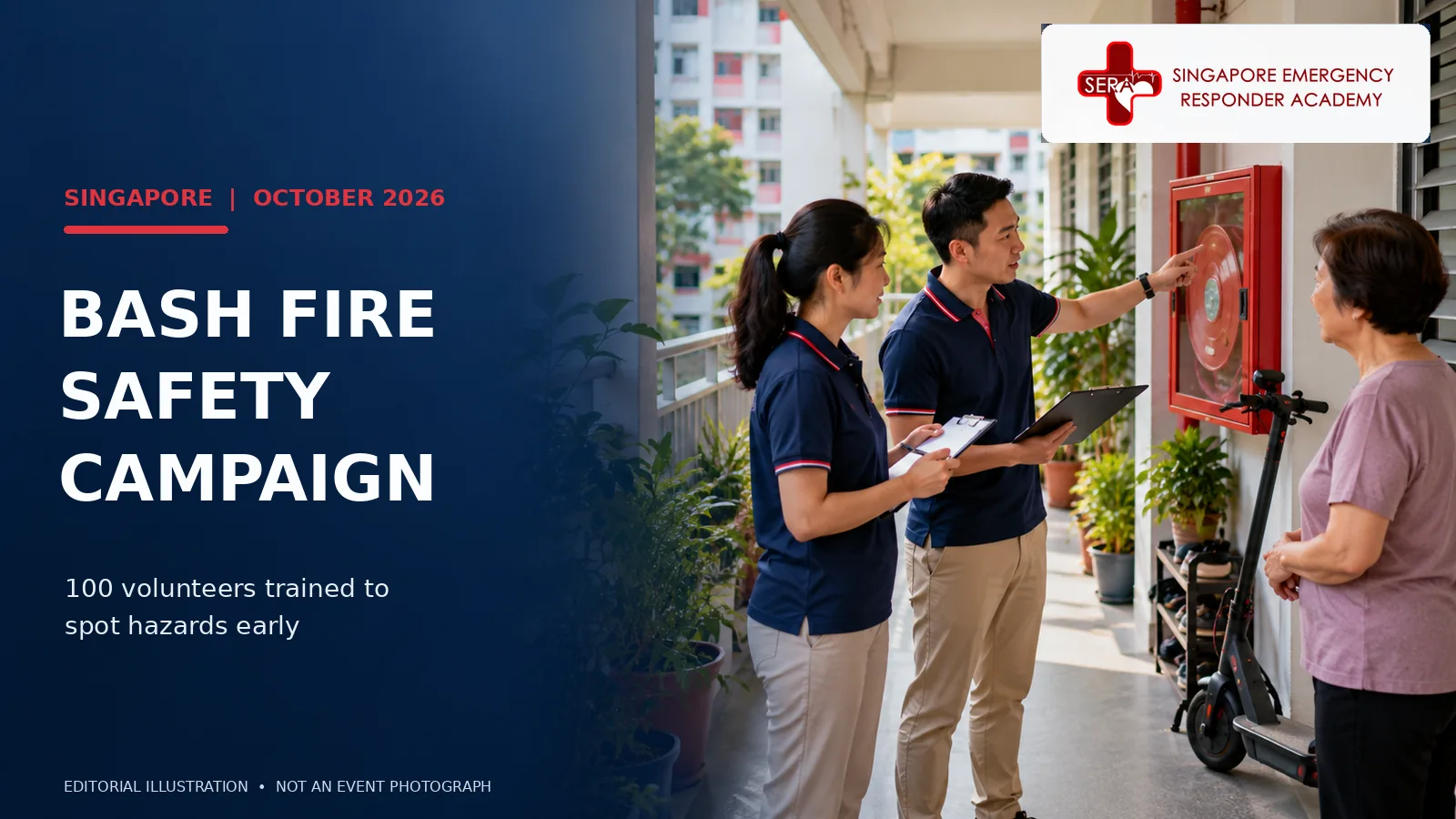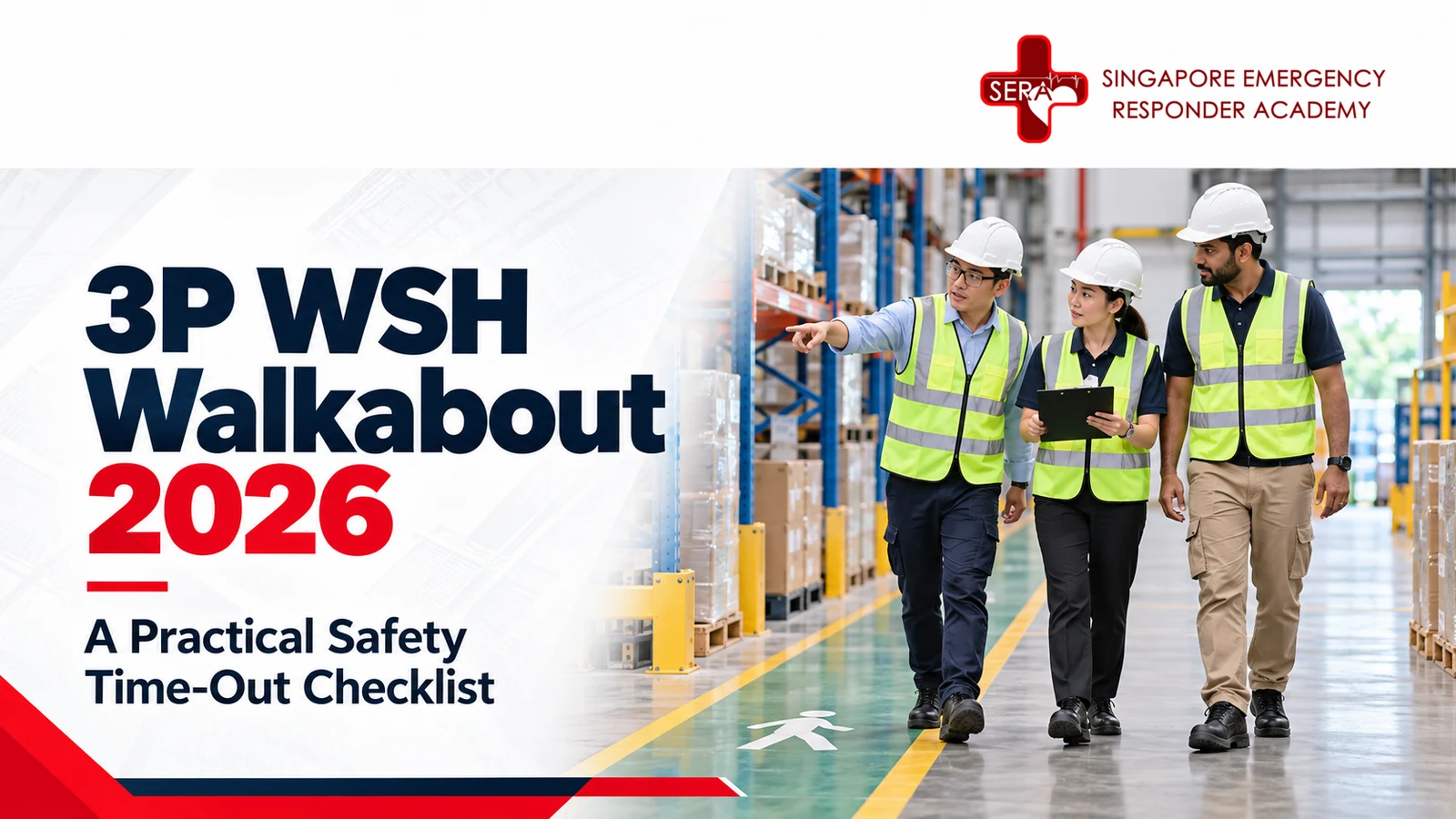
From 28 to 30 October 2026, SIDEX–ACDR and FiSAC will bring fire safety and emergency-response professionals together at Singapore EXPO. Ahead of the event, explore the announced programme and practical steps employers can take to review evacuation, first aid and crisis planning. FIRE Council
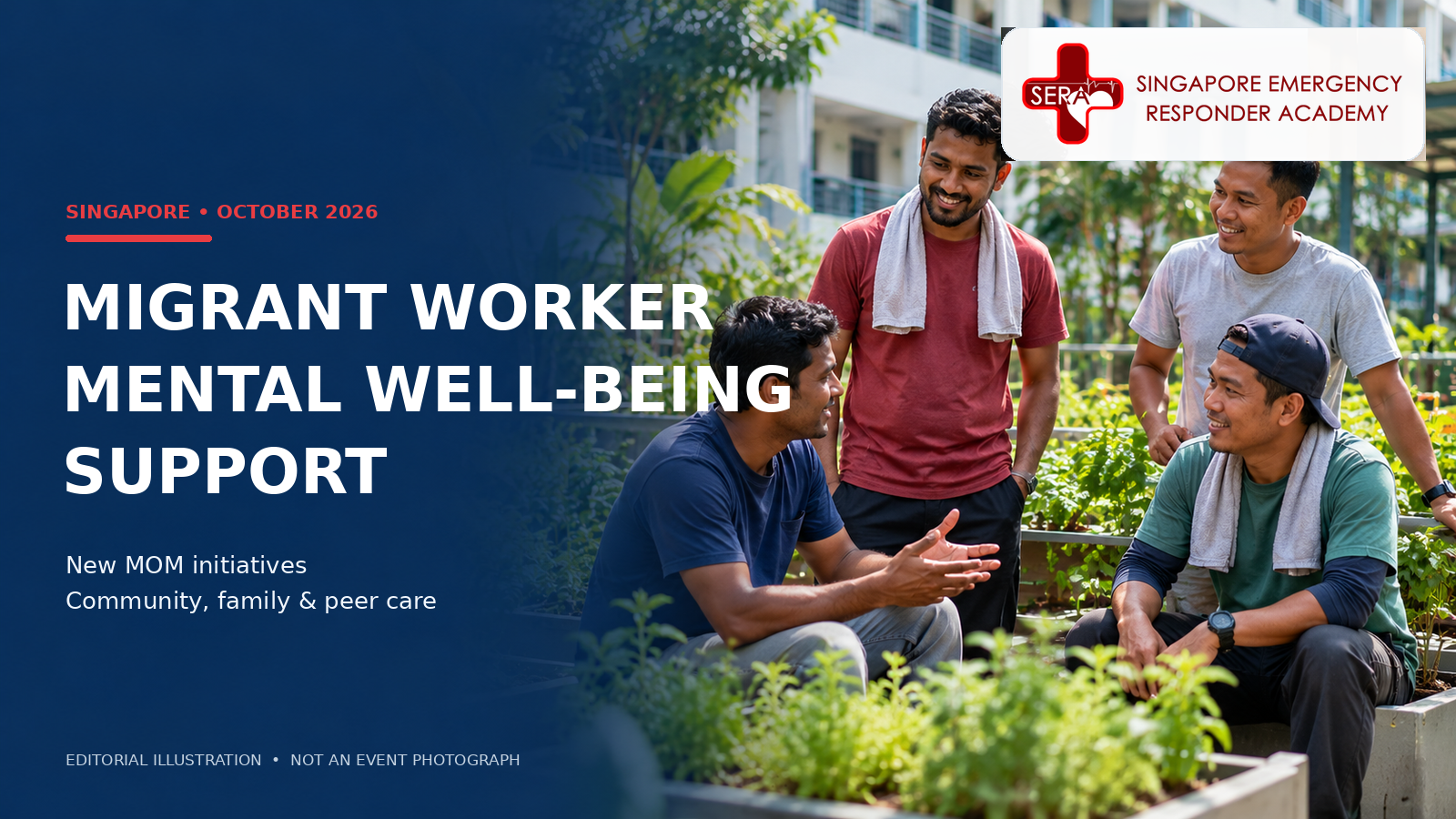
Singapore’s New Migrant Worker Mental Well-Being Initiatives: What Employers and Peer Supporters Should Know
Singapore Workplace Well-Being | October 2026
Singapore’s Ministry of Manpower (MOM) announced new initiatives on 11 October 2026 to support migrant workers’ mental well-being through stronger family connections, community activities and peer support.
What employers should know:
MOM’s initiatives include a community garden
at NESST Tukang Dormitory, parenting workshops
for migrant worker fathers and a new
long-distance parenting programme for
migrant domestic workers beginning in
November 2026.
The announcement also highlights the
importance of community support and
early recognition of emotional distress.
The announcement was made in conjunction with World Mental Health Day 2026 and a Mental Health and Wellness Carnival at NESST Tukang Dormitory.
For employers, dormitory operators and workplace supervisors, the development reinforces an important principle: supporting worker well-being involves more than responding when someone is already experiencing a crisis.
1. What Did MOM Announce on 11 October 2026?
According to MOM’s official announcement , the initiatives focus on strengthening social connections, family relationships and community support.
A Community Garden at NESST Tukang Dormitory
MOM launched the NESST Community Garden, developed in partnership with the National Parks Board under its Community in Bloom programme.
The garden followed a successful pilot in which residents grew edible plants. Workers participated in choosing plants, maintaining the garden and sharing the harvest.
The initiative provides opportunities for residents to relax, interact and build relationships with people from different backgrounds.
Parenting Support for Migrant Worker Fathers
MOM also highlighted parenting workshops conducted by the Centre for Fathering under its Dads for Life movement.
Supported by community partners, including HealthServe and The Salvation Army, the workshops have benefited more than 80 migrant worker fathers to date.
Participants learn parenting skills and discuss challenges associated with maintaining family relationships while working overseas.
Long-Distance Parenting for Domestic Workers
A new online Long Distance Parenting Programme conducted by Uplifters Singapore is scheduled to begin in November 2026.
The programme aims to support migrant domestic workers who are mothers by strengthening communication and relationships with their children.
MOM expects the programme to reach more than 600 migrant domestic workers and 900 children over three years. These are projected beneficiaries, not completed participation figures.
20 Peer Support Leaders Recognised
MOM recognised 20 Peer Support Leaders at NESST Tukang Dormitory for their contributions to peer outreach and para-counselling. Their work supports early identification and assistance for workers experiencing difficulties.
2. Why Does This Matter for Workplace Mental Well-Being?
Migrant workers may experience challenges related to family separation, financial responsibilities, work stress and adjusting to life overseas.
These experiences do not automatically indicate a mental health condition. However, supportive relationships and accessible assistance can help people manage difficulties and seek help when necessary.
MOM’s Tripartite Advisory on Mental Health and Well-Being at Workplaces encourages employers to build supportive work environments, train supervisors to recognise distress and establish clear referral arrangements.
Important distinction:
MOM’s 11 October announcement does
not introduce a new mandatory
psychological first aid certification
requirement for employers.
Psychological support training
remains a practical option that
organisations can consider as part
of their broader employee
well-being arrangements.
3. Five Practical Lessons for Employers and Supervisors
The following recommendations are general workplace support practices informed by MOM’s advisory and established psychological first aid principles. They are not additional requirements announced on 11 October.
01
Build Opportunities for Social Connection
Encourage appropriate recreational activities and worker-led initiatives that strengthen relationships. Provide opportunities for workers to interact outside immediate work tasks without making participation compulsory.
02
Train Supervisors to Recognise Distress
Supervisors should know how to notice significant changes in behaviour, listen without judgement and direct colleagues towards suitable help. They should not attempt to diagnose mental health conditions.
03
Establish a Peer Support Network
Identify suitable employees who are willing to provide supportive conversations and help colleagues access resources. Provide training, clear boundaries and procedures for escalating serious concerns.
04
Make Support Accessible Across Languages
Explain available support channels in languages workers understand. Where possible, identify counselling or support services that can communicate in workers’ preferred languages.
05
Protect Privacy and Encourage Early Help-Seeking
Employees should understand how their concerns will be handled and when information may need to be shared for safety reasons. Avoid unnecessary disclosure and ensure managers respond sensitively when someone requests assistance.
4. How Can Psychological First Aid Help?
Psychological First Aid (PFA) is a supportive approach for people affected by distressing events. It does not replace counselling, medical assessment or psychiatric care.
The World Health Organization’s Psychological First Aid guidance provides a framework for practical, humane assistance that respects a person’s dignity and circumstances.
Its commonly used action principles are Look, Listen and Link.
- Look: Identify immediate safety concerns, urgent needs and signs of serious distress.
- Listen: Approach respectfully, ask what assistance is needed and listen without pressuring someone to share personal details.
- Link: Help the person access practical assistance, trusted relationships and appropriate professional services.
Know when to escalate.
If someone appears to be in immediate danger of harming themselves or others, do not leave them alone if it is safe to remain with them. Seek urgent professional assistance.
For immediate life-threatening emergencies, call 995 or the appropriate emergency service. For mental health support, Singapore’s national mindline 1771 provides round-the-clock assistance. The Samaritans of Singapore crisis hotline is 1767.
Refer to MOH’s mental health services directory for further information.
5. Psychological First Aid vs Peer Support: What’s the Difference?
Although both approaches can strengthen workplace preparedness, they serve different purposes.
Psychological First Aid provides immediate, practical support following distressing or crisis situations.
Peer support focuses on ongoing supportive relationships, early recognition of concerns and appropriate referral.
First Aid in Mental Health training focuses on recognising potential mental health difficulties and providing initial assistance.
None of these approaches makes a peer supporter a qualified mental health professional.
Organisations should choose training based on the role participants will perform and the type of support required.
Relevant SERA Psychosocial Support Training
Psychological First Aid
Learn practical approaches to supporting people affected by distressing situations, including active listening and referral.
Explore Psychological First Aid →First Aid in Mental Health
Develop awareness of common mental health concerns and learn how to provide appropriate initial support.
Explore First Aid in Mental Health →Peer Supporter Programme
Build practical peer support skills for workplaces and organisations, including supportive communication and referral awareness.
Explore Peer Support Training →Build a More Supportive Workplace
MOM’s latest initiatives highlight the value of community connections, early recognition and accessible support for workers.
Singapore Emergency Responder Academy provides Psychological First Aid, First Aid in Mental Health and Peer Supporter training for individuals and organisations.
Request Corporate TrainingFrequently Asked Questions
1. What did MOM announce on 11 October 2026?
MOM announced initiatives including a community garden, parenting workshops for migrant worker fathers and a long-distance parenting programme for migrant domestic workers.
2. When does the long-distance parenting programme begin?
The programme conducted by Uplifters Singapore is scheduled to begin in November 2026.
3. How many workers are expected to benefit?
MOM expects the new long-distance parenting programme to reach more than 600 migrant domestic workers and 900 children over three years.
4. Is psychological first aid now mandatory for employers?
No new mandatory psychological first aid training requirement was announced on 11 October 2026. Employers should continue complying with applicable workplace obligations.
5. What is the role of workplace peer supporters?
Peer supporters can provide supportive conversations, recognise potential difficulties and guide colleagues towards appropriate resources. They do not replace professional care.
6. What is the difference between PFA and counselling?
Psychological First Aid offers immediate, practical assistance after distressing events. Counselling involves structured support provided by appropriately qualified professionals.
7. Where can someone in Singapore seek mental health support?
National mindline 1771 provides 24-hour mental health support. People experiencing suicidal distress may contact Samaritans of Singapore at 1767. Immediate life-threatening emergencies require urgent help.
Official Sources and Further Reading
- Ministry of Manpower — New Initiatives to Strengthen Migrant Community’s Mental Well-Being, 11 October 2026
- MOM — Tripartite Advisory on Mental Health and Well-Being at Workplaces
- Ministry of Health — World Mental Health Day Message, 10 October 2026
- World Health Organization — Psychological First Aid: Guide for Field Workers
- Ministry of Health — Mental Health Services and Support Resources
This article discusses initiatives announced on 11 October 2026. Future participation figures are identified as projections. The article provides general information and does not replace professional mental health advice.

Related Posts