Singapore's Haze Subsidy Scheme begins on 12 October 2026 as worsening air quality raises health concerns. Find out which Singaporeans qualify for subsidised treatment, how much patients pay, which conditions are covered, and when to visit a participating GP clinic, polyclinic or emergency department.

Singapore’s New Scaffold Fire Safety Rules: Evacuation and Burn First Aid
Singapore workplace safety • September 2026 policy update
Singapore’s new scaffold fire safety rules make this a timely moment to review how your workplace prevents fires, evacuates people and provides first aid for burns.
On 24 September 2026, MOM announced updated scaffold fire safety requirements. The changes address timber scaffold duration and fire-retardant netting. They also offer a practical prompt for contractors, building managers and workplace first aiders to check their emergency arrangements.
01Understand the announced implementation dates
- 1 January 2027: permitted timber scaffold use reduces from nine months to three months, with case-by-case exemptions possible.
- 1 March 2027: netting enveloping scaffolds outside buildings must meet specified fire-retardant standards for projects awarded on or after this date, regardless of scaffold material.
- 1 March 2028: fire-retardant netting must also have certification from Singapore Accreditation Council-accredited certification bodies.
Project teams should check procurement, schedules and compliance documentation against the announced scope. Do not assume one implementation date applies to every change.
02Make evacuation workable during building works
The WSH Council’s fire risk guidance highlights escape routes, emergency exits, assembly points, accessible fire protection equipment and effective communication. These arrangements deserve a fresh check whenever site conditions change.
Walk the route with someone unfamiliar with the project. Can they identify the exit without asking a supervisor? Would temporary barriers, deliveries or stored equipment make the route confusing? Record practical problems and assign someone to resolve them.
For occupied buildings, coordinate with building management so workers understand the applicable evacuation arrangements. Include visitors, subcontractors and people who may need assistance. A plan should explain who communicates with each group.
Fire response: protect people first
Raise the alarm and call 995 from a safe location. Follow the site’s emergency plan and avoid entering smoke or flames to attempt a rescue. SCDF’s high-rise fire guidance advises using exit staircases rather than lifts.
Tell the dispatcher the address, affected block or floor, access point and whether anyone is injured or unaccounted for. Follow their instructions.
03Provide burn first aid in a safe area
Begin treatment only after you and the casualty are clear of immediate danger. A first aid kit beside an unsafe work area does not make that area suitable for treatment.
SingHealth’s burn guidance recommends the following:
- Cool: use cool or lukewarm running water for 10–20 minutes. Do not apply ice or ice-cold water.
- Remove constricting items: gently remove jewellery and tight clothing before swelling develops. Leave clothing stuck to the burn in place.
- Cover: after cooling, use a clean, non-stick dressing. Avoid cotton wool and other fluffy materials.
- Avoid home remedies: do not apply butter, oil or toothpaste, and do not burst blisters.
SCDF’s published burns guidance similarly emphasises cooling, removing constrictors, covering and consulting a doctor, with 995 for severe burns.
04Recognise when professional help is urgent
Call 995 for severe burns or breathing difficulty after a fire. Follow the dispatcher’s advice; do not delay the call while trying to complete cooling.
SingHealth advises emergency department assessment for electrical or strong chemical burns, burns involving the face or genitalia, charred burns and areas larger than one palm. Burns with blisters warrant GP or polyclinic assessment.
These care thresholds do not mean every burn requiring hospital assessment needs an emergency ambulance. SCDF lists slight burns and scalds among examples of non-emergency conditions.
05Test the handover between evacuation and first aid
Rehearse a simple scenario: a worker reaches the assembly area with a burn while a colleague reports someone missing. Who calls 995, who stays with the casualty, and who gives the headcount to responders?
Use the exercise to check whether response roles conflict. Ask participants to demonstrate where they would obtain water and dressings, rather than simply naming the supplies.
Before your next site briefing
- Confirm the current escape route and assembly point.
- Identify first aiders available on each shift.
- Check access to water and usable dressings.
- Assign emergency calling and responder access roles.
- Review what changed after each drill.
Choose training for your response role
Pair practical training with your site’s procedures. Course selection should match the person’s appointment and your organisation’s needs.
Occupational First Aid
Develop first aid skills for workplace injuries and medical emergencies.
Explore OFA →CERT First Aid
Training intended for appointed Company Emergency Response Team first aiders.
Explore CERT First Aid →OFA Refresher
Refresh practical skills if you hold a valid Occupational First Aid certificate.
Explore refresher training →Frequently asked questions
Are all the scaffold changes effective immediately?
No. The announced changes have separate commencement dates in 2027 and 2028.
Does the netting requirement apply only to timber scaffolds?
No. Its announced scope includes external scaffolds regardless of their material.
Should I put ice on a burn?
No. Use cool or lukewarm running water; ice can damage tissue.
Should I remove clothing stuck to a burn?
No. Leave stuck material in place to avoid further injury.
Can a small burn still need medical assessment?
Yes. The location, cause and appearance matter, as well as its size.
Does first aid certification replace an evacuation drill?
No. Teams must also practise their own alarm, evacuation, communication and handover arrangements.
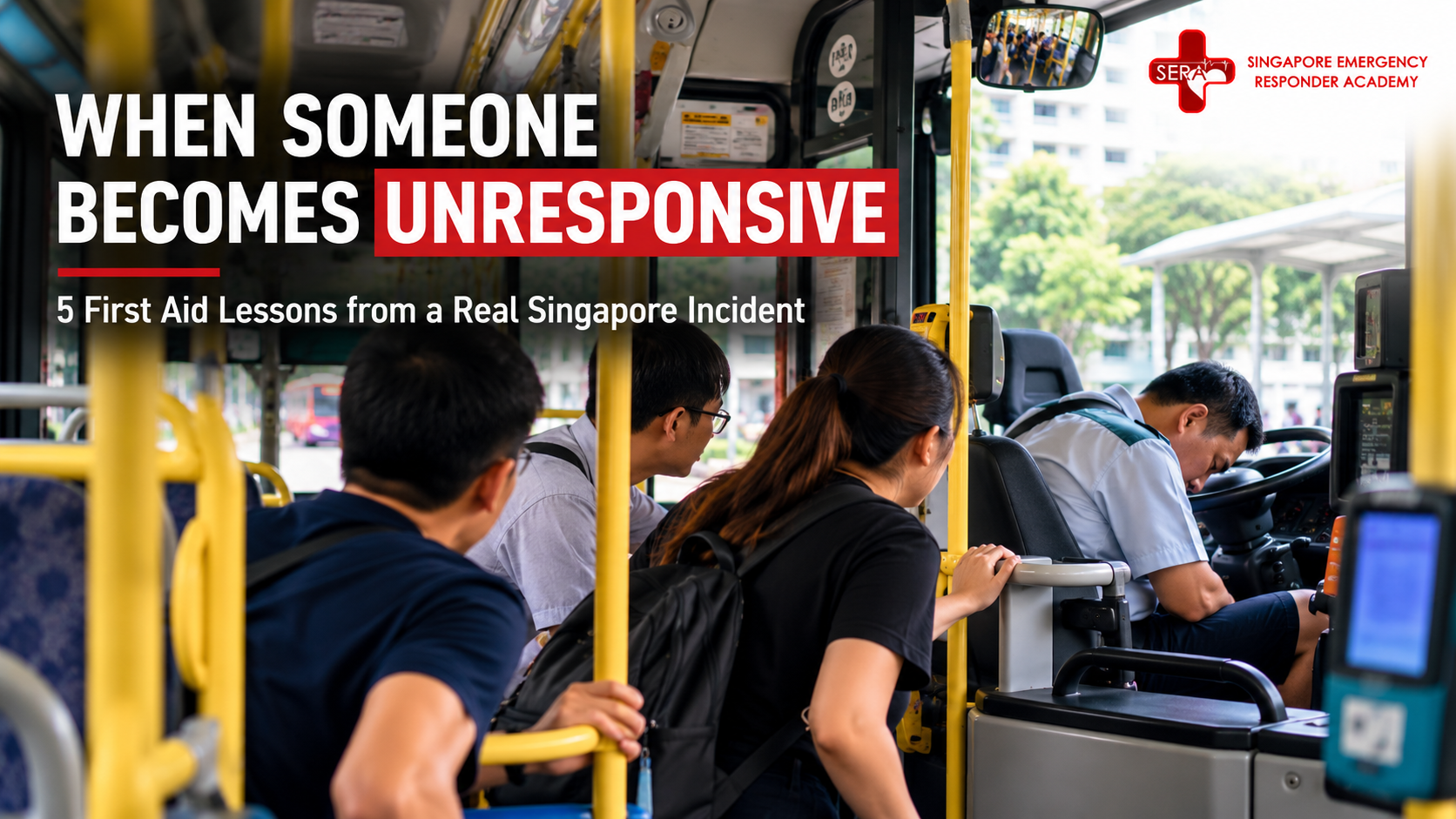
Sources checked on 11 October 2026. Featured image is an editorial illustration, not a documented incident.

Related Posts