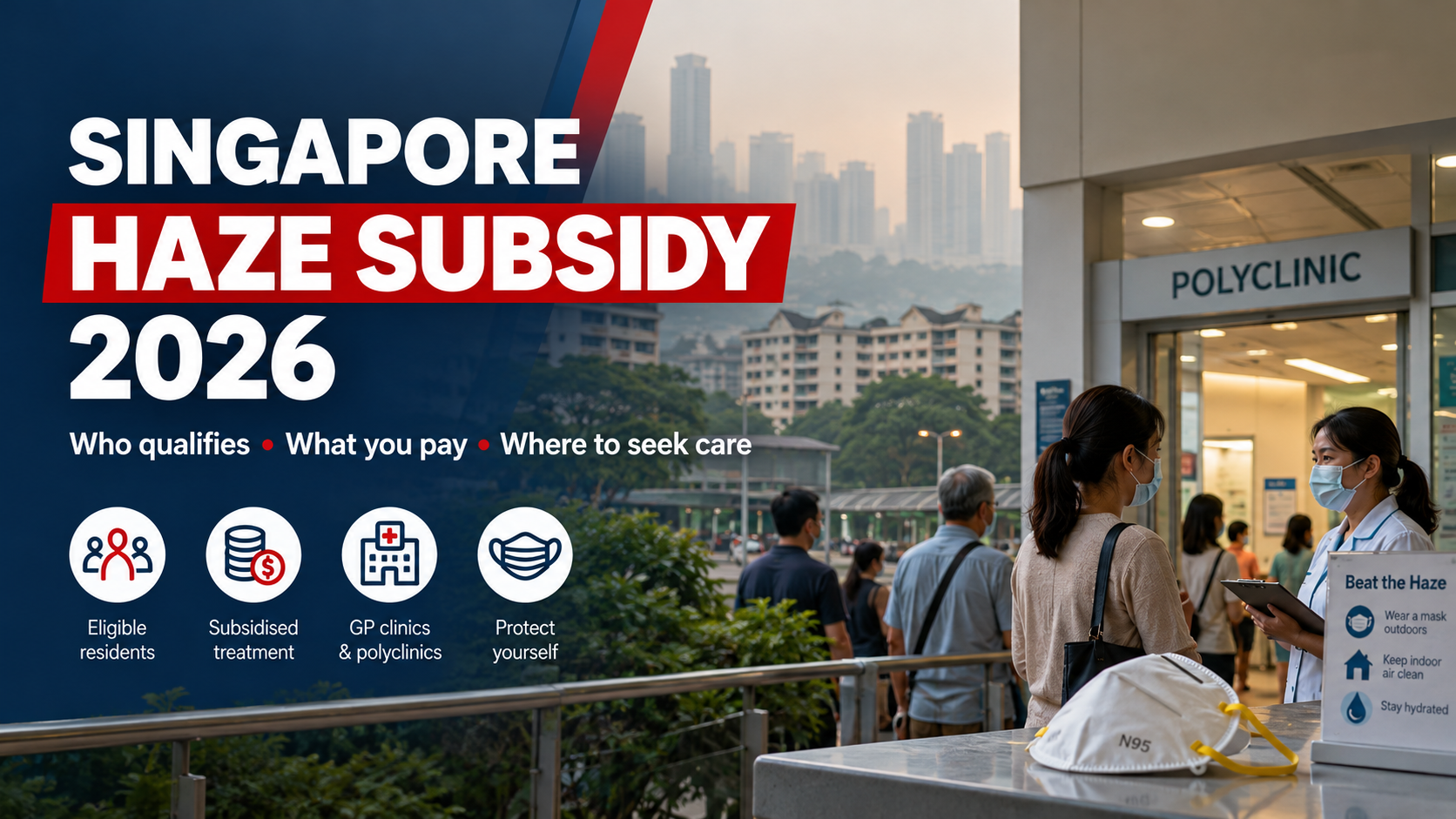
Singapore's Haze Subsidy Scheme begins on 12 October 2026 as worsening air quality raises health concerns. Find out which Singaporeans qualify for subsidised treatment, how much patients pay, which conditions are covered, and when to visit a participating GP clinic, polyclinic or emergency department.
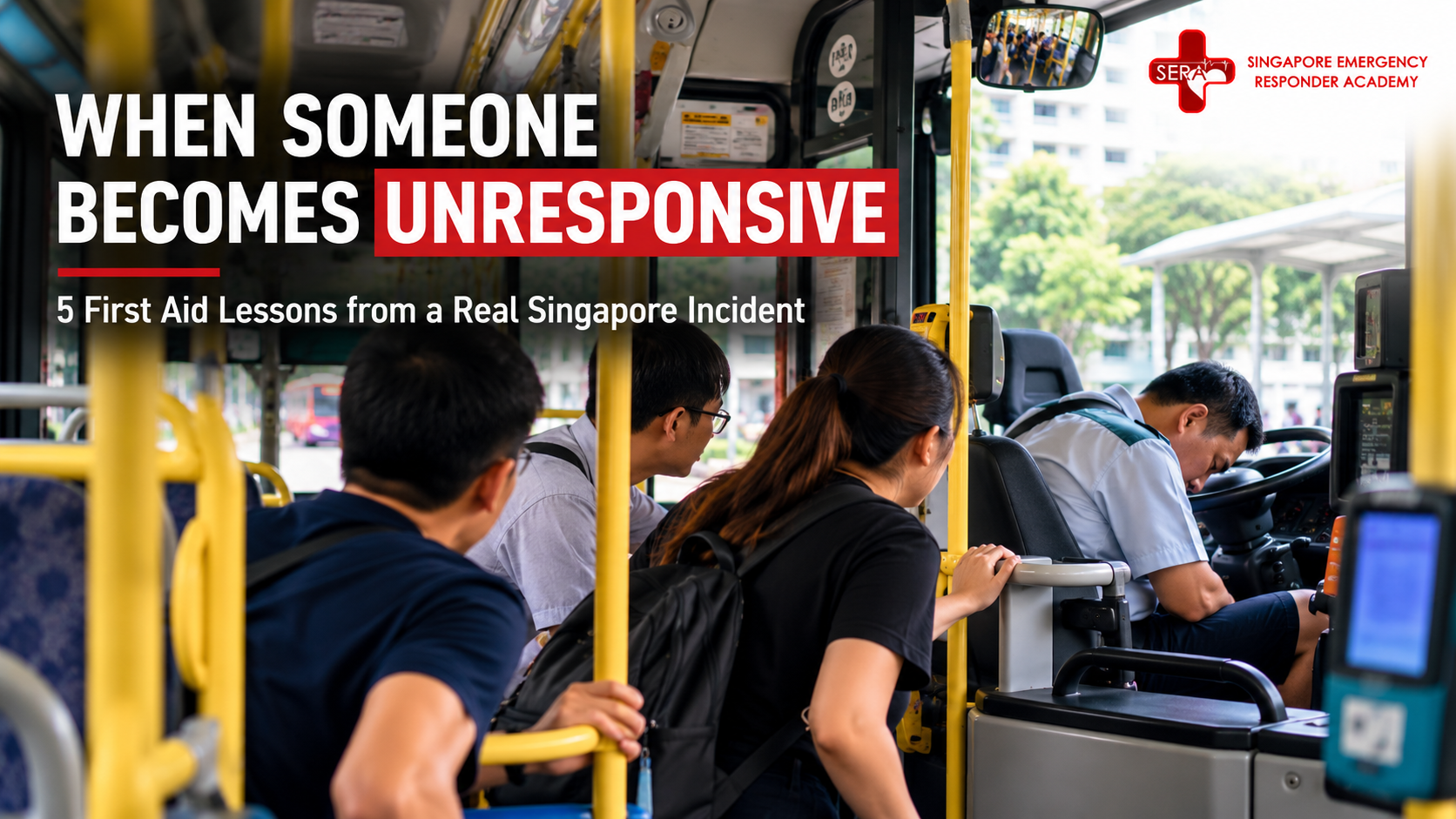
When a Bus Driver Became Unresponsive: What the Hougang Incident Teaches Us About Emergency Response
REAL INCIDENT · SINGAPORE · SEPTEMBER 2026
What should you do when someone suddenly becomes unresponsive? A recent medical emergency on a public bus in Hougang provides a powerful real-life example of why first aid and emergency response skills matter — even when CPR is not immediately required.
On 14 September 2026, a Tower Transit bus captain operating Service 854 experienced a sudden medical emergency and became unresponsive while approaching a bus stop along Hougang Avenue 3.
Instead of assuming someone else would help, several members of the public stepped forward. Their quick thinking helped bring the bus safely to a stop, summon medical assistance and ensure the driver received timely care.
The key takeaway: emergency response is not only about knowing CPR. It starts with recognising danger, making the scene safe and taking appropriate action.
What Happened During the Hougang Bus Medical Emergency?
The Incident
According to reports by The Straits Times and Mothership, the Tower Transit bus captain suffered a sudden medical emergency while driving Service 854 along Hougang Avenue 3.
A man waiting at the bus stop noticed the driver slumped in the driver’s cabin and banged on the bus doors to alert the passengers inside.
- One commuter checked on the unresponsive bus captain.
- Another called for an ambulance.
- A passenger helped engage the bus’s handbrake to bring the vehicle safely to a stop.
- An SBS Transit bus captain nearby alerted Tower Transit’s control centre.
One of the passengers was later identified as Ngee Ann Polytechnic student Neo Ying Ying, who stayed with the bus captain until the ambulance arrived.
The driver was subsequently reported to be in a stable condition and receiving medical care.
Check for Danger Before Helping a Casualty
One of the most important first aid lessons from the Hougang incident happened before any medical treatment was provided.
The casualty was behind the wheel of a bus.
This meant responders were dealing with two potential emergencies at the same time: an unresponsive casualty and a vehicle that needed to be secured.
By engaging the handbrake and bringing the bus safely to a stop, the commuters reduced the risk of further injury to the driver, passengers and other road users.
This illustrates one of the fundamental principles of first aid: check for danger before approaching or treating a casualty.
Depending on the environment, potential hazards might include:
- Moving vehicles
- Operating machinery
- Live electrical sources
- Fire or smoke
- Chemical exposure
- Falling objects
Rushing into an unsafe environment can create another casualty and make the emergency more difficult to manage.
Recognising an Unresponsive Casualty Is a Critical Skill
The commuter waiting at the bus stop did not know what medical condition the bus captain was experiencing.
He did not need to.
What mattered was recognising that the driver was slumped over and not responding normally.
Loss of consciousness can have many possible causes, including fainting, seizure, stroke, low blood sugar, serious illness or cardiac arrest.
A first aider’s role is not to make a medical diagnosis. The immediate priority is to recognise that something is wrong, assess the casualty appropriately and obtain help when required.
If someone is unresponsive, first aiders should follow the casualty assessment sequence taught during accredited first aid training and continue monitoring the person’s breathing and condition.
If the casualty is unresponsive and not breathing normally, the situation may be cardiac arrest and CPR and an Automated External Defibrillator (AED) may be required.
Emergency Response Works Better as a Team
The Hougang incident also demonstrates how effective emergency response often involves several people performing different roles.
- One person recognised that something was wrong.
- Someone raised the alarm.
- A commuter checked on the casualty.
- Another person called for an ambulance.
- Someone secured the vehicle.
- A nearby bus captain contacted the operations control centre.
The same principle applies during a workplace emergency.
When a colleague suddenly collapses, one employee may assess the casualty while another calls 995. A third person can retrieve the AED or first aid kit, while someone else guides Singapore Civil Defence Force responders to the casualty’s location.
“If an emergency happened today, would our team know how to respond together?”
An Unresponsive Casualty Must Be Monitored Closely
A person who is unconscious or unresponsive may still be breathing when initially assessed.
That does not mean the emergency is over.
The casualty’s condition can deteriorate, so continued monitoring is important while waiting for professional medical assistance.
If an unresponsive casualty stops breathing normally, trained responders may need to begin CPR and use an AED.
11,000+
AEDs are registered in Singapore’s national AED repository, according to the Singapore Civil Defence Force (SCDF). Nearby AED locations can be accessed through the myResponder app.
SCDF also reported that the myResponder community had grown to more than 246,300 registered Community First Responders by November 2025.
This nationwide network reinforces an important principle: people who happen to be nearby can play a critical role before professional responders arrive.
Ordinary Bystanders Can Make a Meaningful Difference
The people who responded during the Hougang incident were not an ambulance crew waiting for an emergency call.
They were commuters going about an ordinary day.
Yet they became the first people in a position to help.
This matters because emergency medical services cannot be physically present at the moment every medical emergency begins.
705
Average Emergency Medical Services calls attended by SCDF each day in 2025. SCDF handled 257,158 EMS calls during the year. View the SCDF statistics →
Community participation is also growing. SCDF reported that the overall response rate by Community First Responders to suspected cardiac arrests and minor fires increased from 50.3% in 2024 to 72.4% in 2025.
The lesson is straightforward: the first person able to help during an emergency may be a colleague, commuter, teacher, security officer or member of the public.
What Can Singapore Workplaces Learn from the Hougang Incident?
Although this incident happened on a public bus, the same type of emergency could occur almost anywhere.
A driver could become unresponsive in a company vehicle. A colleague could collapse beside machinery. An employee could lose consciousness at their desk. A customer could suddenly become unwell inside a shop.
Is your workplace ready?
- Would employees recognise that the situation requires urgent attention?
- Would someone know how to make the scene safe?
- Do employees know when and how to call 995?
- Are sufficient trained first aiders available?
- Does the workplace have an AED, and do employees know where it is?
- Would staff know what to do if the casualty stopped breathing normally?
- Has the organisation ever practised its emergency response procedures?
A written emergency plan is important. However, practical training helps employees turn that plan into action when an actual emergency occurs.
Why Practical First Aid Training Matters
One of the most useful lessons from the Hougang emergency is that helping does not always mean performing a complicated medical procedure.
Effective first aid may begin with:
- Recognising that something is wrong
- Checking for danger
- Calling for professional help
- Assessing an unresponsive casualty
- Retrieving first aid equipment or an AED
- Monitoring the casualty
- Providing CPR if required
Training gives responders a structured framework for deciding what action is needed and when.
Choose the Right SERA First Aid Course
The appropriate course depends on your role. Explore SERA’s nationally recognised training options below:
Standard First Aid
Comprehensive first aid skills for sports coaches, teachers and individuals.
Occupational First Aid
Designed for appointed workplace first aiders and occupational emergencies.
BCLS + AED
Develop practical CPR, choking management and AED skills.
Be Ready Before an Emergency Happens
The commuters travelling through Hougang on 14 September did not begin their journeys expecting to encounter a medical emergency. None of us do.
When somebody suddenly becomes unresponsive, the people already nearby may have the earliest opportunity to recognise the danger, summon professional help and prevent the situation from becoming worse.
You cannot predict when an emergency will happen — but you can prepare for how you will respond.
Explore SERA’s First Aid Courses →Frequently Asked Questions About Responding to an Unresponsive Casualty
What should I do if someone suddenly becomes unresponsive in Singapore?
First check that the environment is safe. Assess the casualty according to your first aid training and obtain emergency assistance when required. For a medical emergency, call 995. If the casualty is unresponsive and not breathing normally, CPR and an AED may be required.
Should I give an unconscious person water?
No. Do not give food or drink to an unconscious or poorly responsive casualty, as they may be unable to swallow safely.
When should I call 995 in Singapore?
995 should be used for medical emergencies requiring emergency ambulance assistance, including loss of consciousness, cardiac arrest, breathing difficulties, severe trauma or other potentially life-threatening conditions.
Where can I find an AED in Singapore?
SCDF’s myResponder app provides information on registered AED locations. SCDF has reported more than 11,000 AEDs in its national repository.
Which first aid course should I take in Singapore?
The appropriate course depends on your role. Standard First Aid is suitable for sports coaches, teachers and individuals seeking comprehensive first aid skills. Appointed workplace first aiders should consider Occupational First Aid, while BCLS+AED focuses on CPR, choking management and AED use.

Related Posts