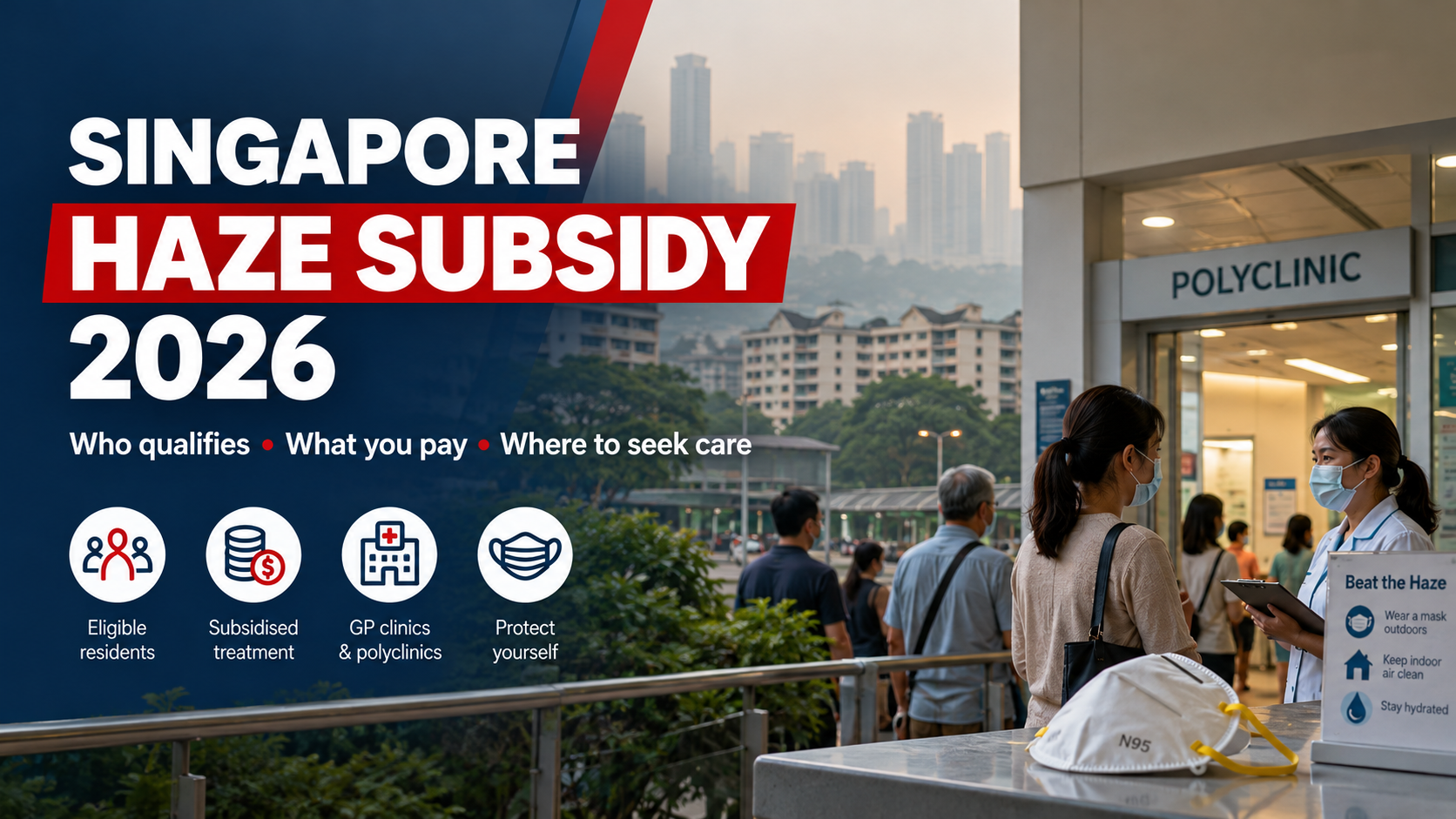
Singapore's Haze Subsidy Scheme begins on 12 October 2026 as worsening air quality raises health concerns. Find out which Singaporeans qualify for subsidised treatment, how much patients pay, which conditions are covered, and when to visit a participating GP clinic, polyclinic or emergency department.
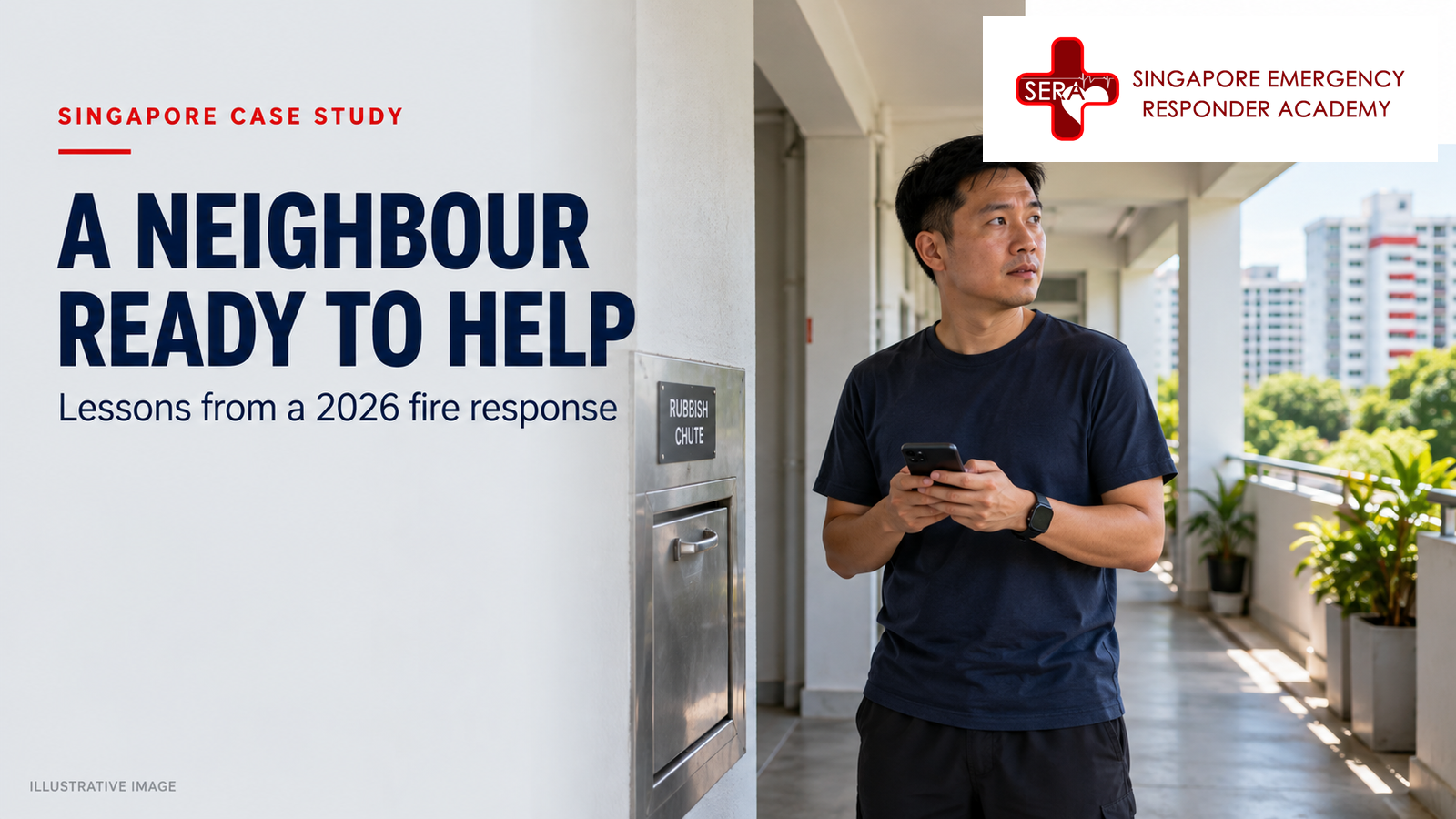
A Neighbour Ready to Help: Lessons from a Singapore Fire Response in 2026
Singapore case study · Community preparedness · Fire response
A nearby emergency can turn an ordinary evening into a moment that requires a decision. A verified March 2026 rubbish-chute fire response shows how a prepared neighbour can help—and why safe limits matter.
This case concerns Stanley Lim, an HTX specialist and registered Community First Responder. The account comes from HTX’s feature published on 25 June 2026.
Read it as a preparedness lesson: the confirmed incident is described below; the subsequent recommendations are general lessons, not additional claims about what happened.
What happened on 8 March 2026?
HTX reports that Stanley received a myResponder alert at night about a rubbish-chute fire in a nearby residential block. He arrived within minutes and found smoke entering the reporting resident’s flat.
He obtained a water hose from a neighbouring unit and extinguished the fire through the chute. The report states that he had learned firefighting and first aid skills during Company Emergency Responder training in 2013.
The source does not identify the block number or street, so an exact address cannot be provided. It also does not report injuries or a medical outcome for this fire incident.
16 May 2026
Stanley received a Community First Responder Award at the Holland-Bukit Timah and Bukit Panjang Community Resilience Day event. HTX says it recognised his assistance in two separate March incidents. Source: HTX.
Prepare before an alert arrives
The practical lesson is to make preparation part of ordinary life. Know your surroundings, understand the equipment available and refresh skills before you need them under pressure.
SCDF’s myResponder information explains that the app alerts registered volunteers to nearby fire and medical emergencies. It includes guided fire-mitigation advice and allows responders to provide photographs for scene assessment.
Signing up should include reading the tutorial and understanding the response guidance. An alert gives information; it does not remove the need to assess whether helping is safe.
Recognise the limits of community fire response
A minor rubbish-chute fire and a serious residential fire require different responses. The method described in this case must not be treated as permission to tackle every fire with water or enter a smoke-filled area.
Serious fires belong with SCDF. In its 3 March 2026 parliamentary reply, MHA explains that myResponder activates volunteers for minor fires. It states that serious HDB flat fires are safer for SCDF to handle and that volunteers may lack suitable training.
SCDF also describes volunteering as entirely voluntary and encourages response only within safe and reasonable means. If conditions are dangerous or uncertain, move to safety and call 995. Useful assistance can include accurate reporting without approaching the hazard.
Use clear information to support professional responders
Communication is a skill that can be practised. When calling for help, provide the block, street, floor and unit when known. Explain what you can see, whether anyone appears affected and where access may be difficult.
Separate observation from assumption. “Smoke is entering a flat” is more useful than guessing that everyone inside is safe. Stay available for questions and follow instructions.
Families and workplaces can rehearse these details without staging a dangerous scenario. Ask someone to describe the location as though the listener has never visited it. That simple exercise often reveals missing information.
Plan for neighbours who may need assistance
Community preparedness also includes knowing who may have difficulty moving independently. Discuss emergency contacts and access arrangements respectfully, with the person’s agreement.
MHA’s March reply explains that elderly or mobility-impaired residents who cannot evacuate independently should remain in a safe room, close the door, tell authorities their location and await assistance where necessary. Follow emergency instructions for the actual situation.
The broader lesson is to plan early. An improvised attempt to move someone through danger can create another casualty. Contact information, a clear location and an agreed plan can all support safer decisions.
Community readiness includes recognising danger, communicating clearly and knowing the limits of your skills.
How can households and teams apply these lessons?
A practical readiness checklist
- Review the myResponder tutorial if you register as a volunteer.
- Learn your building’s layout and emergency arrangements.
- Keep access routes clear and important contacts available.
- Discuss support needs with family members or colleagues.
- Schedule practical training and refreshers.
Use SCDF’s Civil Defence Emergency Handbook as a starting point for household preparedness. These planning suggestions are general recommendations, not a reconstruction of Stanley’s actions.
Build the first aid skills that complement preparedness
Fire preparedness and casualty care are connected, but different competencies. SERA’s Saving a Life with CPR and AED Skills article provides a related example of practical training. A first aid course does not qualify someone to undertake dangerous firefighting.
Standard First AidExplore practical training for everyday casualty care.
Occupational First AidStrengthen first aid readiness within a workplace team.
BCLS + AEDPractise resuscitation and AED skills for medical emergencies.
Make preparedness a practical habit
Start with skills you can practise, responsibilities you understand and an emergency plan your team can follow.
View first aid course registration →Frequently asked questions
Is this a verified Singapore incident?
Yes. HTX published the account of Stanley Lim’s 8 March 2026 rubbish-chute fire response on 25 June 2026.
Where exactly did the fire happen?
HTX describes a nearby residential block but does not publish its exact address.
Should volunteers tackle serious HDB flat fires?
No. MHA states that serious HDB flat fires are safer for SCDF to handle.
Must I respond to a myResponder alert?
No. SCDF states that response is voluntary and should remain within safe and reasonable means.
Is the featured image a photograph of Stanley?
No. It is an illustrative image of a generic volunteer, not a photograph of Stanley or the actual incident.
Case details and official guidance checked on 10 October 2026. The featured image is illustrative.

Related Posts