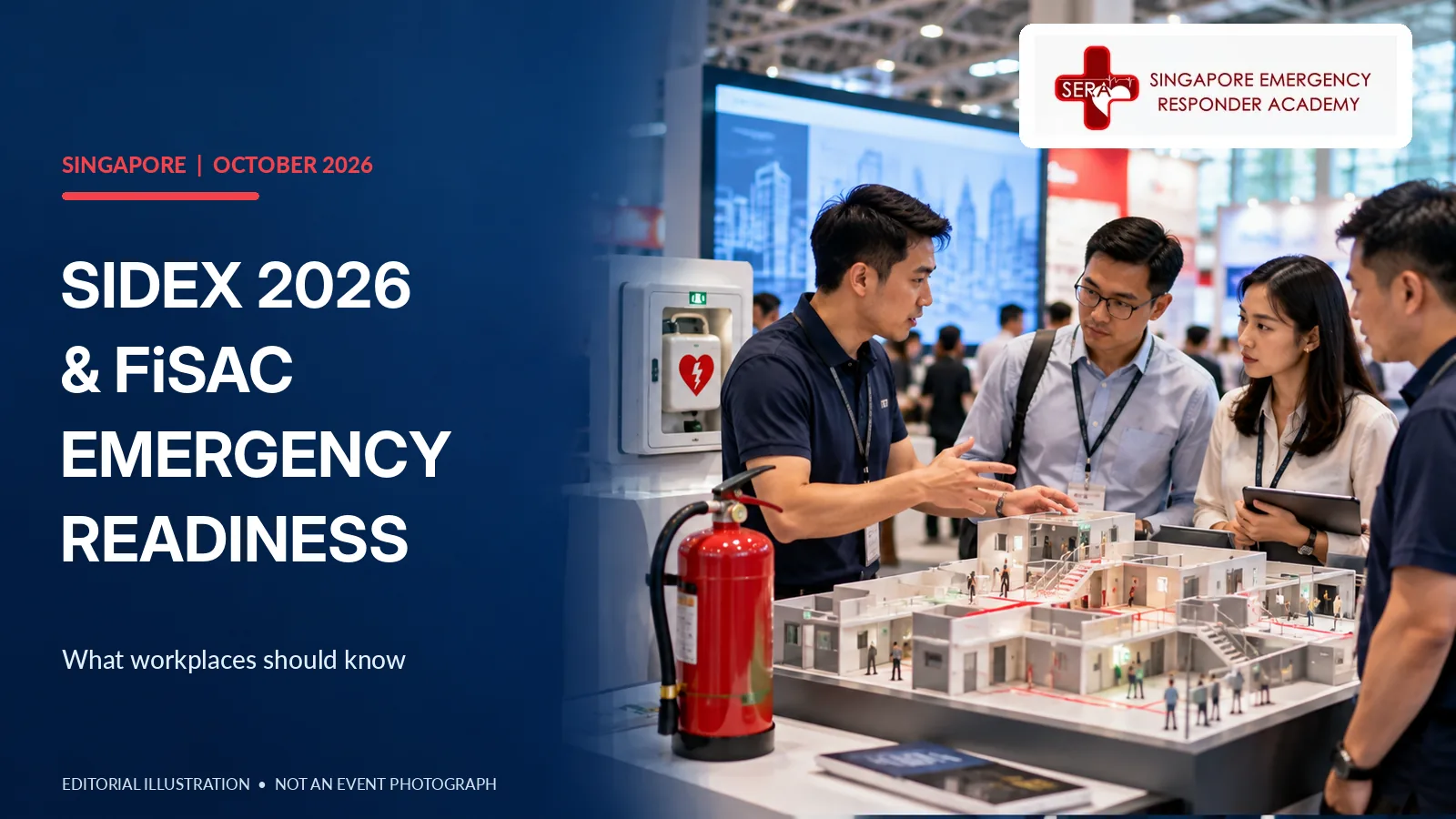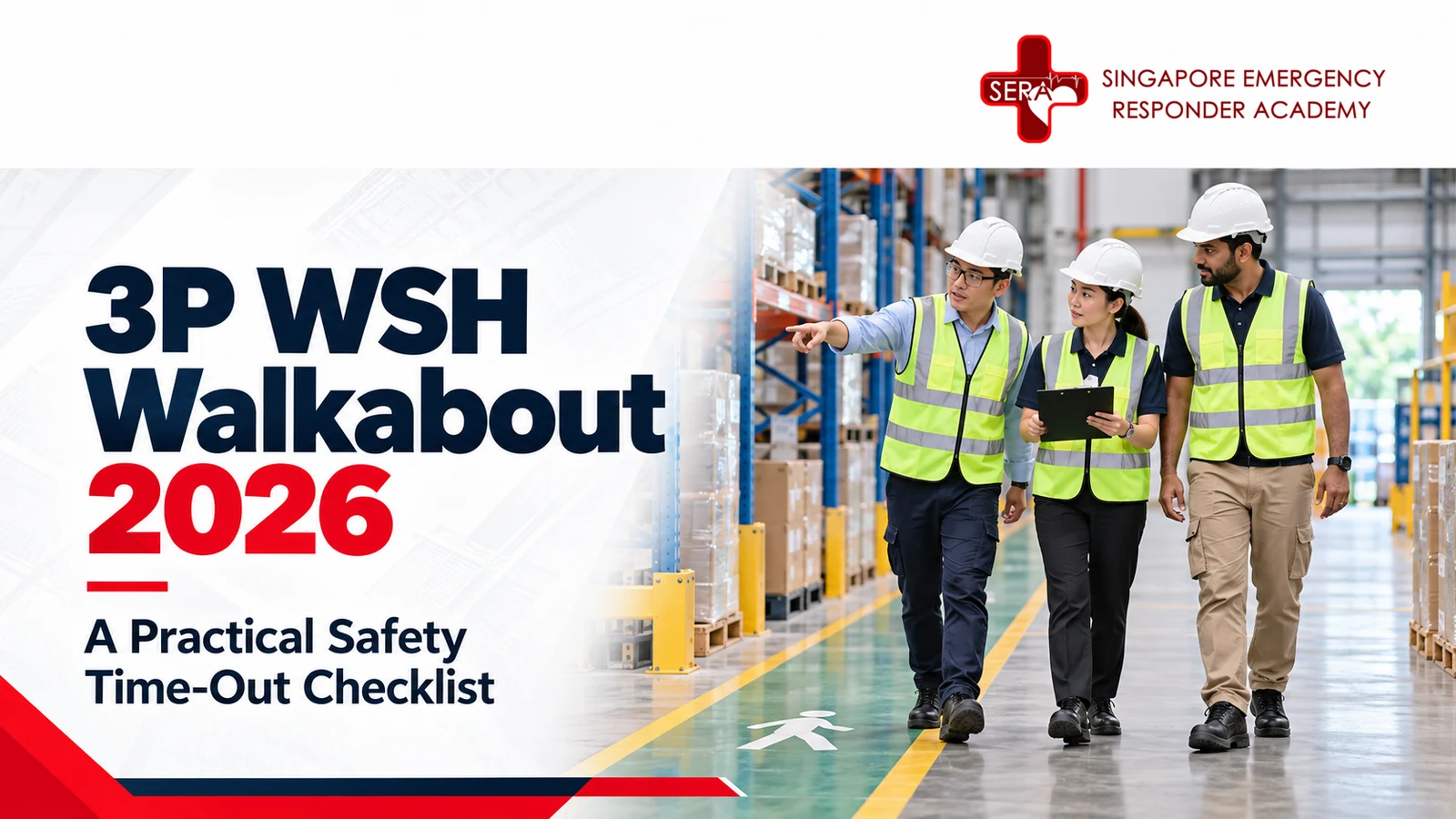
From 28 to 30 October 2026, SIDEX–ACDR and FiSAC will bring fire safety and emergency-response professionals together at Singapore EXPO. Ahead of the event, explore the announced programme and practical steps employers can take to review evacuation, first aid and crisis planning. FIRE Council
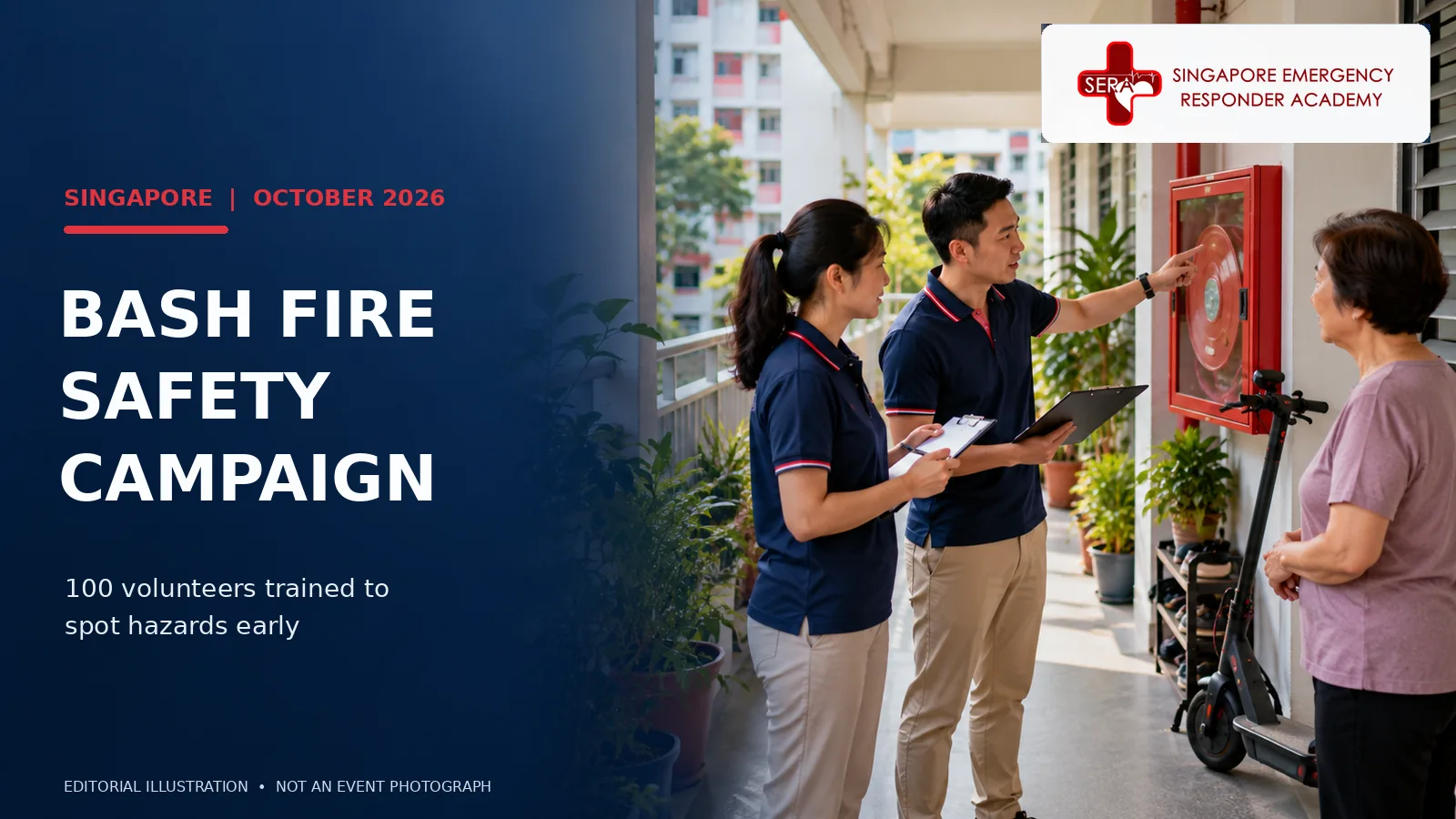
Singapore’s BASH Fire Safety Campaign: 100 Volunteers Trained to Spot Fire Hazards
Singapore Fire Safety | Community Preparedness | October 2026
Approximately 100 community volunteers attended fire safety training at Singapore Civil Defence Force (SCDF) headquarters on 6 October 2026. The session, organised by SCDF and the National Fire and Emergency Preparedness Council (NFEC), supported Singapore’s Better Awareness, Safer Homes (BASH) campaign.
What Singapore residents should know:
The BASH campaign encourages residents
to identify potential fire hazards in their
homes and common areas before emergencies occur.
The October training focused on residential
fire safety, hazard identification and
reporting, including risks associated with
non-compliant active mobility devices.
The initiative provides an important reminder that fire prevention begins with everyday decisions, from keeping corridors clear to charging electrical devices safely.
1. What Is Singapore’s BASH Fire Safety Campaign?
Better Awareness, Safer Homes (BASH) is a community fire safety initiative involving SCDF, NFEC and the People’s Association.
The campaign was highlighted during the Ministry of Home Affairs’ Responders, Partners and Volunteers Appreciation Event on 6 February 2026.
It aims to encourage residents to take greater responsibility for preventing fires at home and maintaining safe shared residential spaces.
Under the initiative, Community Emergency and Engagement Committee (C2E) volunteers support fire safety awareness and conduct surveys of common areas.
They can also report estate maintenance concerns through the OneService app.
About 100 Volunteers
On 6 October 2026, approximately 100 C2E volunteers attended a training session at SCDF headquarters. The session covered residential fire statistics, common hazards, reporting procedures and safety concerns involving active mobility devices.
Representatives from the Land Transport Authority (LTA) also participated in the session.
The October event was additional training under an existing campaign, not the launch of a new mandatory first aid certification requirement.
2. Why Is Early Fire Hazard Identification Important?
Residential fires can develop rapidly. Blocked escape routes, damaged electrical equipment and inaccessible firefighting facilities may increase the danger to residents and responders.
SCDF’s residential estate fire safety guidelines emphasise maintaining clear corridors, staircases and access to firefighting equipment.
These precautions support safer evacuation and allow emergency personnel to carry out their work more effectively.
3. Five Fire Hazards Singapore Residents Should Look Out For
The following practical checks are based on SCDF’s published guidance. They are not additional legal requirements introduced at the October training session.
01
Obstructed Common Corridors
Check whether household items obstruct the shared escape route. SCDF generally requires a minimum clear escape passage of 1.2 metres along common corridors. Shoe racks and certain movable items may be permitted when the applicable conditions are met and sufficient clearance remains.
02
Items Stored at Staircases
Exit staircases and their immediate landings must remain free of stored items. Bicycles, furniture, boxes and other belongings can obstruct evacuation during an emergency.
03
Unsafe Battery Charging
Avoid charging personal mobility devices near exits or in common corridors. Follow the manufacturer’s charging instructions and avoid using damaged, modified or incompatible batteries and chargers. Do not leave devices charging unattended for extended periods or overnight.
04
Blocked Firefighting Equipment
Check that access to hose reels, dry risers and other firefighting facilities is unobstructed. Damaged or apparently defective equipment should be reported to the relevant building management or Town Council.
05
Unreported Common-Area Hazards
Residents can report suitable estate maintenance concerns through the OneService app . Provide a clear description, location and photographs where appropriate. Do not use routine feedback channels instead of calling emergency services during an active fire.
4. Why Are Active Mobility Device Fires a Concern?
SCDF’s 2026 Civil Defence Emergency Handbook identifies lithium-ion battery fires involving active mobility devices as a significant safety concern.
When a battery enters thermal runaway, it may release heat and toxic gases, and the fire can spread rapidly.
If an active mobility device catches fire:
- Alert people nearby.
- Evacuate immediately using a safe route.
- Close the door when leaving, if safe.
- Call 995.
- Do not attempt to fight a lithium-ion battery fire.
These precautions follow SCDF’s Civil Defence Emergency Handbook, 10th Edition (2026) .
5. What Should You Do During a Residential Fire?
Fire prevention is the priority, but households should also know how to respond if a fire occurs.
Alert others, activate emergency services and evacuate through a safe route.
Do not enter smoke-filled areas or attempt dangerous rescues without appropriate training and protective equipment.
Once everyone is in a safe area, trained first aiders can provide appropriate assistance to casualties while awaiting professional help.
Anyone experiencing serious breathing difficulties, collapse or reduced responsiveness after smoke exposure requires urgent medical assistance.
6. What Can Workplaces and Organisations Learn?
Although BASH focuses on residential fire safety, its prevention-first approach is also relevant to offices, schools and commercial premises.
Organisations can review housekeeping, emergency access, equipment maintenance and employee awareness.
They should also establish clear procedures for alerting emergency services, evacuating safely and providing first aid once conditions are safe.
First aid training complements these arrangements but does not replace fire safety compliance or specialist firefighting and rescue training.
Relevant SERA Emergency Response Training
Standard First Aid
Learn practical first aid skills for common injuries and medical emergencies, including CPR and AED use.
Explore Standard First Aid →CERT First Aid
First aid, CPR and AED training for appointed Company Emergency Response Team first aiders.
Explore CERT First Aid →CPR + AED
Develop practical skills to recognise adult cardiac arrest, perform CPR and operate an AED.
Explore CPR + AED →Build a Safer, Better-Prepared Organisation
Recognising hazards is an important part of prevention. Knowing how to respond when an emergency occurs is equally important.
Singapore Emergency Responder Academy provides practical first aid, CPR+AED and workplace emergency response training for individuals and corporate groups.
Request Corporate TrainingFrequently Asked Questions
1. What is the BASH fire safety campaign?
Better Awareness, Safer Homes is a Singapore community initiative that encourages residents to identify and prevent fire hazards in homes and shared residential spaces.
2. Who organised the October 2026 volunteer training?
The Singapore Civil Defence Force and National Fire and Emergency Preparedness Council organised the 6 October training session.
3. How many volunteers attended?
Approximately 100 Community Emergency and Engagement Committee volunteers attended the training session at SCDF headquarters.
4. Are shoe racks prohibited in HDB corridors?
Not necessarily. SCDF permits certain shoe racks and movable items subject to conditions, including maintaining a minimum 1.2-metre clear escape passage.
5. How can residents report blocked corridors?
Residents can submit suitable common-area maintenance concerns through the OneService app or contact their Town Council.
6. What should I do if an e-scooter battery catches fire?
Alert others, evacuate using a safe route and call 995. Do not attempt to fight a lithium-ion battery fire.
7. Does the BASH campaign make first aid training mandatory?
The October 2026 volunteer training did not introduce a new mandatory first aid certification requirement. Existing applicable workplace and fire safety obligations remain.
Official Sources and Further Reading
- SCDF — Community Emergency and Engagement Committee Volunteer Training, 6 October 2026
- Ministry of Home Affairs — Responders, Partners and Volunteers Appreciation Event, 6 February 2026
- SCDF — Fire Safety Guidelines for Residential Estates
- SCDF — Civil Defence Emergency Handbook, 10th Edition (2026)
- OneService — Reporting Municipal Concerns
- SCDF — Home Fire Safety Checker
This article discusses an existing community fire safety campaign and training conducted on 6 October 2026. The safety recommendations are based on published SCDF guidance and do not replace professional emergency response instructions. The featured image is illustrative and does not depict the actual event.

Related Posts