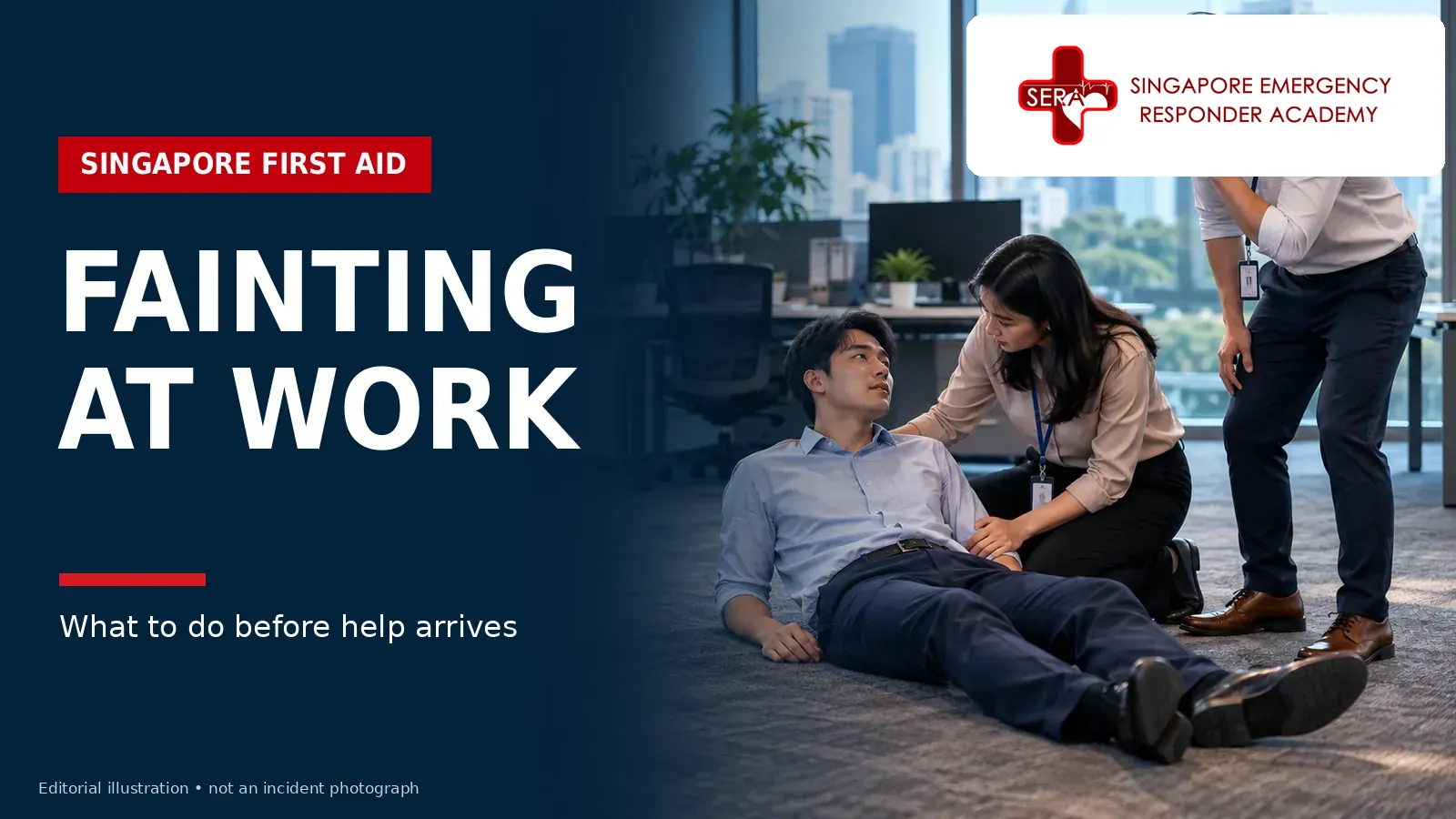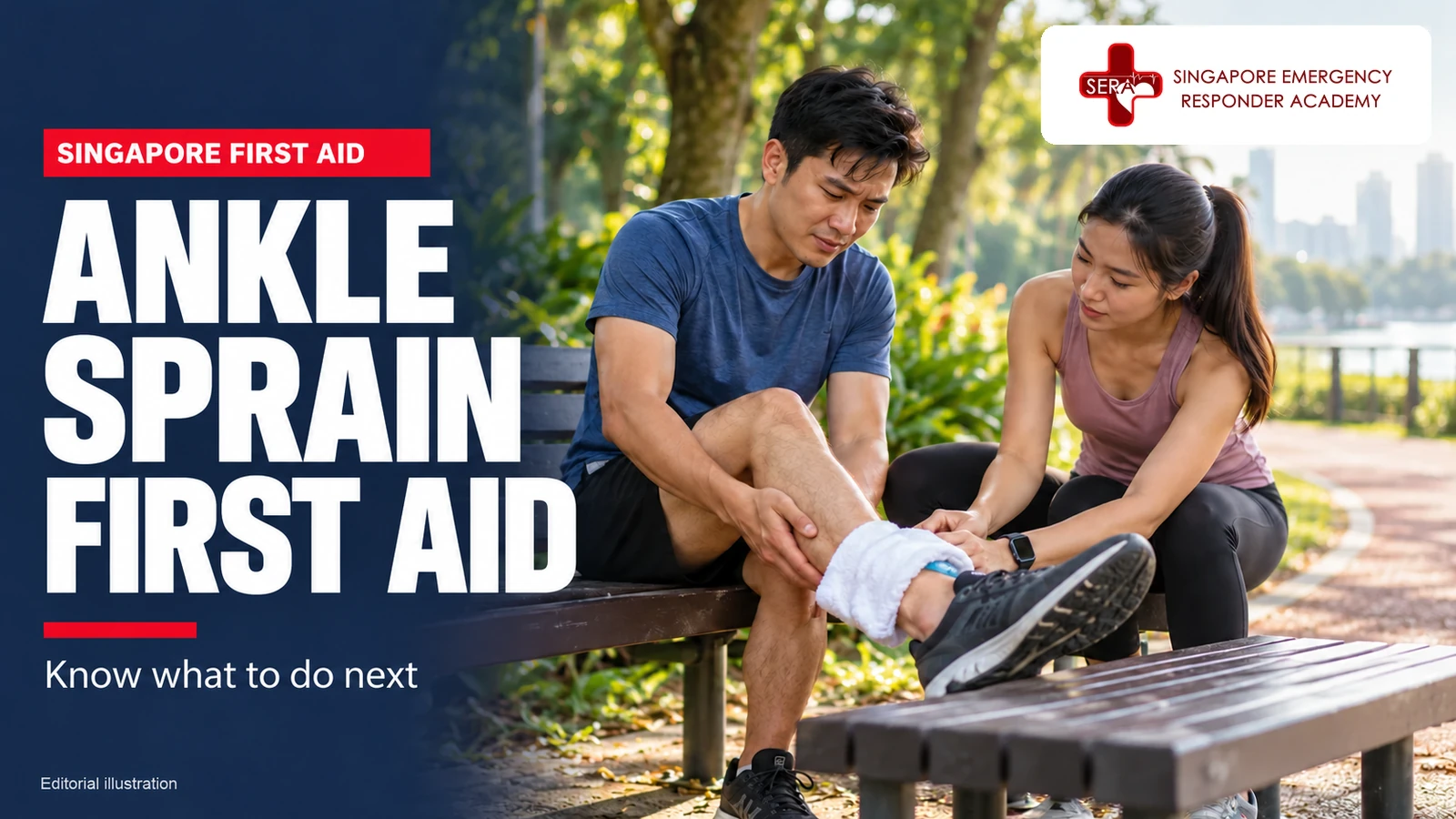
A colleague suddenly collapses during a meeting. Should you help them lie down, call an ambulance or begin CPR? Learn how to respond to fainting at work, identify dangerous warning signs and provide appropriate first aid using guidance from Singapore's healthcare authorities.
Child Nosebleed First Aid in Singapore: What Parents and Caregivers Should Do
Child First Aid | Singapore Parents & Caregivers
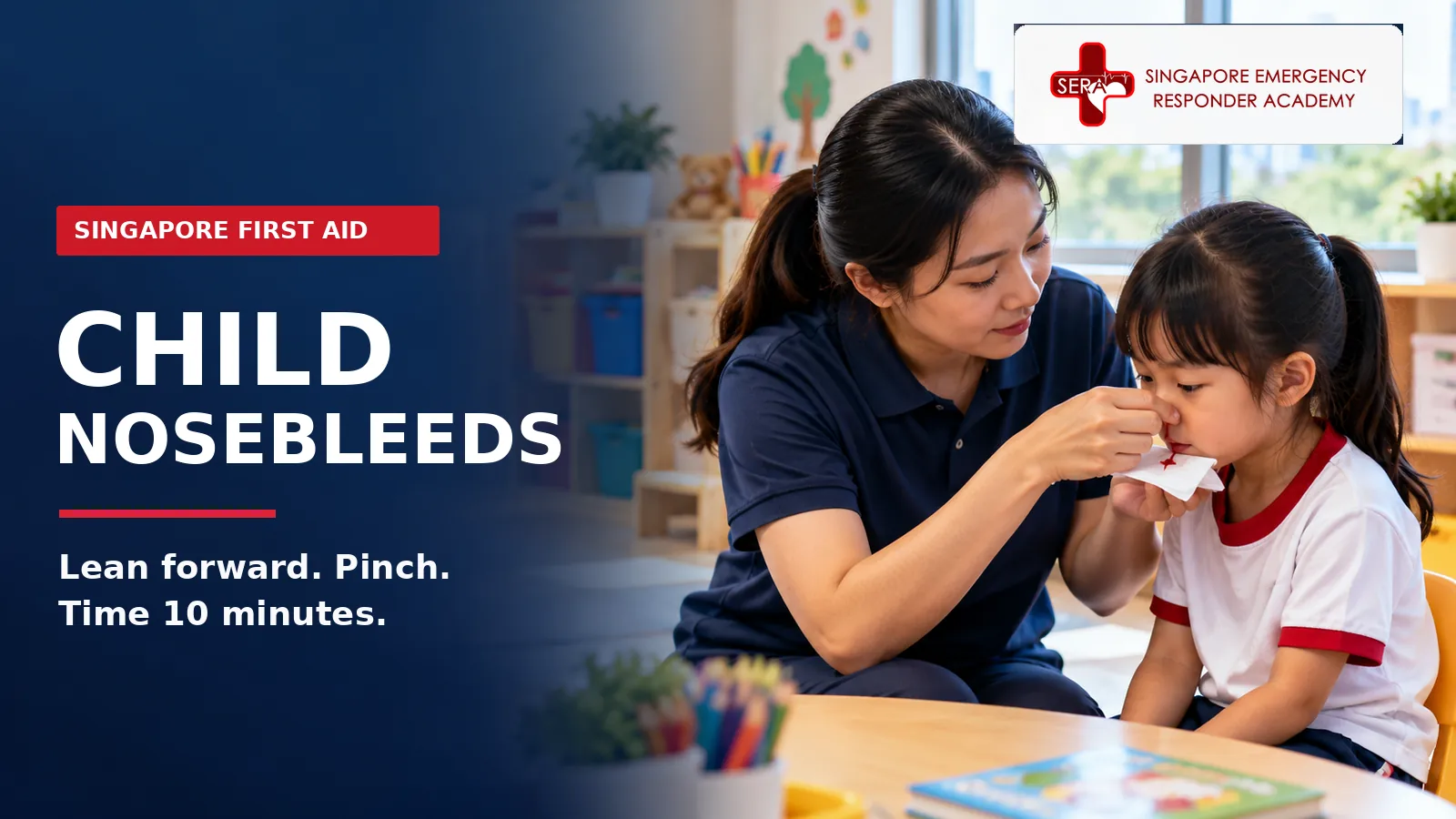
If your child has a nosebleed, help them sit upright and lean slightly forward. Pinch the soft part of their nose firmly for 10 minutes without releasing the pressure. Most childhood nosebleeds can be managed with this simple first aid technique.
Quick answer:
Sit upright. Lean forward. Pinch the soft part
of the nose for 10 uninterrupted minutes.
If bleeding continues, repeat for another
10 minutes. Seek medical attention if the
nosebleed has not stopped after 20 minutes
of correct pressure.
Seeing blood coming from a child’s nose can be distressing for parents, preschool teachers and caregivers. Fortunately, most childhood nosebleeds are minor and stop with appropriate first aid.
The important thing is knowing where to apply pressure, how long to maintain it and which warning signs require medical assessment.
1. Why Do Children Get Nosebleeds?
A nosebleed, medically known as epistaxis, occurs when small blood vessels inside the nose break and bleed.
According to National University Hospital’s guidance on childhood nosebleeds , children are particularly prone to nosebleeds because the lining of their nose is delicate and contains many small blood vessels.
Common contributing factors include:
- Nose picking or rubbing
- Blowing the nose forcefully
- Colds and nasal irritation
- Allergic rhinitis or a sensitive nose
- Dryness of the nasal lining
Although the amount of visible blood can appear alarming, most minor nosebleeds stop within approximately 10 minutes with correct first aid.
2. How to Stop a Child’s Nosebleed
The following steps are consistent with guidance published by Singapore’s Ministry of Health (MOH) and NUH.
01
Sit the Child Upright
Help the child sit comfortably with their head slightly forward. Avoid lying them flat or tilting their head backwards. Leaning forward reduces the amount of blood flowing into the throat.
02
Pinch the Soft Part of the Nose
Using your thumb and index finger, firmly squeeze the soft portion of the nose just above the nostrils. Both nostrils should be pressed together. Avoid pressing on the hard, bony bridge of the nose.
03
Maintain Pressure for 10 Minutes
Keep the pressure continuous for 10 full minutes. Encourage the child to breathe through their mouth. Use a timer and avoid repeatedly releasing pressure to check whether the bleeding has stopped.
04
Check and Repeat if Necessary
Release the pressure after 10 minutes. If bleeding continues, repeat the same technique for another 10 minutes. If the nosebleed persists after 20 minutes of correct pressure, bring the child to the Emergency Department.
10 Minutes + 10 Minutes
NUH recommends 10 minutes of uninterrupted pressure, followed by another 10 minutes if bleeding continues. Persistent bleeding after 20 minutes requires medical attention.
3. What Should You Avoid During a Nosebleed?
Several commonly suggested remedies may be ineffective or potentially unhelpful.
- Do not tilt the head backwards. Blood may run down the throat, causing nausea or vomiting.
- Do not keep checking the nose. Releasing pressure too frequently can interrupt the process of stopping the bleeding.
- Do not insert tissues or gauze deep into the nostrils. Improvised packing can disturb blood clots and cause rebleeding.
- Do not rely on an ice pack. Cold compresses are not a substitute for firm pressure on the soft part of the nose.
The KK Women’s and Children’s Hospital also advises against inserting tissues or gauze into the nose.
4. What Should You Do After the Bleeding Stops?
Once the bleeding has stopped, allow the child to rest and recover comfortably.
Discourage nose picking, rubbing or forceful blowing immediately after the episode. These actions can disturb the newly formed blood clot and restart bleeding.
Explain calmly what happened, particularly if the child became frightened by the sight of blood.
If the nosebleed occurred at school or preschool, caregivers should inform the child’s parents and document the incident according to the centre’s procedures.
5. When Should You Seek Medical Attention?
Most childhood nosebleeds are minor, but some situations require prompt assessment.
Seek medical attention if:
- Bleeding continues after 20 minutes of correct pressure.
- The nosebleed followed an injury to the nose or face.
- Nosebleeds recur frequently over several weeks.
- The child also experiences unusual bruising, gum bleeding, paleness or unexplained fatigue.
For severe bleeding, collapse, difficulty breathing or other life-threatening symptoms, call 995 immediately.
Refer to SCDF’s Emergency Medical Services guidance for information about emergency ambulance activation.
6. How Can Parents and Preschools Prepare?
A simple first aid plan helps adults respond consistently when a child becomes injured or unwell.
Parents, caregivers and preschool staff should know:
- Where first aid supplies are kept
- How to apply correct nosebleed pressure
- Who to inform when an incident occurs
- When professional medical help is required
- How to communicate with emergency services
Practical first aid training can help caregivers develop the confidence to apply these skills appropriately.
Relevant SERA First Aid Training
First Aid Essentials: Babies and Children
A practical introductory workshop for parents, grandparents and caregivers covering common childhood emergencies.
Explore Workshop →Child First Aid
SRFAC-accredited and ECDA-recognised training for individuals requiring structured infant and child first aid competencies.
Explore Child First Aid →School & Corporate First Aid Talks
Customisable first aid awareness sessions for schools and organisations seeking practical emergency preparedness education.
Explore First Aid Talks →Be Prepared for Childhood Emergencies
From nosebleeds and minor injuries to choking and more serious medical emergencies, knowing how to respond can make a meaningful difference.
Singapore Emergency Responder Academy provides practical first aid training for parents, caregivers, schools and organisations.
Explore Child First Aid TrainingFrequently Asked Questions
1. Should I tilt my child’s head backwards during a nosebleed?
No. Keep the child sitting upright with their head slightly forward to reduce blood flowing down the throat.
2. How long should I pinch my child’s nose?
Apply continuous pressure to the soft part of the nose for 10 minutes. Repeat for another 10 minutes if bleeding continues.
3. Should I put tissue inside the nose?
No. Avoid inserting tissues or gauze into the nostrils. Use firm pressure on the soft part of the nose instead.
4. When should I bring my child to hospital?
Seek medical attention if bleeding does not stop after 20 minutes of correct pressure, or if the nosebleed follows a significant injury.
5. Are frequent childhood nosebleeds normal?
Occasional nosebleeds are common. However, frequent episodes, especially when accompanied by bruising, paleness or other bleeding, require medical review.
6. Can allergies cause nosebleeds in children?
Yes. Nasal allergies may increase rubbing and irritation, making nosebleeds more likely. A doctor can advise on appropriate management.
7. Which SERA first aid course is suitable for parents?
SERA’s First Aid Essentials: Babies and Children workshop is designed for parents and caregivers. Those requiring formal child first aid certification can consider the SRFAC-accredited Child First Aid course.
Official Sources and Further Reading
- National University Hospital — Nosebleeds (Children)
- Ministry of Health — Nosebleeds
- KK Women’s and Children’s Hospital — Childhood Nosebleeds
- Singapore Civil Defence Force — Emergency Medical Services
- SERA — Child First Aid Course
This article is intended for general first aid education. It does not replace medical assessment or professional advice.

Related Posts