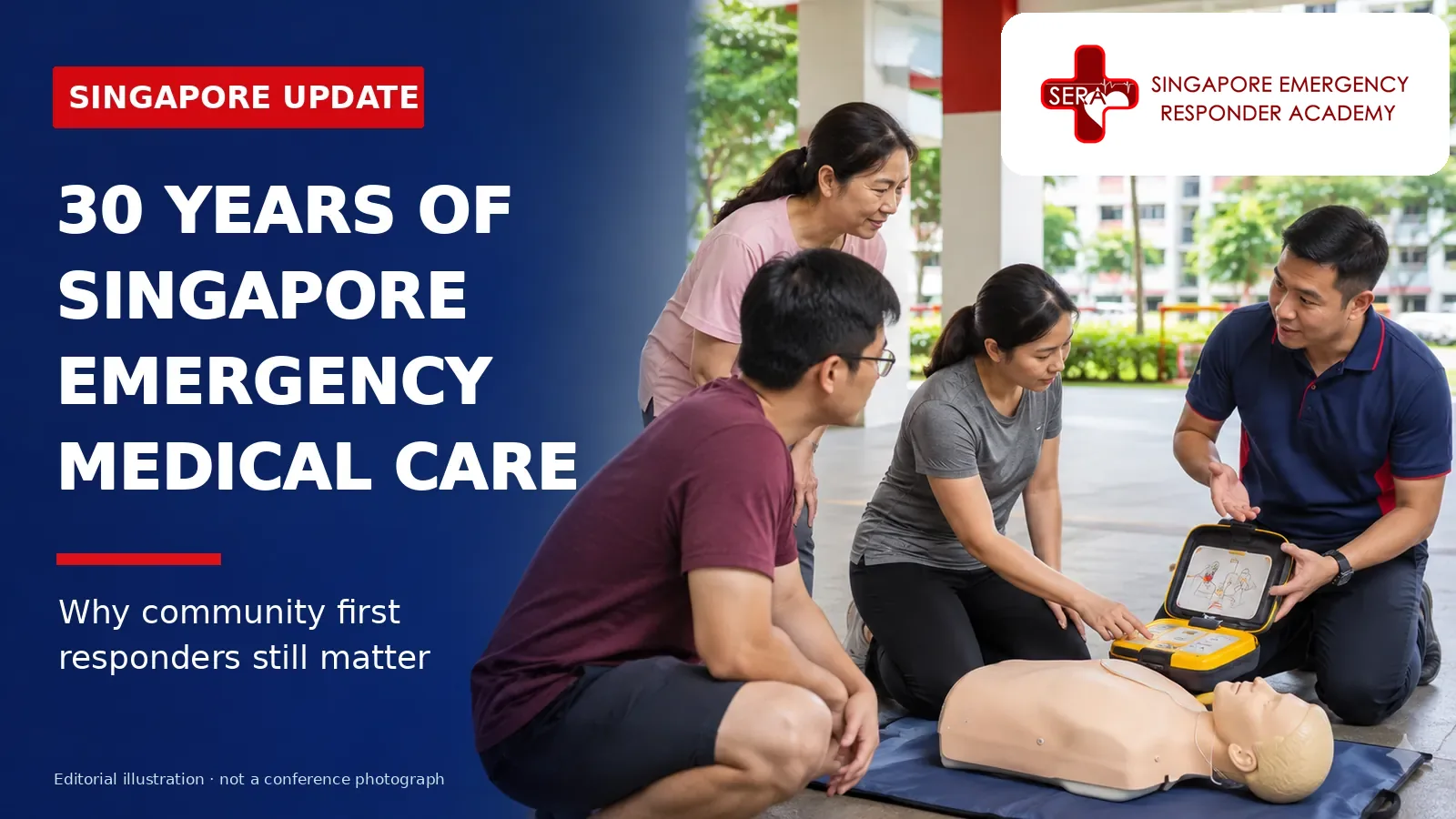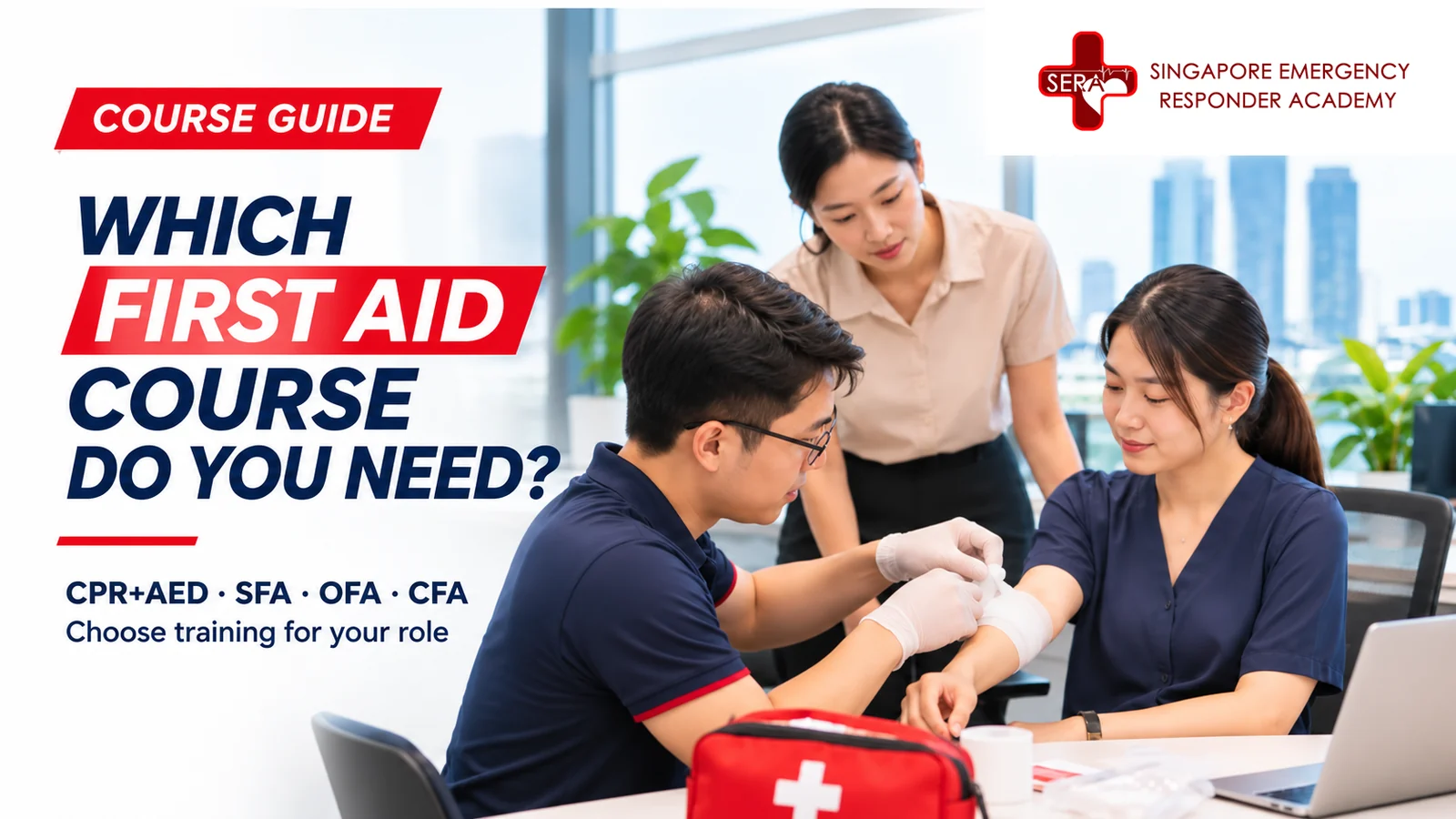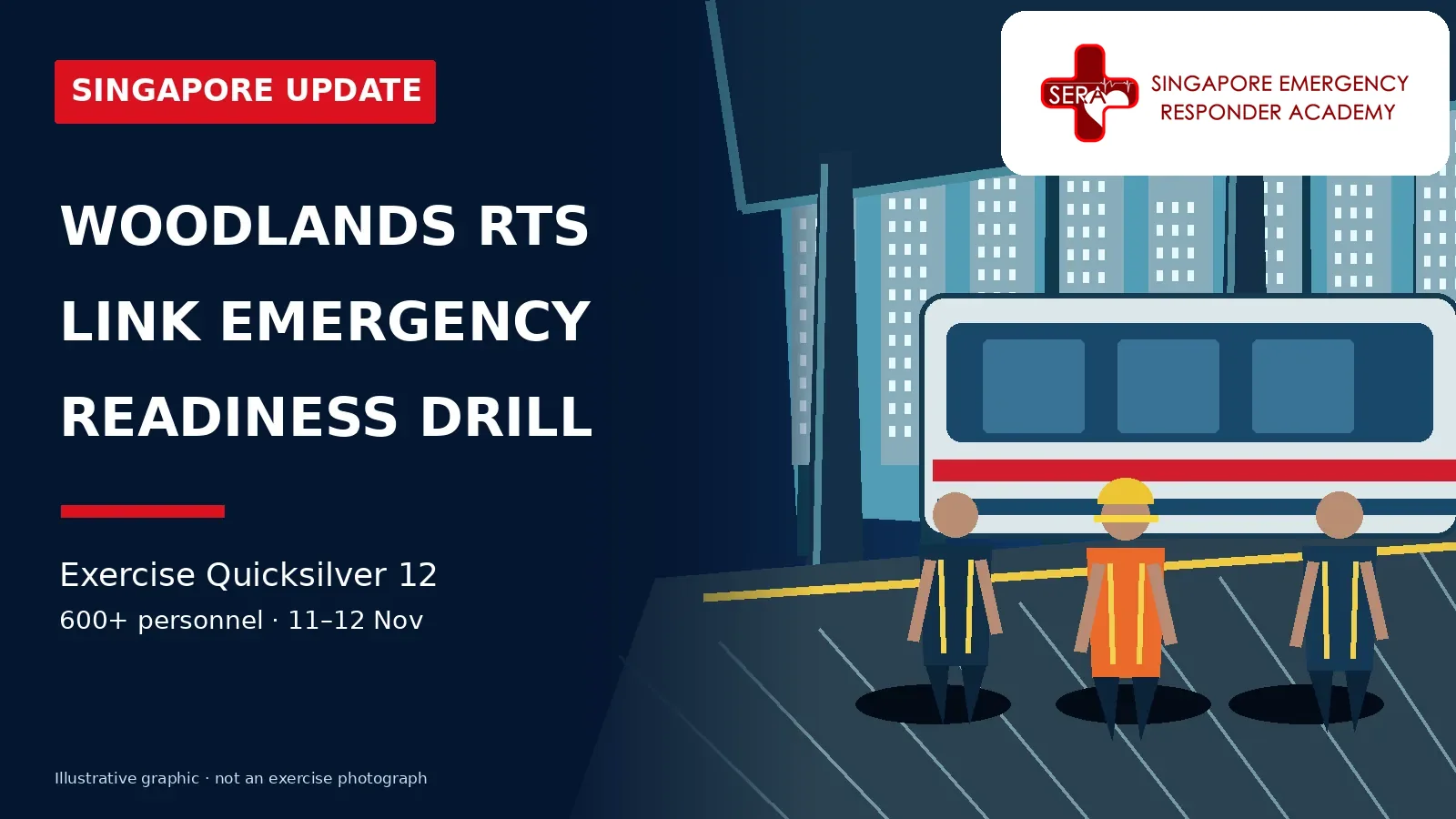
At EMS Asia 2026 on 10 November, Singapore commemorated three decades of emergency medical services since SCDF paramedicine began in 1996. The event highlighted how bystanders, community responders, dispatchers and paramedics work together to save lives—and why CPR and AED training matters to everyone.
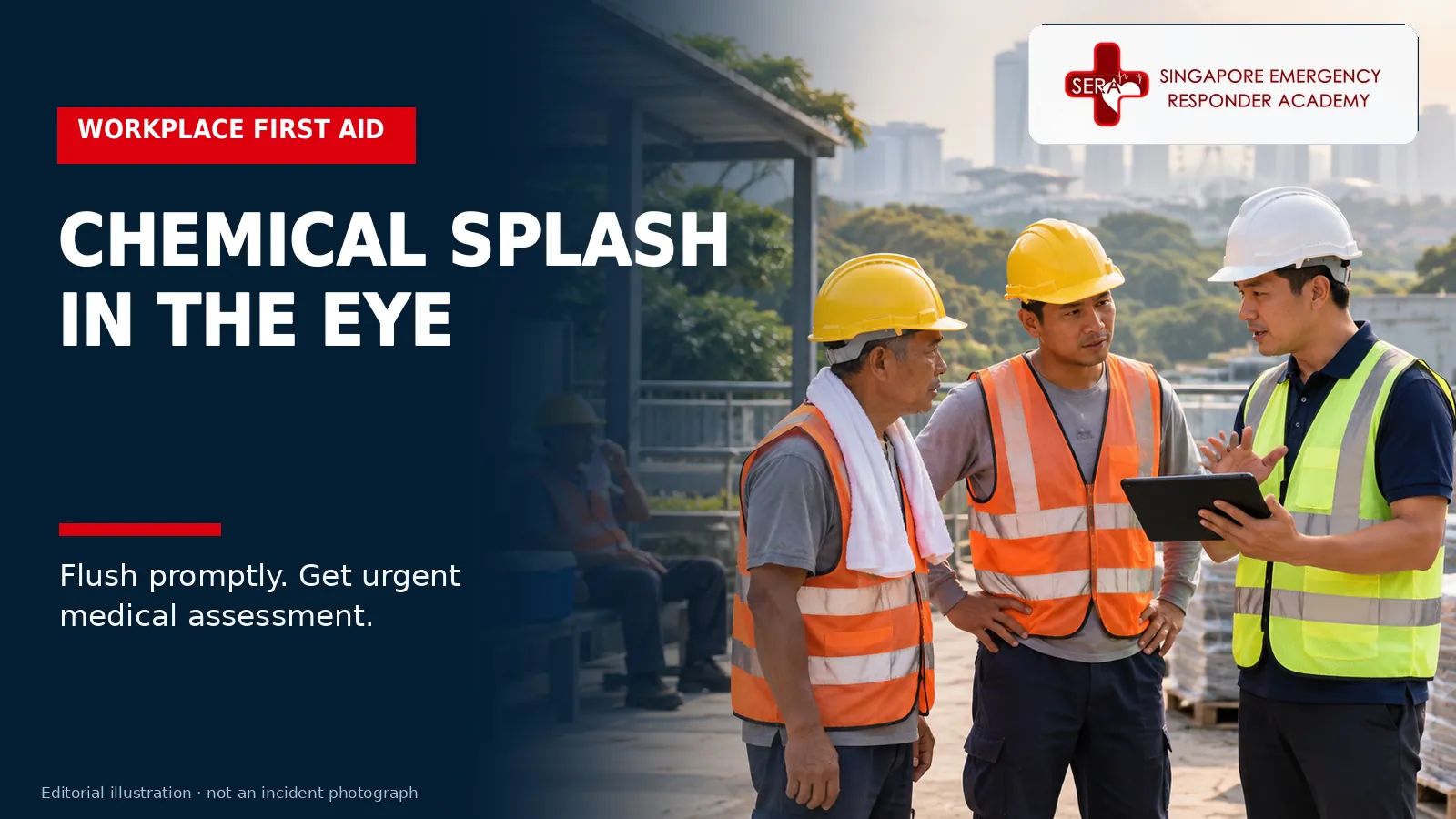
Chemical Splash in the Eye at Work: First Aid Steps for Singapore Employees
Workplace First Aid | Singapore
A cleaning solution splashes into an employee's eye. The eye becomes painful and watery. Should you search for eye drops, wipe it or start rinsing? Prompt irrigation is the most important first response.
Start flushing the affected eye immediately with clean, gently running water or a suitable emergency eyewash. SingHealth advises flushing for 10–20 minutes. Continue as directed by the chemical’s safety instructions or medical professionals and arrange urgent assessment at an emergency department with eye services.
Why are chemical eye splashes dangerous?
Chemicals may damage the surface of the eye and surrounding tissues. Severity depends on the substance, concentration, duration of contact and whether the chemical is corrosive. Pain, redness, tearing, blurred vision and sensitivity to light may develop.
An eye may appear less affected than it really is. Do not use temporary improvement as a reason to skip medical assessment.
Immediate first aid: five steps
1. Protect yourself. Stop the activity and move away from the chemical hazard. Do not expose additional workers while assisting.
2. Flush immediately. Use a suitable eyewash station or clean running tap water. Begin before searching for the chemical label if that would cause a delay.
3. Keep rinsing. SingHealth recommends 10–20 minutes of flushing. More prolonged irrigation may be necessary depending on the chemical and medical instructions. Gently keep eyelids open as tolerated.
4. Remove contact lenses if easy. Do not interrupt irrigation or force removal of lenses that are difficult to take out.
5. Seek urgent eye assessment. Arrange transport to an appropriate emergency department. Provide the chemical name, container label or Safety Data Sheet if it can be obtained safely.
What should you never do?
Do not rub the eye, apply unprescribed creams or eye drops, or attempt to neutralise a chemical using another chemical. Such attempts may worsen tissue damage.
Do not postpone irrigation while waiting for a first aider or a specialised solution. Clean water is appropriate for immediate flushing when an eyewash is unavailable.
When should emergency help be activated?
Chemical exposure warrants urgent medical assessment, especially if there is pain, blurred vision, difficulty opening the eye or sensitivity to light. Call 995 for life-threatening associated symptoms, major trauma or serious breathing difficulty.
While waiting for medical help, follow workplace emergency procedures and the dispatcher’s instructions. Do not allow the worker to resume tasks before assessment.
What does Singapore workplace law say?
Singapore’s Workplace Safety and Health (First-Aid) Regulations address facilities for workers who may contact toxic or corrosive substances. Suitable quick-flushing or drenching facilities must be provided and properly maintained where the regulations apply.
The requirement depends on the hazards present. Laboratories, maintenance facilities and chemical-handling workplaces should assess their actual exposures rather than assuming an ordinary first-aid box is sufficient.
How can employers prepare?
Identify substances used in each work area, review Safety Data Sheets, keep appropriate eye protection available and ensure eyewash facilities are easy to reach. Workers should know how to activate the equipment and where to find the emergency contact procedure.
Inspect facilities and replenish supplies regularly. Practise scenarios during safety briefings so staff can begin irrigation promptly and arrange an effective medical handover. First aid training supports but does not replace chemical risk controls.
Emergency assistance in Singapore: 995
Call 995 for life-threatening symptoms and follow SCDF dispatcher instructions.
Relevant SERA training
Prepare your team for emergencies
SERA offers practical first aid and emergency-response training for Singapore workplaces, schools and caregivers.
Request group trainingFrequently asked questions
How long should an eye be flushed?
SingHealth advises 10–20 minutes, with longer irrigation if directed for the specific chemical.
Can I use tap water?
Yes. Begin with clean running tap water if a suitable eyewash is not immediately available.
Should I use eye drops?
Do not replace flushing or medical assessment with eye drops.
Is medical assessment needed after flushing?
Yes. Chemical eye exposure warrants urgent assessment.
Do workplaces need eyewash facilities?
Suitable flushing facilities are required where the applicable regulations cover toxic or corrosive exposure.
Can I neutralise the chemical?
No. Do not add another chemical to the eye.
Sources and further reading
Educational information only. Follow individual medical plans, current official guidance and emergency dispatcher instructions.

Related Posts