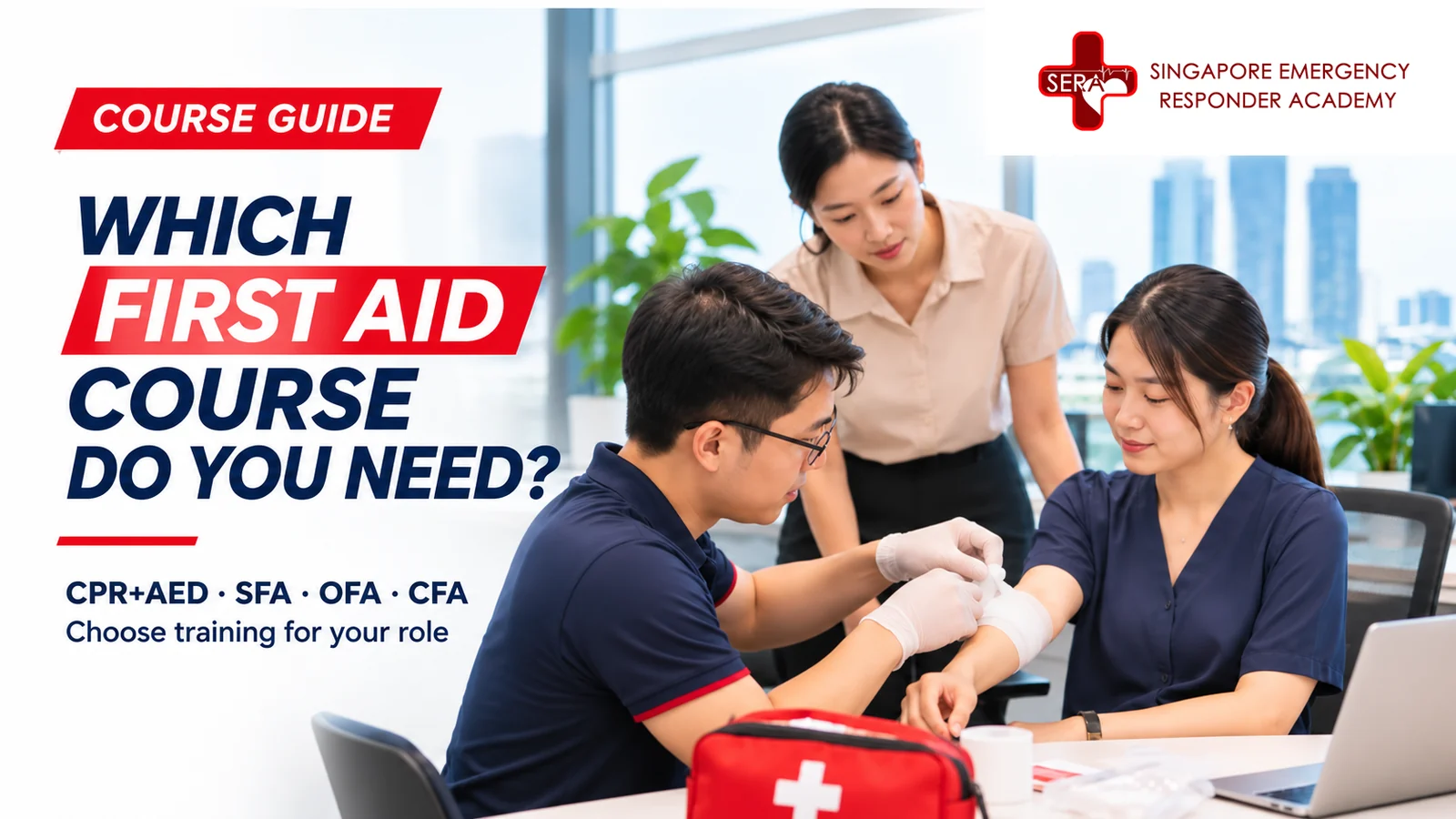
Not all first aid certificates are interchangeable. A sports coach, preschool teacher, healthcare professional and appointed workplace first aider may require different qualifications. This guide compares six common Singapore first aid pathways, explains their intended purposes and helps individuals and employers avoid registering for an unsuitable course.
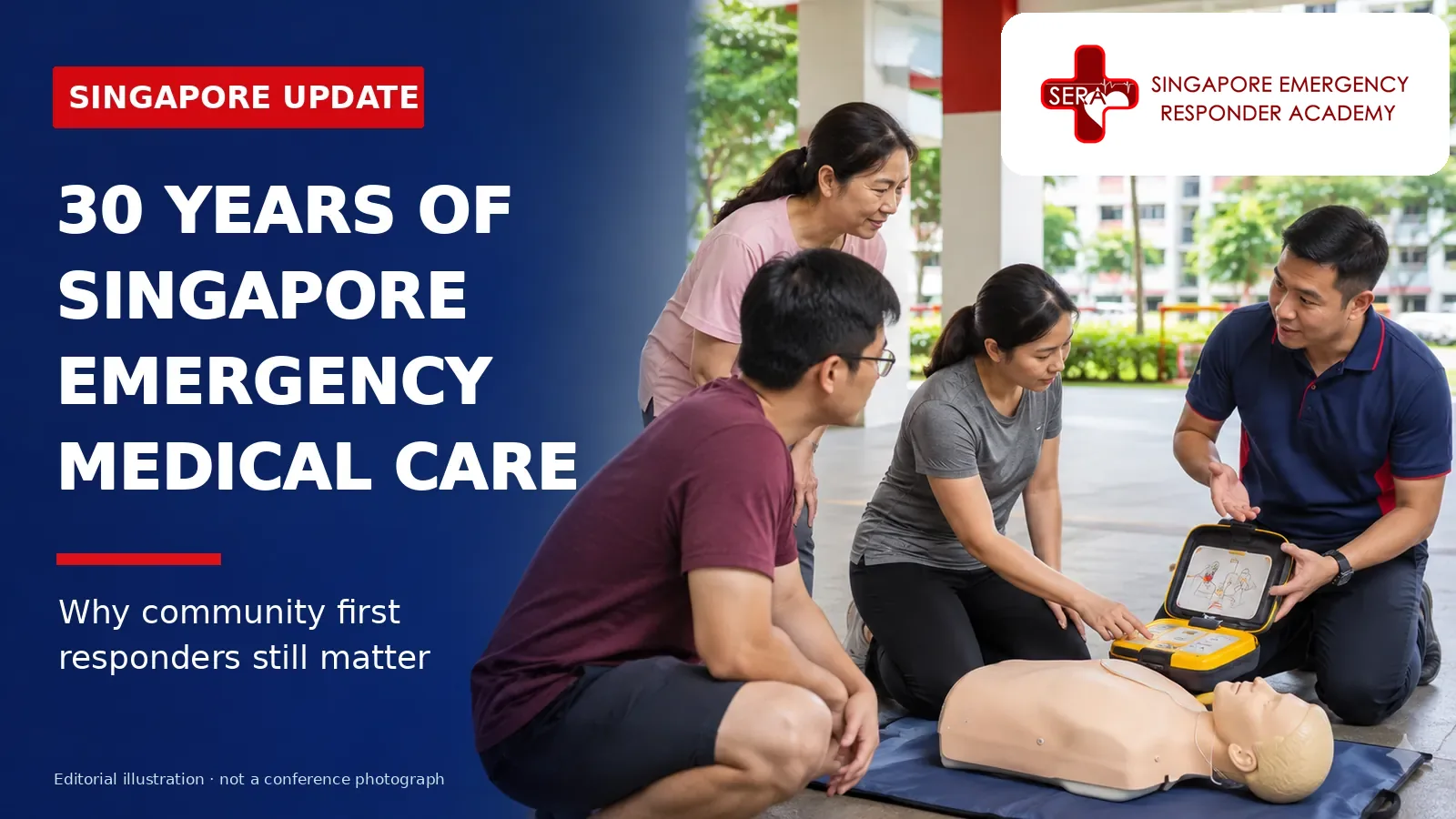
Singapore Marks 30 Years of Emergency Medical Services: Why Community First Responders Matter
SERA | Singapore Emergency Preparedness
At EMS Asia 2026 on 10 November, Singapore marked 30 years of emergency medical services. The milestone highlighted the important role that ordinary bystanders and trained Community First Responders play alongside ambulance crews.
Key takeaway: The Ministry of Home Affairs recognised three decades since paramedicine began within SCDF in 1996. This was a commemoration and discussion of future priorities, not a new mandatory public CPR certification announcement.
1. What happened at EMS Asia 2026?
The conference marked three decades of SCDF paramedicine and discussed empowering communities, developing professional capabilities and improving patient care through shared learning. The Citizen Life Saving Summit highlighted the relationship between community action and professional response.
2. Why do community first responders matter?
When someone experiences cardiac arrest, professional responders may not yet be at the scene. A bystander who recognises the emergency, calls 995 and provides appropriate CPR and AED assistance can bridge the critical period before paramedics arrive.
Call 995 for life-threatening emergencies
Follow SCDF emergency dispatcher instructions and provide assistance only when it is safe.
3. What is SCDF's myResponder app?
The myResponder application can alert registered Community First Responders to nearby suspected cardiac arrests and minor fires. It also helps members of the public locate AEDs. Historical SCDF figures from 2025 described a substantial network of volunteers and publicly accessible AEDs.
4. Check responsiveness and breathing
Before helping, ensure the surroundings are safe. If a person is unresponsive and not breathing normally, suspect cardiac arrest. Do not delay by assuming the person has merely fainted.
5. Call 995 and start CPR
Contact SCDF and provide the exact location. Follow dispatcher instructions and begin CPR when indicated. For adult cardiac arrest, hands-only chest compressions are an option for members of the public.
6. Retrieve and use an AED
Ask another person to locate the nearest AED. Switch it on and follow its prompts. Keep everyone clear during analysis and any shock. Resume compressions as directed.
7. What can workplaces do?
Make AEDs accessible, train staff to recognise emergencies, maintain accurate building access instructions and practise how to guide ambulance crews to casualties. Technology supports, but does not replace, a prompt human response.
8. How can individuals get involved?
Learn CPR and AED skills, locate AEDs near home and work, and consider SCDF community-response initiatives. The anniversary is a reminder that emergency preparedness is a shared responsibility.
Relevant SERA Training
Standard First Aid
Explore practical training appropriate to your role and responsibilities.
Explore course →Corporate Training
Explore practical training appropriate to your role and responsibilities.
Explore course →Build Emergency Readiness
SERA provides practical first aid and emergency-response training for individuals and organisations in Singapore.
Request Corporate TrainingFrequently Asked Questions
When did SCDF paramedicine begin?
1996.
What was EMS Asia 2026?
A regional emergency medical services conference.
Was new CPR certification mandated?
Not in the cited speech.
What is a CFR?
A volunteer Community First Responder.
When should I call 995?
For life-threatening emergencies.
Can the public use an AED?
Yes, following the device and dispatcher instructions.
Sources and Further Reading
This draft is for editorial review only. Incident facts and general first-aid guidance should remain clearly distinguished.

Related Posts