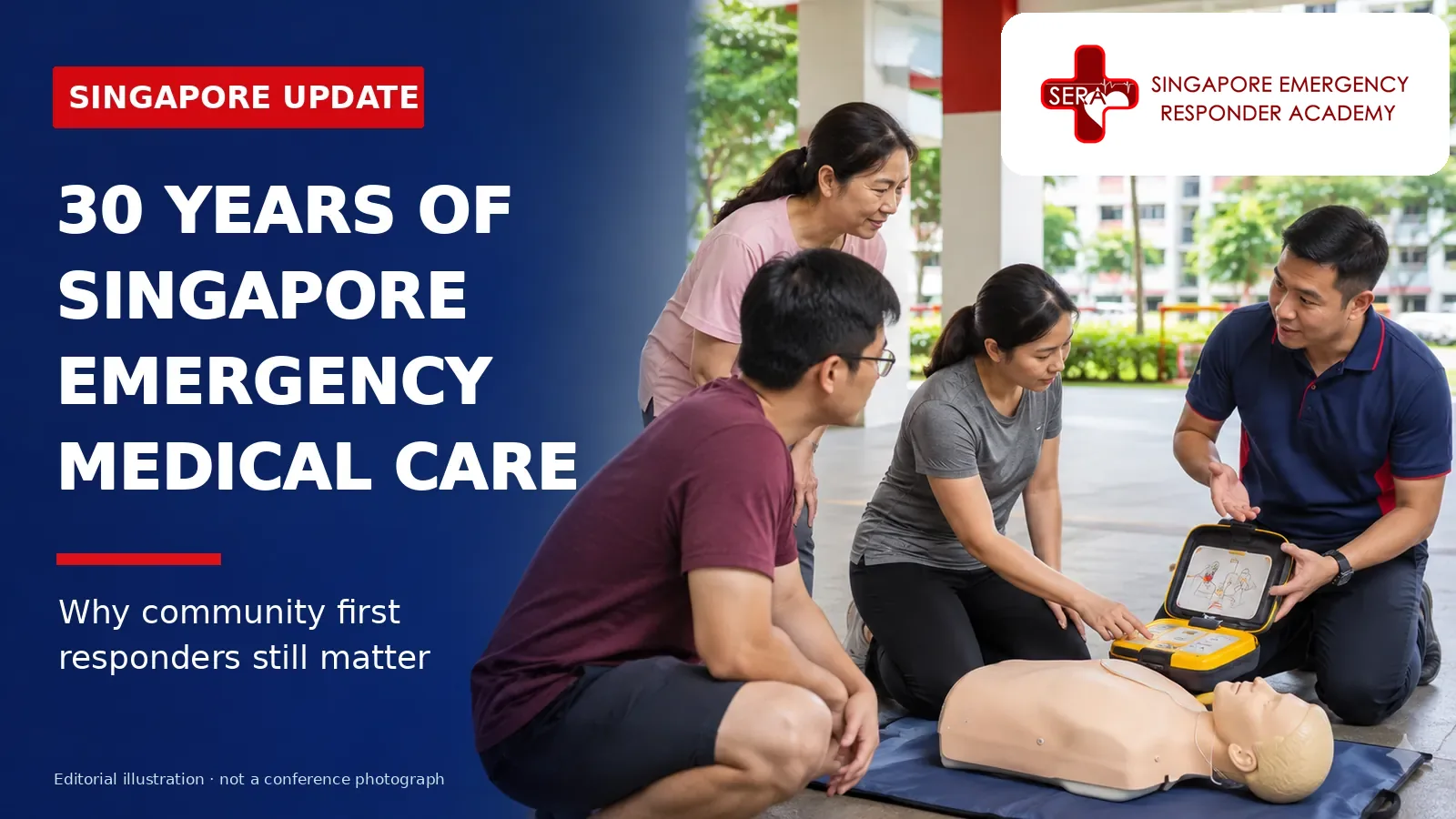
At EMS Asia 2026 on 10 November, Singapore commemorated three decades of emergency medical services since SCDF paramedicine began in 1996. The event highlighted how bystanders, community responders, dispatchers and paramedics work together to save lives—and why CPR and AED training matters to everyone.
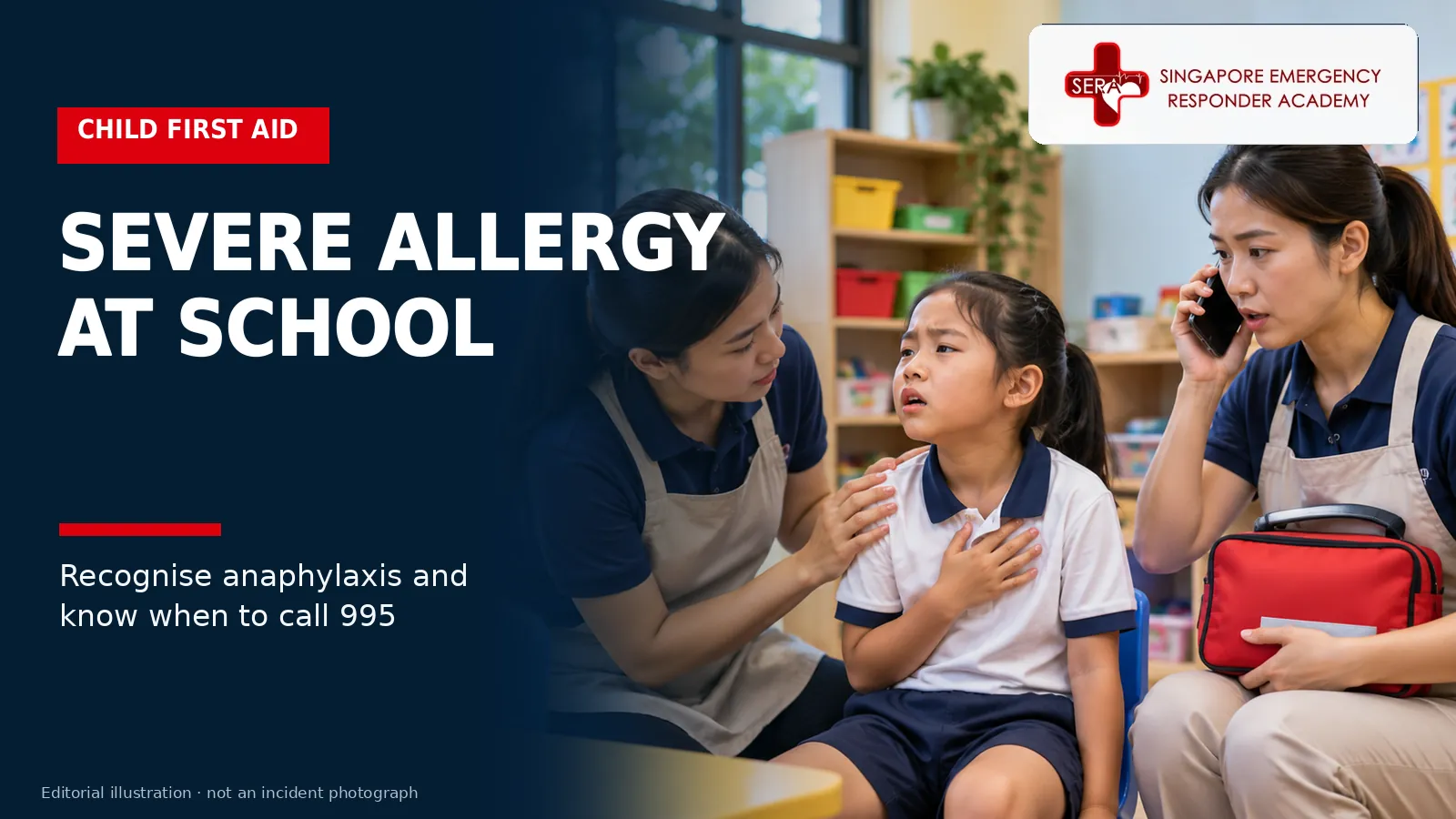
Anaphylaxis in Singapore Schools: How to Recognise a Severe Allergy and Respond
Child First Aid | Singapore
A child suddenly develops a swollen tongue, difficulty breathing and dizziness after eating. Would you recognise a severe allergic reaction? Anaphylaxis can progress rapidly, making prompt recognition and emergency assistance essential for parents, teachers and caregivers.
If anaphylaxis is suspected, call 995 immediately. Assist with the person’s prescribed adrenaline auto-injector according to their emergency action plan and the specific device instructions. Do not delay emergency treatment or assume the danger has passed when symptoms improve.
What is anaphylaxis?
Anaphylaxis is a severe allergic reaction that may affect the airway, breathing, circulation and other body systems. Triggers can include certain foods, medicines and insect stings. A mild allergy may cause isolated itching or hives, but anaphylaxis requires urgent action.
A severe reaction can develop without a rash. Caregivers should consider the full pattern of symptoms, especially after exposure to a known allergen.
What warning signs should caregivers recognise?
Possible warning signs include swelling of the tongue or throat, wheezing, difficulty breathing, persistent coughing, a hoarse voice, dizziness, collapse or severe abdominal symptoms together with other allergic features.
Do not wait for every symptom to appear. Sudden breathing or circulatory problems following allergen exposure should be treated as an emergency.
Five steps when anaphylaxis is suspected
1. Recognise the emergency. Stop the activity and check the child’s breathing, responsiveness and symptoms. Ensure the surroundings are safe.
2. Call 995. State that you suspect anaphylaxis, describe the symptoms, give the exact location and tell the dispatcher whether an adrenaline auto-injector is available.
3. Assist with prescribed adrenaline. Follow the child’s action plan and the instructions for the actual auto-injector. EpiPen and EpiPen Jr are administered into the middle outer thigh; other devices may have different operating steps.
4. Position and monitor appropriately. Follow the dispatcher’s instructions. Avoid having the child stand or walk unnecessarily. If unresponsive and not breathing normally, begin CPR and use an AED when available.
5. Obtain emergency medical assessment. Symptoms may recur after initial improvement. Tell paramedics what was given, when it was administered and any known trigger.
Can antihistamines replace adrenaline?
No. Antihistamines may help some mild allergic symptoms but do not replace adrenaline for anaphylaxis. Do not delay emergency treatment to search for tablets, drinks or home remedies.
Do not give anything by mouth to a child who is unconscious or cannot swallow safely. Follow their individual medical plan rather than improvising medication.
How can schools and preschools prepare?
Where a child has a known severe allergy, caregivers should have access to an individual emergency action plan, relevant contact details and prescribed emergency medication. Staff should understand who will call 995, who can assist with the prescribed device and how to communicate with parents.
Training should cover recognition, practical device familiarisation, escalation and handover. Check that medication is stored accessibly in accordance with the child’s plan and local policies. Keep sensitive health details confidential while ensuring authorised staff can respond.
What should happen after the emergency?
An emergency medical team should assess the child even if they appear to recover. The school should document the event accurately, inform the family, and review whether its emergency arrangements worked as intended.
After a significant allergic reaction, the child’s treating clinician may update the action plan. Staff should use the revised instructions for future activities and excursions.
Emergency assistance in Singapore: 995
Call 995 for life-threatening symptoms and follow SCDF dispatcher instructions.
Relevant SERA training
First Aid Essentials: Babies and Children
Practical awareness for parents and caregivers.
Explore course →Prepare your team for emergencies
SERA offers practical first aid and emergency-response training for Singapore workplaces, schools and caregivers.
Request group trainingFrequently asked questions
Is a rash always present?
No. Anaphylaxis can occur without visible skin symptoms.
Should I call 995 after an EpiPen is used?
Yes. Emergency assessment is necessary even when symptoms improve.
Can a child be prescribed an EpiPen?
Yes. A healthcare professional determines the appropriate device and strength.
Where is an EpiPen administered?
Into the middle outer thigh according to its instructions.
Can symptoms return after treatment?
Yes. A further reaction can occur after initial improvement.
Does first aid training replace a child’s allergy plan?
No. Staff should follow the individual medical action plan.
Sources and further reading
Educational information only. Follow individual medical plans, current official guidance and emergency dispatcher instructions.

Related Posts