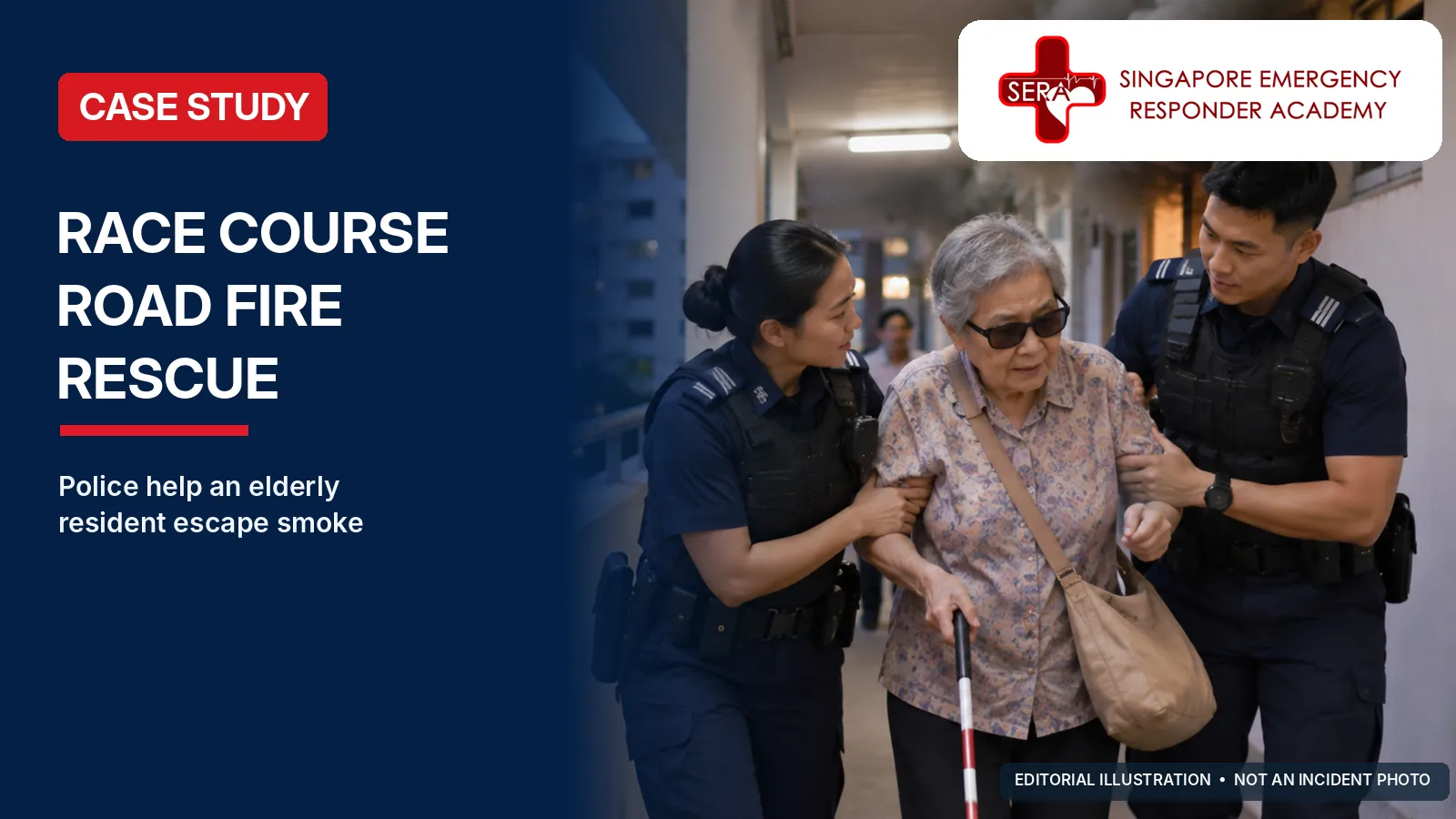
On 3 August 2026, police officers forced open a gate during a Race Course Road flat fire to assist a visually impaired elderly woman. Five people were hospitalised; an 88-year-old man later died. This case study examines confirmed rescue facts and safer fire-response lessons.
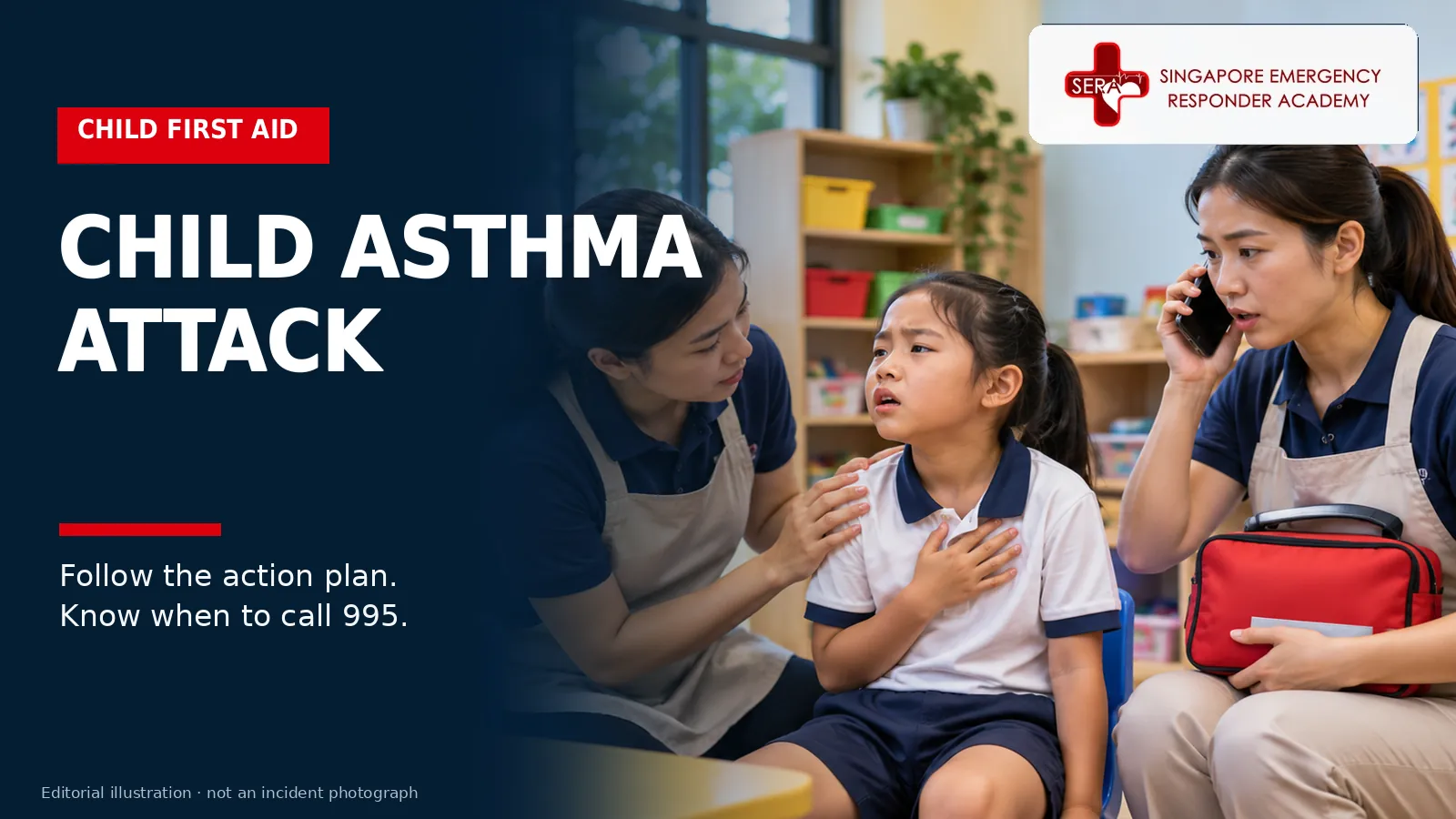
Child Asthma Attack in Singapore: What Parents and Preschool Teachers Should Do
Child First Aid | Singapore
A preschooler begins coughing, wheezing and struggling to breathe during playtime. Could this be an asthma attack? Recognising breathing difficulties and following the child's medical plan can help caregivers respond promptly.
Stop the activity, reassure the child and help them sit comfortably upright. Follow their prescribed asthma action plan and assist with their own reliever inhaler as directed. Call 995 for severe breathing difficulty, blue lips, inability to speak properly, unresponsiveness or rapid deterioration.
What happens during an asthma attack?
Asthma involves sensitive, inflamed airways that can narrow during an attack. This makes it harder for air to move in and out. Symptoms may vary between children and may worsen during respiratory infections, exercise or exposure to triggers.
Not every breathing problem is asthma. Choking and anaphylaxis can also cause sudden breathing difficulty and require different responses.
What signs should parents and teachers recognise?
Common symptoms include coughing, wheezing, shortness of breath, chest tightness and difficulty taking part in normal activities. A child may appear distressed, pause frequently while speaking or need to stop playing.
Severe warning signs include marked effort to breathe, inability to speak normally, blue lips, exhaustion, unusual drowsiness and reduced responsiveness. Treat these as urgent.
Five steps during a suspected asthma attack
1. Stop activity. Help the child stop running or playing and move away from an obvious trigger when safe.
2. Sit upright. Support a comfortable upright position. Remain calm and reassure the child; do not force them to lie flat.
3. Follow the action plan. Check the individual written asthma plan prepared with the child’s clinician. It should identify medication, dosing and escalation instructions.
4. Assist with prescribed reliever medication. Help the child use their own inhaler and spacer, if prescribed, according to the plan and training. Do not substitute another child’s medicine.
5. Reassess and escalate. Monitor breathing, speech and responsiveness. Seek urgent help if symptoms are severe, worsen or do not improve as expected.
When should you call 995?
Call 995 immediately if the child is gasping, struggling to breathe, becoming blue around the lips, unable to speak normally, unusually drowsy or unresponsive. Do not wait for collapse before calling.
Follow the dispatcher’s instructions. If the child becomes unresponsive and is not breathing normally, begin CPR and use an AED if available and appropriate.
What is an asthma action plan?
An asthma action plan is an individual written guide developed with a healthcare professional. It explains regular treatment, what to do when symptoms worsen and when to obtain urgent help.
Parents should provide relevant caregivers with an up-to-date plan and ensure prescribed medication is accessible. Staff should know who is authorised and trained to assist, and how to contact the family.
How can preschools prepare?
Preschools should have clear emergency communication arrangements, staff awareness of known asthma plans and access to prescribed inhalers where appropriate. Educators should recognise signs of worsening breathing and know when to activate emergency services.
Training can include spacer familiarisation, first-aid assessment, handover to paramedics and scenario practice. Confidentiality remains important, but staff responsible for the child must have the information necessary to act safely.
How is asthma different from choking or anaphylaxis?
Asthma often involves wheezing and coughing, but sudden breathing difficulty after eating could suggest choking or a severe allergic reaction. Swelling, collapse or multiple allergic symptoms following a known trigger raise concern for anaphylaxis.
Caregivers should not assume every wheeze is asthma. If the cause is uncertain or the child is seriously unwell, seek emergency help promptly.
Emergency assistance in Singapore: 995
Call 995 for life-threatening symptoms and follow SCDF dispatcher instructions.
Relevant SERA training
Prepare your team for emergencies
SERA offers practical first aid and emergency-response training for Singapore workplaces, schools and caregivers.
Request group trainingFrequently asked questions
What are common signs of an asthma attack?
Coughing, wheezing, breathlessness and chest tightness.
Should a child lie down?
Help the child remain comfortably upright.
Can I use another child's inhaler?
Follow the affected child's prescribed plan; do not substitute another person's medication.
When should I call 995?
For severe breathing difficulty, blue lips, inability to speak normally or reduced responsiveness.
What is an asthma action plan?
An individual written guide prepared with the child's healthcare professional.
Does first aid training replace the child's action plan?
No. The child's own clinical instructions take priority.
Sources and further reading
Educational information only. Follow individual medical plans, current official guidance and emergency dispatcher instructions.

Related Posts