Singapore's WSH Council has urged employers to maintain safety standards as workloads and leave arrangements change towards year-end. With enhanced enforcement extended in two high-risk sectors, this guide explains practical steps to manage fatigue, supervision, emergency readiness and workplace first aid.
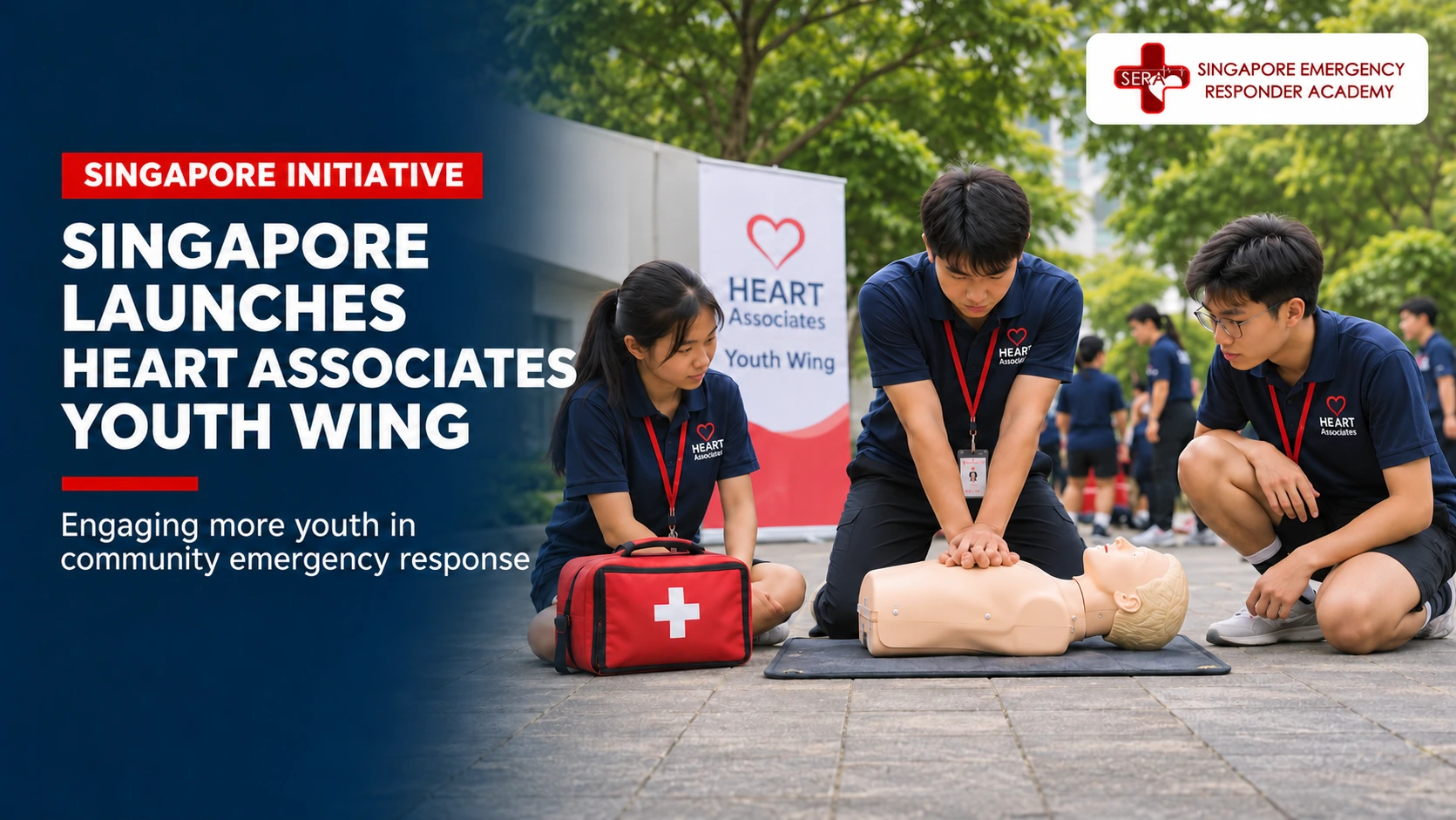
Singapore Launches HEART Associates Youth Wing: Why Psychological First Aid Matters in a Crisis
Community Resilience | Psychological First Aid
Singapore has launched a new youth initiative to strengthen psychological preparedness during crises. On 27 October 2026, the Ministry of Home Affairs (MHA) announced the launch of the HEART Associates Youth Wing at its inaugural Professional Community Forum on Human Behaviour in Crises.
What is the initiative about?
The HEART Associates Youth Wing
aims to equip young people
to provide peer support,
share accurate information
and strengthen community resilience
during crises.
MHA reported that close to
100 young people had expressed
interest in joining the initiative.
1. What Is the HEART Associates Youth Wing?
According to MHA’s speech dated 27 October 2026 , the Youth Wing is the next phase of the HEART initiative.
The broader HEART Professionals Network was launched in 2025. It brings together professionals from Singapore’s psychological, social work, counselling and psychiatric communities, alongside the Home Team.
Its purpose is to complement operational emergency response by supporting people affected psychologically during crises.
The new Youth Wing expands this community-focused approach by recognising the important role of young people.
2. What Are Youth Volunteers Expected to Do?
MHA identified three ways the Youth Wing can contribute.
01
Share Accurate Information
Young people can serve as trusted messengers within their social networks. During emergencies, sharing verified information helps reduce confusion and limits the spread of misinformation.
02
Provide Initial Peer Support
Youth volunteers can use psychological first aid skills to support peers experiencing distress. This involves offering calm, practical assistance and helping those who need further support access appropriate services.
03
Build Community Resilience
Volunteers can encourage young people to look out for one another. This helps strengthen psychological preparedness before a crisis occurs.
Close to 100
MHA reported that close to 100 young people had expressed interest in joining the HEART Associates Youth Wing. This is an expression-of-interest figure, not a confirmed count of trained or appointed volunteers.
3. Why Does Psychological Preparedness Matter?
Emergency response is often associated with evacuation, firefighting, medical treatment and rescue.
However, people affected by emergencies may also experience fear, confusion, grief or uncertainty.
These reactions may continue after the immediate danger has passed.
At the 27 October forum, MHA emphasised that effective crisis response must consider both operational needs and the psychological effects on individuals and communities.
People may recover at different rates, and some may require additional support.
4. What Is Psychological First Aid?
Psychological First Aid (PFA) is a practical approach to supporting people experiencing distress.
It does not require a person to provide therapy or diagnose a mental health condition.
The International Federation of Red Cross and Red Crescent Societies describes three core action principles.
01
Look
Observe the situation, identify immediate safety concerns and recognise people who may require support.
02
Listen
Approach respectfully, ask about the person’s needs and concerns, and listen without judgement. Do not pressure someone to describe a distressing experience in detail.
03
Link
Help the person access practical assistance, trusted information, social support or professional services when needed.
Important distinction:
Psychological First Aid is
not psychological therapy.
It provides humane, supportive
assistance during or after
distressing events.
Peer supporters should understand
their limits and know when
to involve trained professionals.
5. What Should Peer Supporters Avoid?
Being supportive does not mean taking responsibility for solving every problem.
The International Federation of Red Cross and Red Crescent Societies advises supporters not to pressure people to talk about distressing events.
Peer supporters should also avoid making promises they cannot keep, sharing private information unnecessarily or presenting themselves as counsellors.
Where concerns exceed their competence, they should seek appropriate supervision or professional assistance.
6. When Is Professional Help Necessary?
Some situations require urgent assessment rather than peer support alone.
Seek immediate help when there is:
- Immediate danger to life or safety.
- A serious medical emergency.
- A person at imminent risk of harming themselves or others.
- Severe distress requiring urgent professional intervention.
For life-threatening emergencies in Singapore, call 995 or 999, as appropriate.
For emotional crisis support, Samaritans of Singapore provides a 24-hour hotline at 1767.
7. What Can Schools and Workplaces Learn?
The HEART Youth Wing highlights the value of preparing people to provide appropriate support before an emergency occurs.
Schools, youth organisations and workplaces can develop peer support arrangements with clear role boundaries, referral pathways and appropriate training.
Psychological preparedness should complement physical first aid, emergency response planning and professional mental health services.
The Youth Wing announcement does not introduce a new mandatory psychological first aid certification requirement for organisations.
Relevant SERA Psychological Support Training
Psychological First Aid
Learn practical skills for supporting people affected by distressing events, including Look, Listen and Link principles.
Explore PFA →Peer Supporter Programme
Training for youth and adult peer supporters, with emphasis on supportive communication and appropriate referrals.
Explore Programme →First Aid in Mental Health
Develop awareness of common mental health concerns and skills for providing appropriate initial support.
Explore Course →Build a More Supportive Community
Psychological preparedness begins with recognising distress, responding appropriately and knowing when to connect someone with further help.
SERA provides Psychological First Aid and Peer Supporter training for schools, workplaces and organisations.
Request Group TrainingFrequently Asked Questions
1. When was the HEART Associates Youth Wing launched?
MHA announced its launch on 27 October 2026.
2. Who launched the initiative?
The launch was announced by Second Minister for Home Affairs Ms Sim Ann at MHA’s Professional Community Forum.
3. How many young people have joined?
MHA reported close to 100 expressions of interest, not a confirmed number of trained members.
4. What is the role of youth peer supporters?
They can share accurate information, provide initial psychological support and help peers access appropriate assistance.
5. Is Psychological First Aid the same as counselling?
No. Psychological First Aid provides immediate practical and emotional support, not professional therapy.
6. Is PFA certification now mandatory for Singapore youths?
No new mandatory certification requirement was announced as part of this initiative.
7. Can schools arrange peer supporter training?
Yes. SERA offers a Peer Supporter Programme with a youth-focused option for schools and organisations.
Official Sources and Further Reading
- Ministry of Home Affairs — Human Behaviour in Crises Forum, 27 October 2026
- International Federation of Red Cross and Red Crescent Societies — Psychological First Aid
- IFRC — International First Aid, Resuscitation and Education Guidelines
- Samaritans of Singapore — Crisis Support Services
- SERA — Psychological First Aid Course
- SERA — Peer Supporter Programme
This article discusses the HEART Associates Youth Wing launch on 27 October 2026. The practical Psychological First Aid recommendations are general educational guidance and are not claims about the training already received by Youth Wing members. The featured image is illustrative and does not depict actual programme participants.

Related Posts