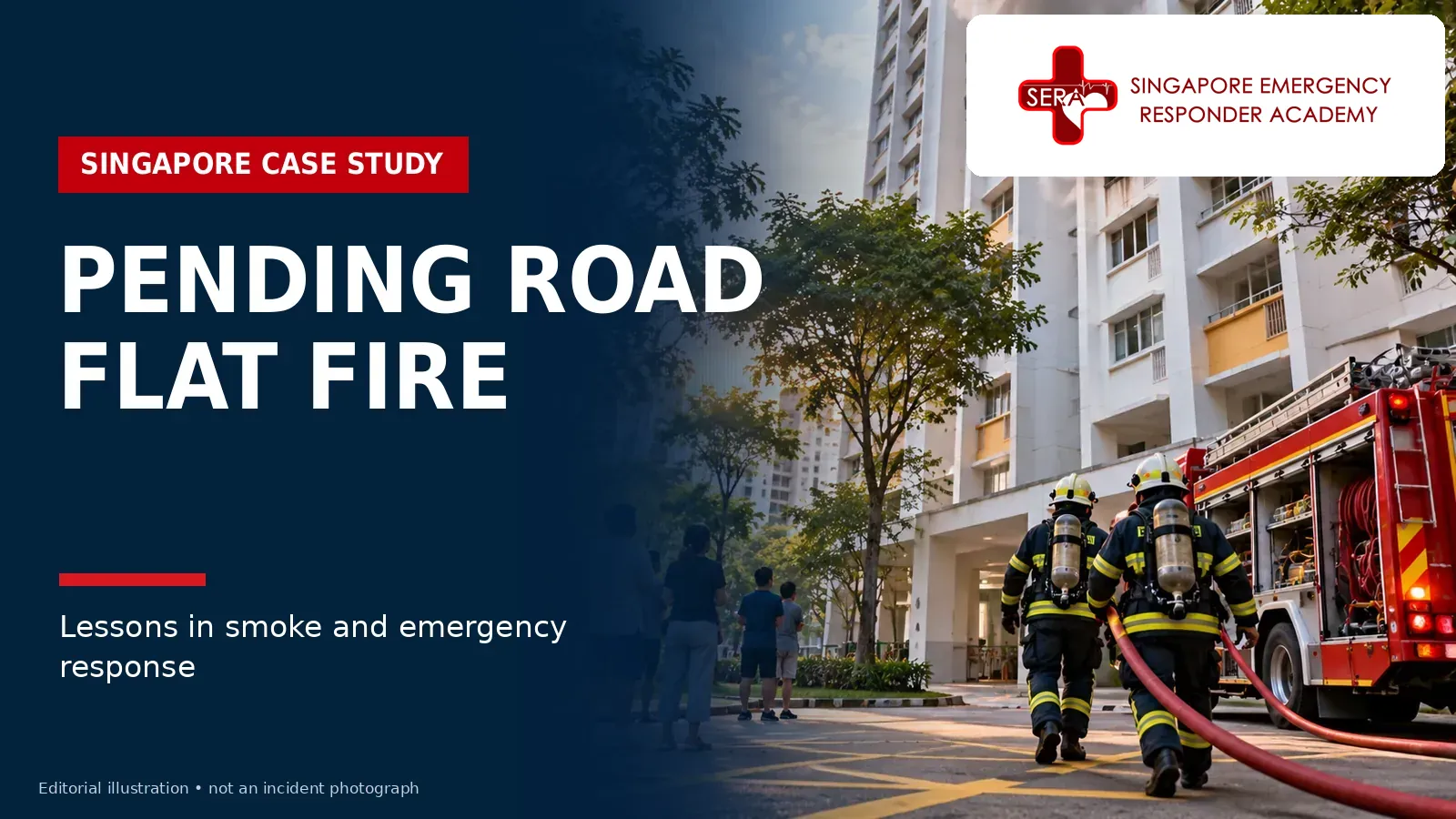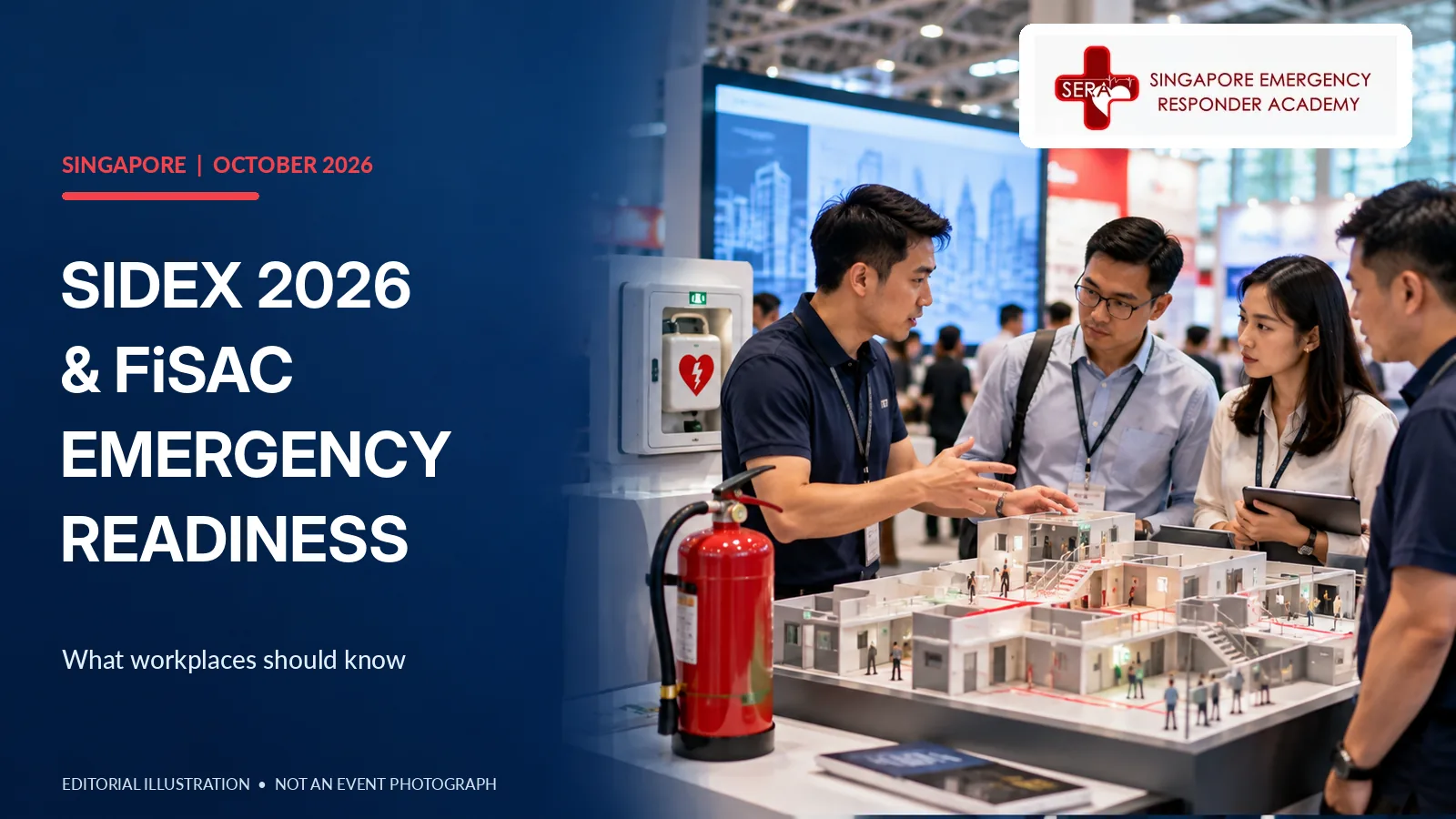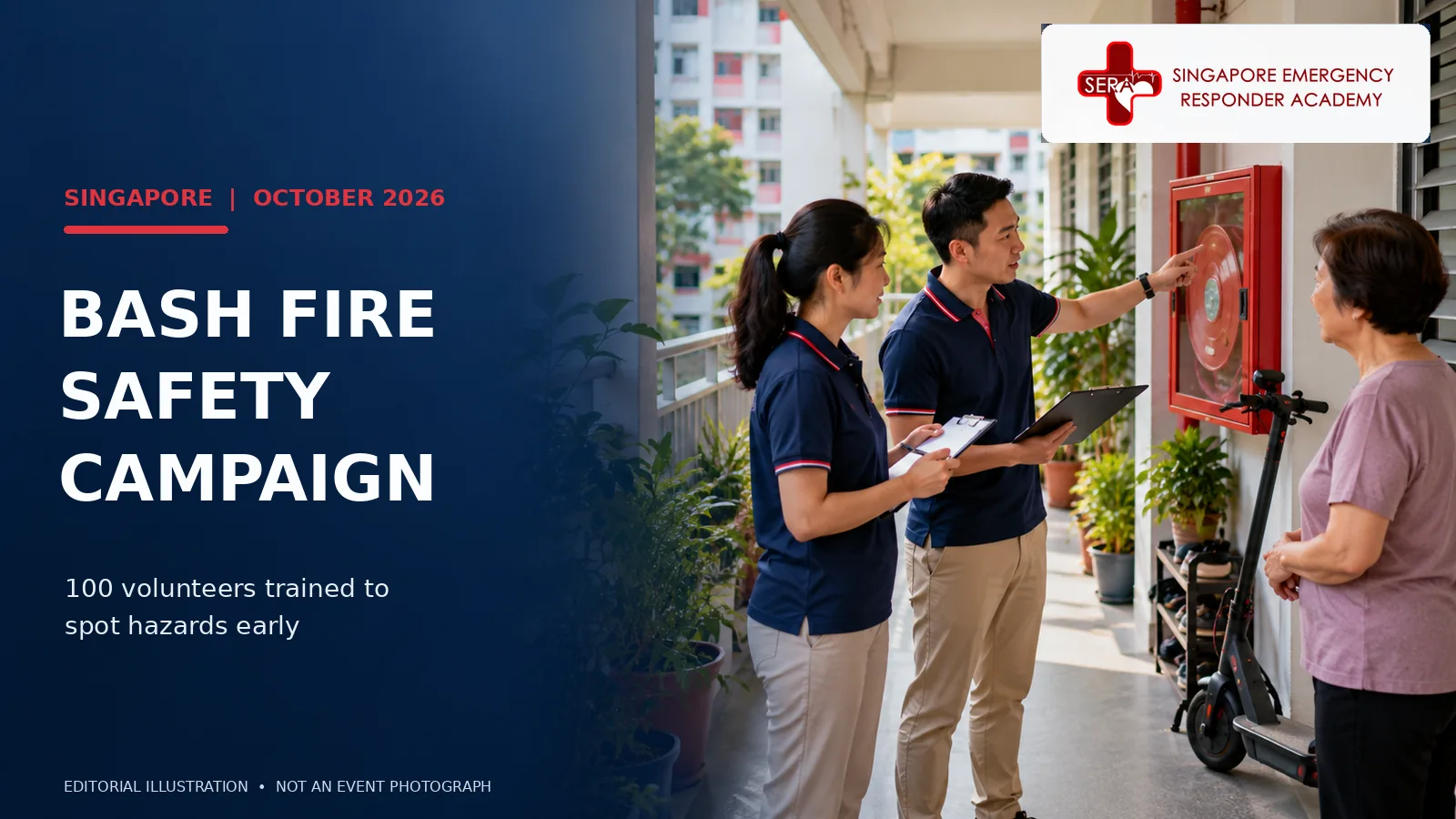
On 28 September 2026, a fire at Block 126 Pending Road in Bukit Panjang prompted the evacuation of approximately 70 residents. SCDF firefighters rescued an unconscious woman and paramedics performed CPR, but she subsequently died. The incident highlights the dangers of smoke exposure and the importance of safe evacuation and emergency preparedness.
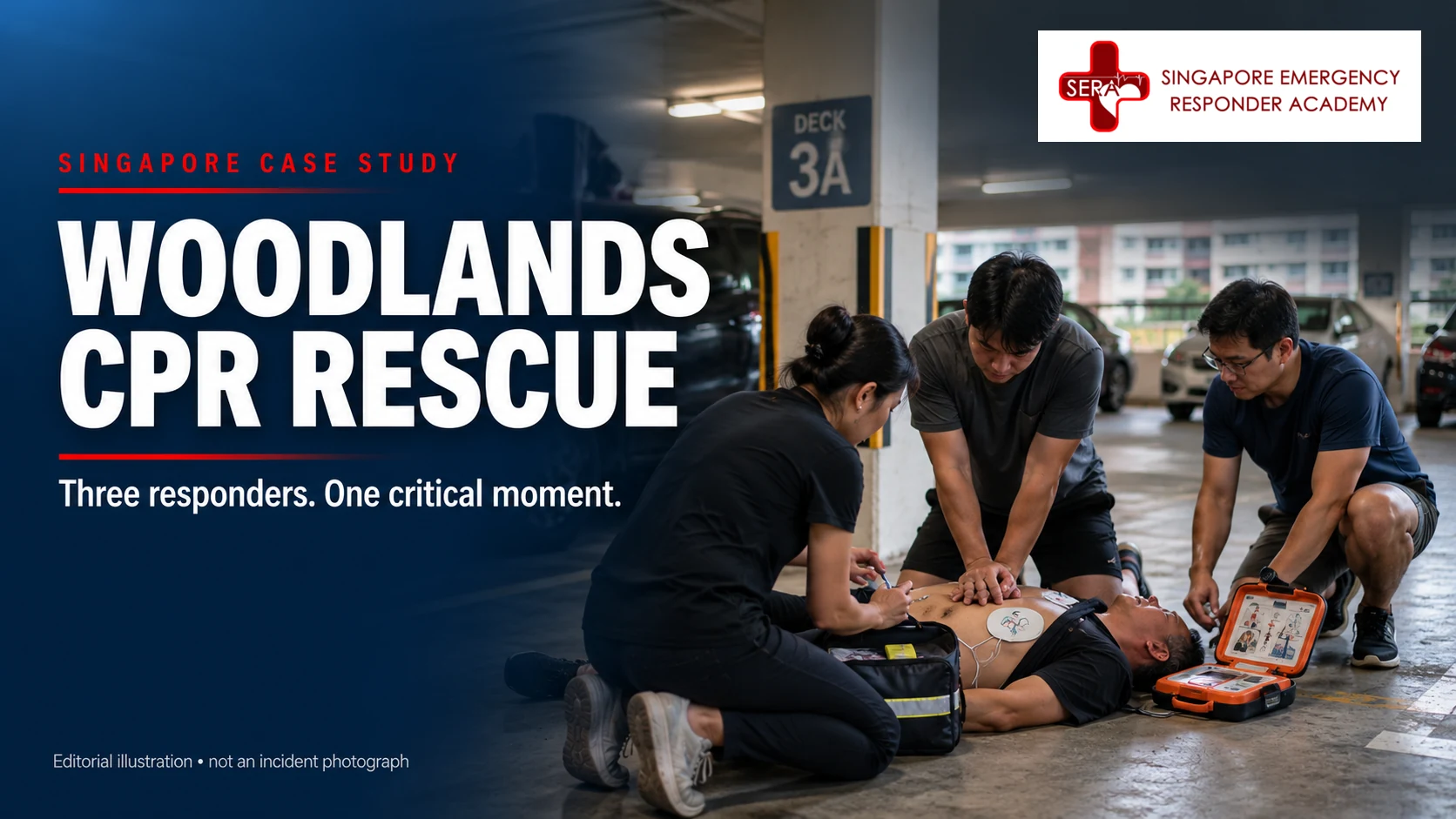
Woodlands Cardiac Arrest Rescue: How Three Community Responders Used CPR and an AED to Save a Life
Real-Life Emergency Response | Singapore Case Study
On 6 February 2026, three Community First Responders (CFRs) helped save a man who suffered cardiac arrest at a multi-storey carpark in Woodlands, Singapore. Their response combined CPR, an automated external defibrillator (AED) and the Singapore Civil Defence Force’s (SCDF) myResponder network.
The key takeaway:
A cardiac arrest emergency requires immediate action.
In this verified Singapore case, one responder was
already performing chest compressions when another
arrived with an AED. The team delivered two shocks
and continued resuscitation until SCDF arrived.
The patient regained his pulse and breathing.
The incident demonstrates how trained community responders can work together during the critical minutes before professional emergency services arrive. It also highlights the value of accessible AEDs and knowing how to locate them.
What Happened During the Woodlands Cardiac Arrest?
According to SCDF’s official account, “From Teaching CPR to Saving a Life” , three Community First Responders attended a cardiac arrest involving a man at a Woodlands multi-storey carpark on 6 February 2026.
The responders were CPL Muhammad Nur Syafiq Bin Ismail, Fazakir Zulhilman Bin Dzulkarnain and Koh Jia Jun.
CPL Syafiq, an SCDF National Serviceman who regularly teaches CPR and AED skills, responded to an alert through the myResponder mobile application.
Fazakir, an Operationally Ready National Serviceman and former Emergency Medical Technician, retrieved an AED from a nearby block after receiving the alert.
When Fazakir reached the casualty, Koh Jia Jun was already performing chest compressions. Fazakir attached the AED pads while CPL Syafiq helped operate the device.
3 Responders · 2 AED Shocks
SCDF confirmed that the responders delivered two AED shocks and continued resuscitation until its personnel arrived. The patient regained his pulse and breathing and was conveyed to hospital.
SCDF reported that the man survived the incident. Koh and Fazakir subsequently received Community Lifesaver Awards, while CPL Syafiq received the SCDF Pride and Care Award.
What remains unconfirmed:
The official report does not specify the patient’s
underlying diagnosis, the exact duration of
resuscitation or his long-term medical outcome.
These details should not be inferred from the
reported survival.
Five First Aid Lessons From the Woodlands Rescue
The following lessons draw on the reported incident and SCDF’s published emergency response guidance. They are general recommendations, not additional claims about what occurred at the carpark.
01
Recognise Cardiac Arrest and Act Quickly
If someone collapses, check that the scene is safe before approaching. Assess responsiveness and normal breathing. If the person is unresponsive and not breathing normally, call 995 and begin CPR, following the dispatcher’s instructions. Do not mistake occasional gasping for normal breathing.
02
Start CPR Without Waiting for an AED
The Woodlands incident shows why CPR and AED retrieval can happen in parallel. If several people are present, one can begin chest compressions while another locates an AED. For an adult in suspected cardiac arrest, hands-only CPR is an option for members of the public. Avoid unnecessary interruptions to compressions.
03
Use an AED as Soon as It Is Available
An AED analyses the heart’s rhythm and advises whether a shock is required. Switch it on, attach the pads as illustrated and follow its voice prompts. Ensure nobody touches the casualty during analysis or shock delivery. Resume CPR when instructed. Not every cardiac arrest requires an AED shock.
04
Share Responsibilities During the Emergency
Having multiple responders can help distribute essential tasks: calling 995, performing CPR, retrieving the AED and guiding paramedics to the location. Trained responders can also rotate chest compressions to manage fatigue. Clear communication helps prevent unnecessary delays.
05
Continue Until Professional Help Takes Over
Even if a casualty appears to regain breathing or responsiveness, emergency medical assessment remains essential. Follow dispatcher instructions, monitor the casualty and provide a clear handover when SCDF personnel arrive. Do not assume that an apparent recovery means hospital care is unnecessary.
How Does Singapore’s myResponder App Help?
SCDF’s myResponder app connects community volunteers with nearby emergencies, including suspected cardiac arrests.
The app allows responders to receive alerts, identify nearby publicly registered AEDs and access the 995 emergency calling function. SCDF emphasises that volunteering is voluntary and responders should only assist when it is safe and reasonable to do so.
The Woodlands rescue illustrates the potential benefit of this network: responders with different experiences contributed complementary skills during the same emergency.
How Can Organisations Prepare for a Similar Emergency?
A cardiac arrest can occur at a workplace, sports facility, community venue or residential property. Organisations should not assume that emergency assistance will always arrive before first aid becomes necessary.
Practical emergency-readiness checklist:
- Identify the nearest accessible AED and check that it is maintained.
- Ensure employees know the site’s emergency address and access points.
- Assign clear responsibilities for calling 995 and guiding paramedics.
- Train suitable personnel in CPR and AED use.
- Practise emergency scenarios and review response arrangements regularly.
Training should complement appropriate equipment, site procedures and emergency communication. For further background, read SERA’s guide to out-of-hospital cardiac arrest in Singapore .
Learn CPR and Emergency Response Skills With SERA
CPR + AED
Learn to recognise adult cardiac arrest, perform CPR and use an automated external defibrillator through practical training.
Explore CPR + AED →Standard First Aid
Build practical first aid skills for common injuries, sudden medical emergencies and cardiopulmonary resuscitation.
Explore Standard First Aid →Occupational First Aid
Develop workplace first aid competencies to respond to injuries and medical emergencies before professional help arrives.
Explore Occupational First Aid →Be Ready to Respond When Every Moment Matters
The Woodlands incident demonstrates how practical lifesaving skills can make a difference before an ambulance arrives.
Singapore Emergency Responder Academy provides hands-on CPR, AED and first aid training for individuals, workplaces and organisations.
Explore CPR + AED TrainingFrequently Asked Questions
1. When did the Woodlands cardiac arrest happen?
The incident occurred on 6 February 2026 at a multi-storey carpark in Woodlands, Singapore, according to SCDF.
2. Was CPR performed during the incident?
Yes. SCDF confirmed that Koh Jia Jun was performing chest compressions when another community responder arrived with an AED.
3. How many AED shocks were delivered?
SCDF reported that the three responders delivered two AED shocks while continuing resuscitation efforts.
4. Did the casualty survive?
Yes. SCDF reported that the patient regained his pulse and breathing, was conveyed to hospital and survived the incident. His long-term medical outcome was not specified.
5. Can members of the public use an AED?
Yes. AEDs are designed to guide users through the process using instructions and voice prompts. Call 995, follow dispatcher guidance and use the AED as directed.
6. Is myResponder only for healthcare professionals?
No. Members of the public can register as Community First Responders. SCDF encourages people to learn lifesaving skills and respond voluntarily when safe.
7. What first aid training is suitable for beginners?
SERA’s CPR + AED course focuses on adult resuscitation and defibrillator use. Standard First Aid provides broader training covering common injuries and medical emergencies.
Official Sources and Further Reading
- SCDF — From Teaching CPR to Saving a Life
- SCDF — myResponder App
- SCDF — Civil Defence Emergency Handbook, 10th Edition (2026)
This case study uses SCDF’s published account of the 6 February 2026 incident. The featured image is illustrative and does not depict the actual responders or casualty.

Related Posts